
Origins of a Railway Hung Over the Abyss
The territory of Montserrat, with its unique conglomerated limestone formations sculpted by millennia of erosion, has challenged the laws of human movement for centuries. Before the arrival of modern engineering, reaching the Benedictine monastery involved navigating winding bridle paths, exposed to rockfalls and considerable physical strain. By the late 19th century, the rise of hiking and the surge in pilgrimages forced authorities and engineers to devise a transport solution that would guarantee safety and regularity without drastically altering the fragile natural environment.
The inauguration of the rack railway marked a turning point in the accessibility of this unique geological enclave. Unlike conventional adhesion, which hits a physical limit on steep slopes, the rack system introduces a third toothed rail positioned in the center of the track. This gearing allows locomotives to literally bite into the rail, overcoming gradients exceeding fifteen percent with millimeter precision. The construction of this infrastructure demanded a titanic effort in stonework, tunneling through living rock, and erecting metal viaducts that today form part of European industrial heritage.
Far from being a mere mechanical resource, the railway route was designed as a gradual transition between the bustle of the plains and the introspection of the mountain. From the moment the train departs Monistrol de Montserrat station, the agricultural landscape gives way to increasingly enclosed and vertical gorges. The track clings to the slope like a precise scar, allowing the traveler to perceive the magnitude of the precipices without experiencing the vulnerability of the isolated walker. This coexistence between 19th-century technical audacity and the untouchable morphology of the mountain shapes a travel experience where mobility turns into contemplation.
Traction Engineering and the Daily Pulse
The daily operation of the Montserrat rack railway relies on strict safety protocols and preventive maintenance that guarantee line reliability 365 days a year. Modern units, equipped with high-efficiency motors and redundant braking systems, combine electric traction with traditional mechanical power. Each convoy is designed to withstand extreme thermal variations on the mountain, where winter freezes and scorching summer sun test rail expansion and gear durability.

The team of drivers and technical operators plays an invisible yet crucial role in running this transport ecosystem. Before the first morning service, inspection trolleys travel the entire route to verify slope stability and the optimal condition of the toothed rack. This constant monitoring is complemented by geotechnical sensors installed at the most critical points of the gorges, capable of alerting to any minor movement of rock blocks. The synchronization between the control center in Monistrol and the trains en route is an exercise in precision comparable to air traffic or high-speed rail.
For local residents and the sanctuary staff, the train represents much more than a tourist attraction; it constitutes the vital artery supplying essential provisions to the monastic complex. Food, mail, maintenance materials, and the technical replacements required by the monastic community travel on the earliest services of the day, sharing space with the first workers and religious personnel ascending in silence. This dual facet—touristic and essential public service—gives the rack railway a complex identity that transcends the conventional concept of a recreational transport medium.
Silence, Geology, and Sacred Architecture
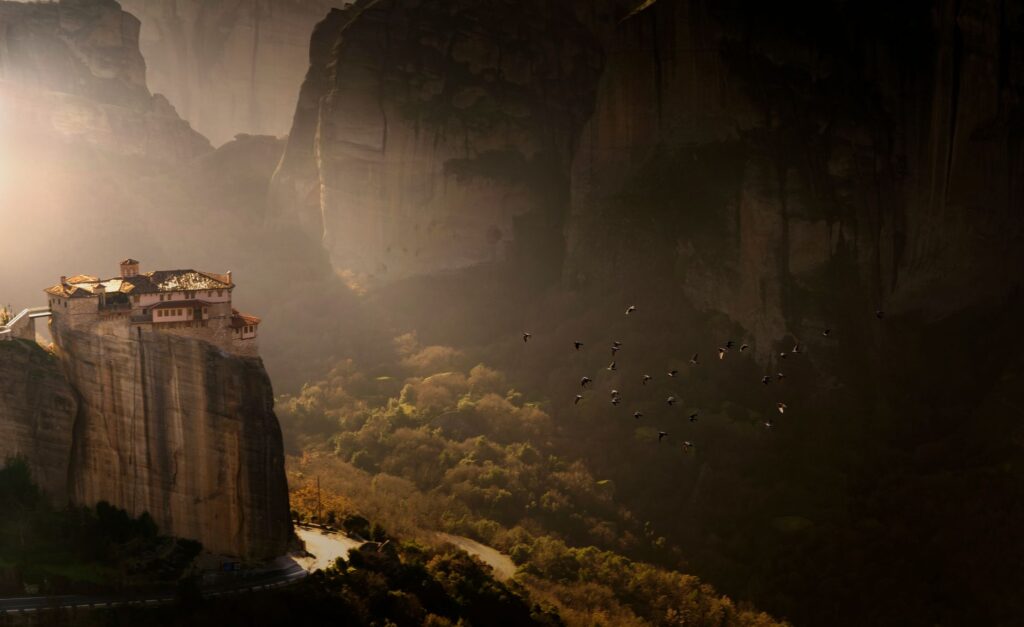
As the train overcomes the final meters of elevation and approaches the terminal station, partially excavated into the rock, the landscape opens into a natural amphitheater of stone and sky. The Montserrat monastery, tucked into a natural ledge more than seven hundred meters above sea level, appears as an architectural extension of the conglomerated spires protecting it. The layout of the monastic buildings reflects a perfect symbiosis between human work and surrounding geology, an uninterrupted dialogue between earthly stone and spiritual aspiration.
The sacred mountain of Montserrat does not reveal itself to those who approach it with haste, but to those who accept the unhurried pace of its ascent and the weight of its millennial silence.
The sound impact of the train’s arrival quickly dissolves into the atmosphere of recollection characterizing the enclosure. The natural acoustics of the mountain circus absorb visitor murmurs, channeling wind and the echo of monastic bells. In this environment, the sanctuary’s Romanesque and Gothic architecture dialogues with modern interventions and the sobriety of Benedictine cells. Visiting the basilica to contemplate the Moreneta, the 12th-century polychrome wood-sculpted black Madonna, completes a journey where the materiality of art intertwines with secular devotion.
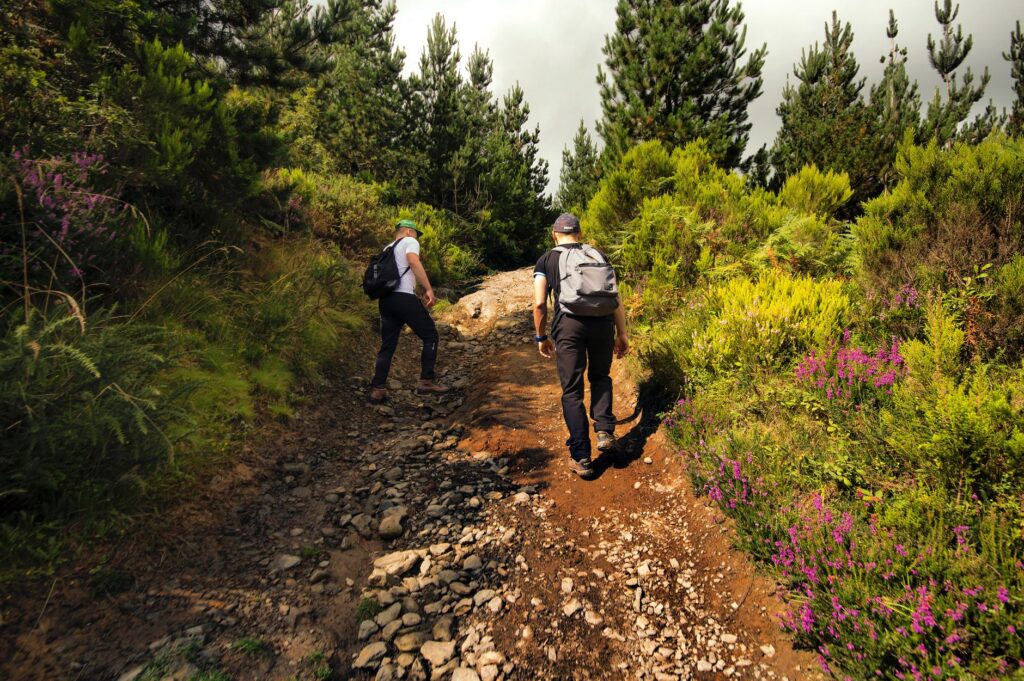
Beyond the monumental core, the network of trails starting from the upper station invites deep immersion in the surrounding nature. Abandoned hermitages like Sant Jeroni or Santa Magdalena, scattered among cliffs and Mediterranean holm oak and pine vegetation, recall the eremitic tradition inhabiting these peaks for centuries. Walking these trails demands absolute respect for the environment and a predisposition toward digital and mental detox, turning the visit into an authentic exercise in inner wellness and escape from urban tensions.
The Monastic Larder and Mountain Cuisine
The experience in Montserrat extends beyond spirituality and landscape, finding in local gastronomy a faithful reflection of the territory’s identity. In the enclosure’s establishments and surrounding villages, traditional mountain Catalan cuisine is crafted using products that have preserved artisanal production methods. Goat cheeses made in the Natural Park farmhouses, liqueurs distilled by monks from medicinal mountain herbs, and traditional pastries form an intangible culinary heritage that deserves unhurried tasting.
The Montserrat requesó, a delicate fresh cheese traditionally made from goat or sheep milk, embodies the simplicity and excellence of the local larder. Usually served with a touch of honey or quince paste, this dairy product results from livestock grazing on the rugged slopes of the Bages region. Likewise, mistelas and abbot liqueurs, flavored with plants like thyme, rosemary, and lemon verbena, follow centuries-old recipes jealously guarded by the Benedictine community.
The mountain’s dining offer balances respect for tradition with the nutritional demands of the contemporary traveler. Local restaurants revive seasonal stews, small game meats, and vegetables from nearby gardens, offering a comforting pause after hikes along the limestone ridges. This gastronomic approach reinforces the idea that sustainable, inner travel is nourished not only by panoramic views and silence, but also by an honest connection with the flavors and producers sustaining the region’s economic life.
Conservation Practices and Alpine Sustainability
Preserving a natural space as fragile and heavily visited as Montserrat demands the constant implementation of rigorous environmental policies. The Montserrat Mountain Natural Park, declared a protected area, firmly regulates private vehicle access, prioritizing public transport and the rack railway as fundamental tools to curb carbon footprints and prevent road congestion.
Conservation efforts extend beyond mobility control to include natural habitat restoration, the protection of cliff-nesting bird species like the peregrine falcon and Bonelli’s eagle, and sustainable water resource management. Water scarcity on the mountain has historically forced the development of complex rainwater harvesting systems and advanced purification, an efficient management model that today serves as a benchmark for other high-mountain tourist enclaves across Europe.
The true conscious traveler understands that passing through the sacred mountain must leave the lightest possible footprint, preserving silence and geological integrity intact for future generations.
Likewise, local communities and park managers actively promote environmental education among visitors, reminding them of the prohibition to stray from marked trails to prevent soil erosion and degradation of endemic flora. These regulations, far from being perceived as restrictions, are understood as a necessary pact between humanity and nature, a reminder that Montserrat’s beauty is a shared asset requiring the active commitment of those who visit.
Practical guide
How to get there: The Montserrat rack railway departs from Monistrol de Montserrat station, directly connected to Barcelona via line R5 of Ferrocarrils de la Generalitat de Catalunya (FGC) from Plaza España. Total travel time from central Barcelona is approximately one hour and ten minutes.
Schedules and frequency: Service operates every day of the year, with frequencies varying between 20 and 40 minutes depending on peak or off-peak seasons. Consult updated schedules on the official website before planning your journey.
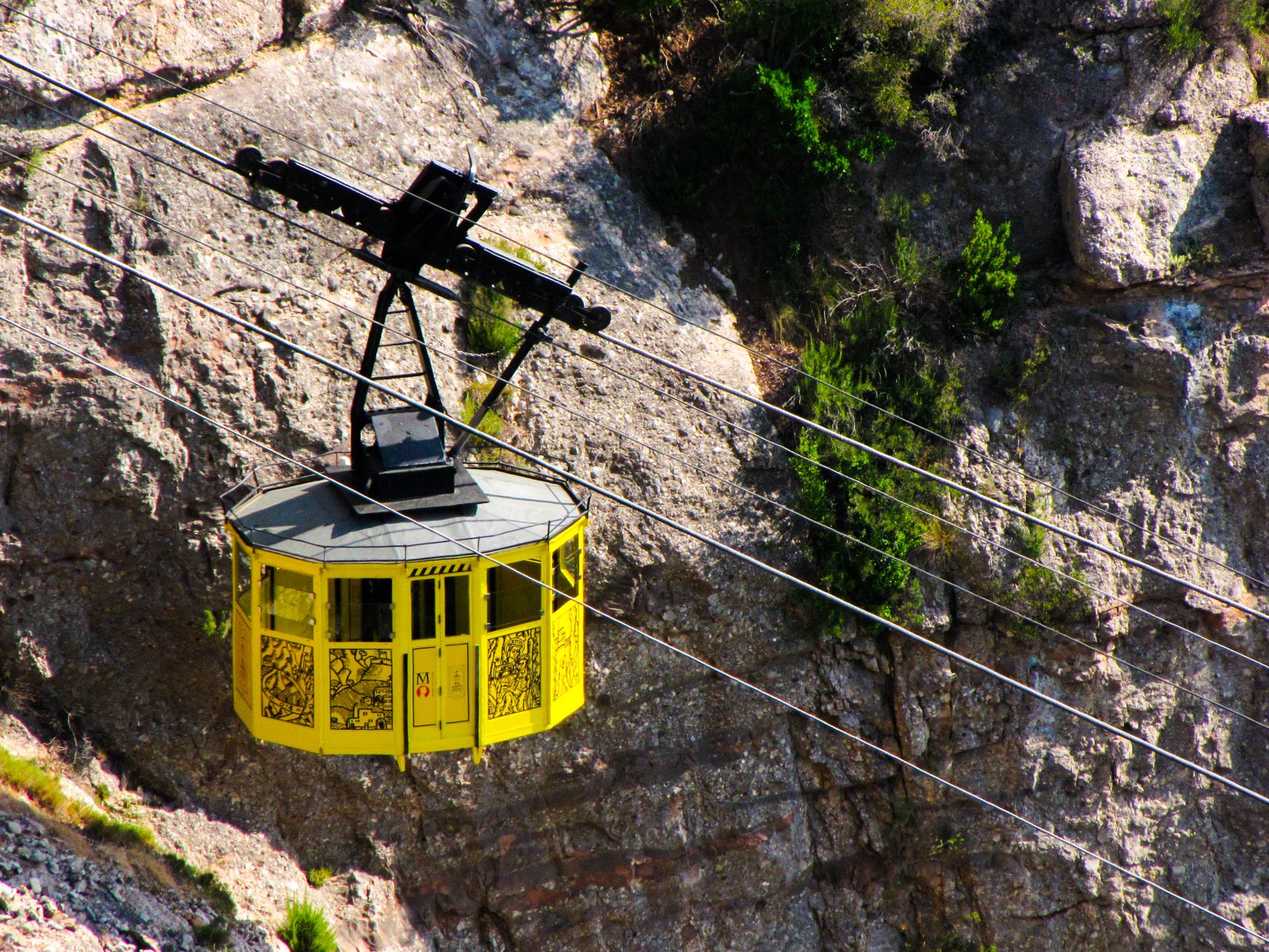
Fares and ticket types: Combined tickets are available including train travel from Barcelona, the rack railway or Montserrat cable car, and access to the sanctuary exhibition spaces. Standard round-trip rack railway fare ranges around 12-15 euros per adult.

Best time to visit: Spring months (April to June) and autumn (September to November) offer optimal hiking temperatures and fewer tourist crowds compared to summer months.
Equipment advice: Mountain footwear with high-traction soles, layered clothing due to sudden altitude temperature drops, sun protection, and sufficient water if planning hiking routes toward the hermitages are essential.
Accessibility: The upper and lower rack railway stations, as well as the Sant Joan and Santa Cova funiculars, feature ramps and adapted access for reduced mobility visitors, though some mountain trails retain irregular surfaces.
The Final Echo of the Sacred Mountain
When the last convoy of the day descends toward the plain, absorbing the final sunset light over the conglomerate walls, Montserrat reclaims its absolute and solemn solitude. Stone silhouettes, set against a sky shifting from indigo to dark gray, appear to jealously guard the secrets of a millennial history where faith, engineering, and landscape merge into a single identity. In that moment of stillness, the traveler understands that the true essence of the journey lies not in the distance covered, but in the mountain’s capacity to order thought, quiet the pulse, and return clarity of silence to the spirit.