
The Recovered Silence of the Caldera
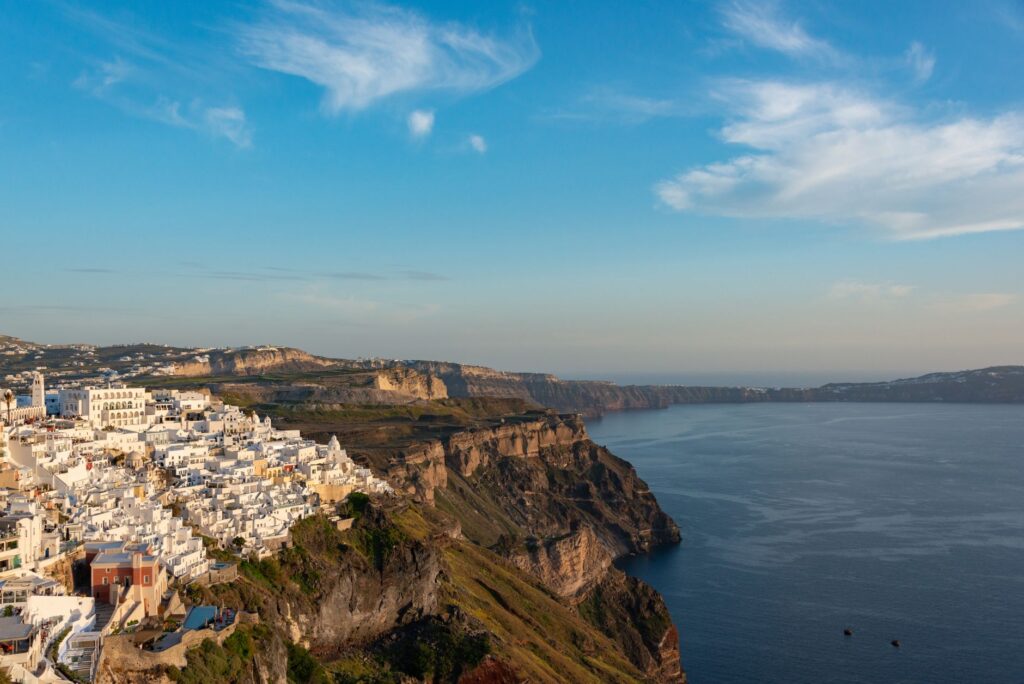
When the large-scale cruise ships finally abandon the sapphire expanse of the Aegean and maritime traffic slows to a crawl, Santorini lets out a profound, collective sigh of relief. This is the moment when the island reclaims its primordial pulse—the one that travel brochures so often bury beneath an avalanche of umbrellas and hurried selfies. In this autumnal parenthesis, the light shifts from the blinding zenith of peak summer into a golden watercolor that brushes delicately against the indigo domes and whitewashed lime roofs of Oia and Fira. To truly understand this measured heartbeat, there is no better guide than Michael Kouloglou, owner of Kyanos Wines, who knows the geology and soul of this volcanic ridge better than almost anyone.
Kouloglou does not merely cultivate the land; he engages in a quiet dialogue with it. As he walks along the terraced slopes of Pyrgos with his gaze fixed on the distant marine horizon, he explains that autumn is the truest season of truth on the island. Following the exhaustion of the harvest, when the fruits of the pre-phylloxera vines already rest quietly within wooden casks, the atmosphere grows still. It is then that Santorini strips away its commercial artifice and reveals its true texture—rugged, volcanic, and deeply human. Visitors who arrive during this season discover that real luxury lies not in the ostentation of glass-walled infinity pools, but in the absolute silence of the caldera paths and the chance to look locals in the eye.
The Invisible Geology of Volcanic Wine
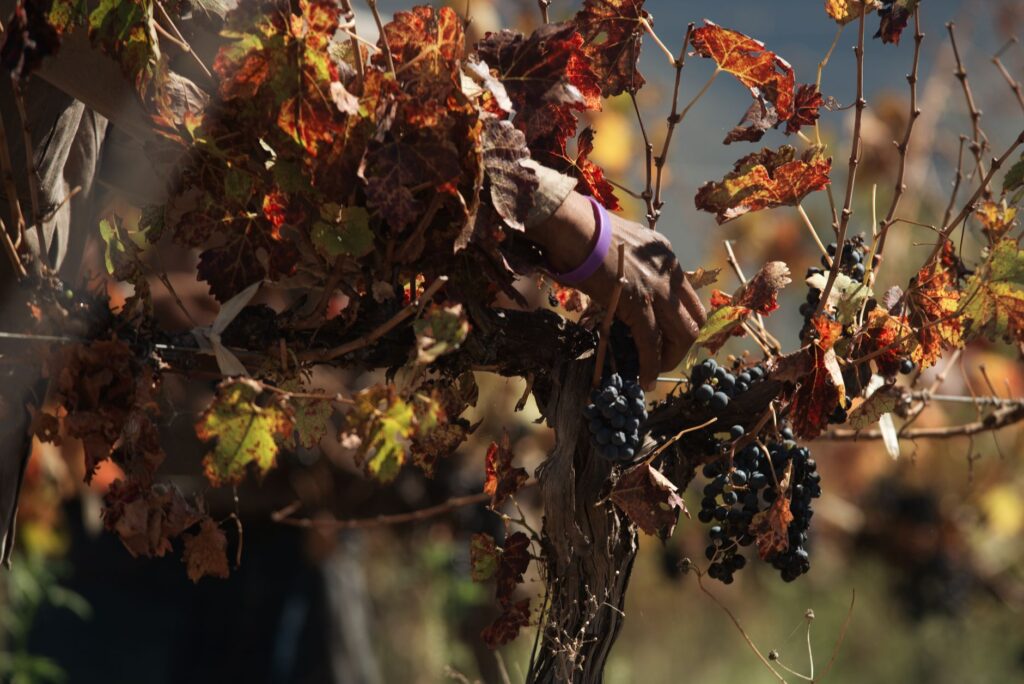
To grasp the character of Santorin’s wines, one must descend into the subsoil. The earth beneath Kouloglou’s boots is a brutal geological archive, shaped by the Minoan eruption of the sixteenth century BCE. This cataclysm left behind a thick layer of ash, pumice, and lava known as aspa, a mineral substrate completely devoid of traditional organic matter yet possessing exceptional water retention thanks to the nocturnal humidity absorbed from the sea breeze. The vines here do not grow on conventional trellises; instead, they are coiled into low, basket-like shapes called kouloura, specifically designed to protect fragile grape clusters from the ferocious winds sweeping across the archipelago.
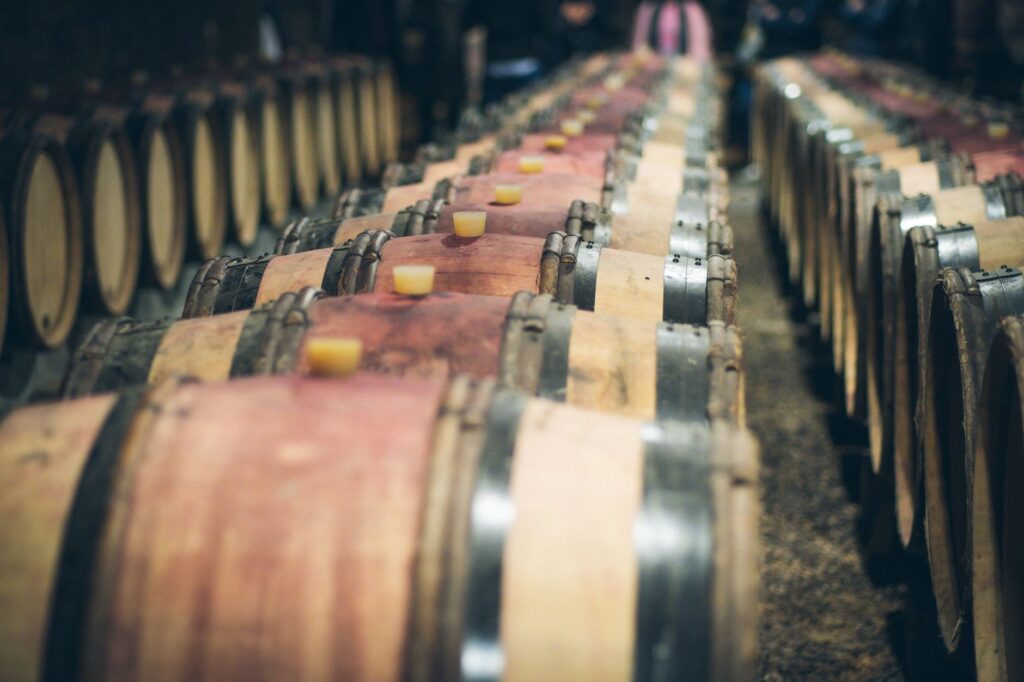
Inside underground wineries carved directly into soft volcanic rock, Kouloglou oversees the maturation of dry white wines crafted from the indigenous Assyrtiko grape. Unlike continental varieties, this grape retains an almost electric acidity even beneath the scorching Mediterranean sun, a characteristic beautifully balanced by an unmistakable saline minerality. Seated beside a rustic wooden table where impromptu tastings rest, the winemaker points out that autumn allows for unhurried evaluation, free from the commercial rush of summer. Here, every bottle tells the story of a hostile environment where agriculture is nothing short of a centuries-old act of resilience.
Inland Villages: Beyond the Cliff Edge
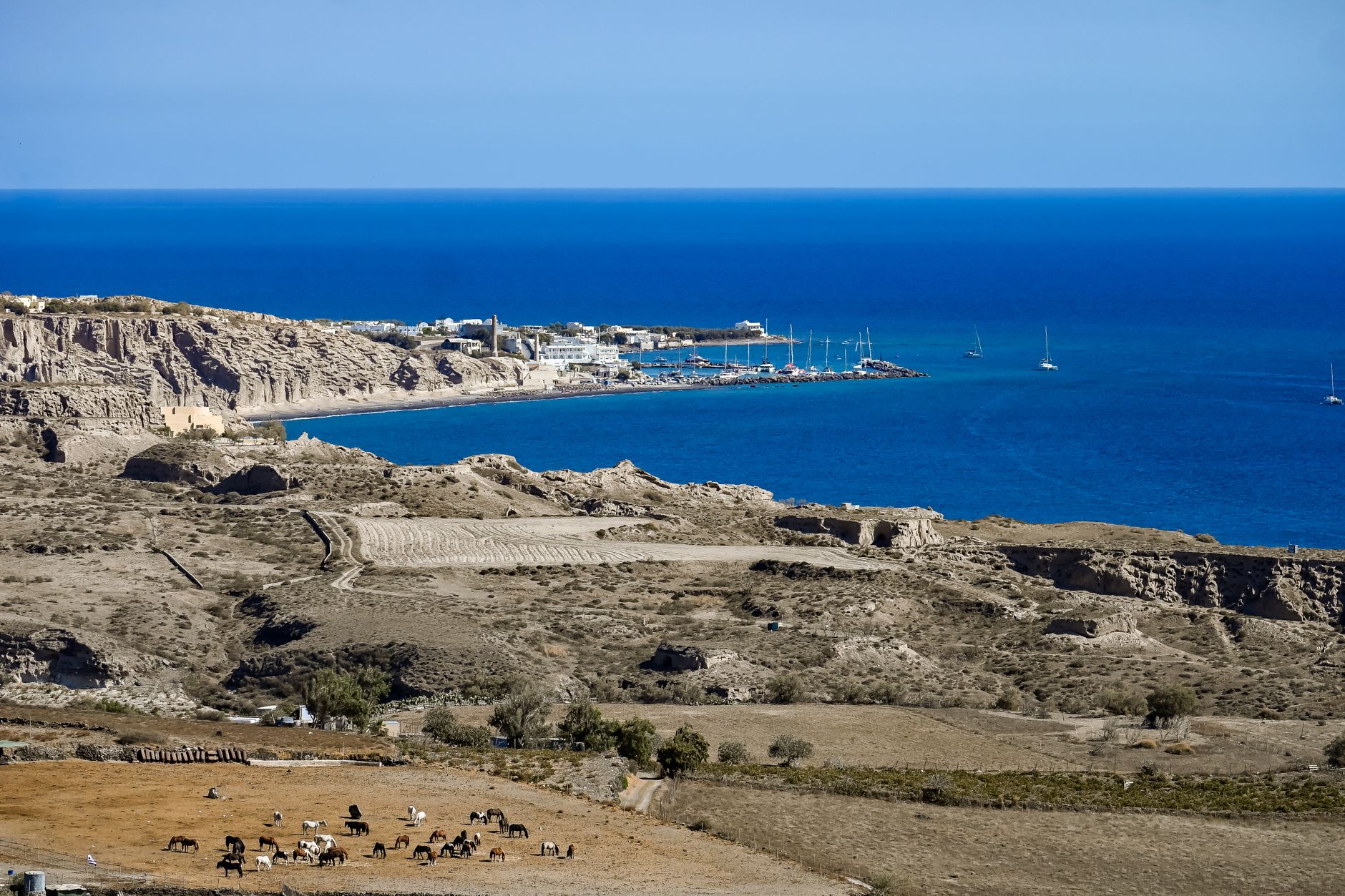
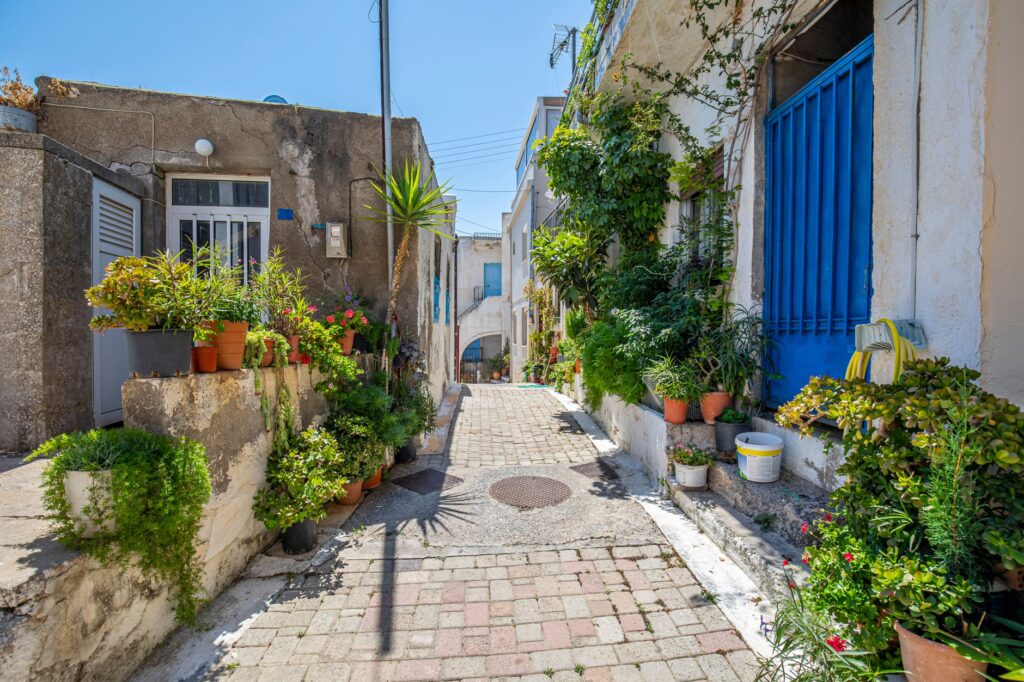
While the vast majority of tourists concentrate their steps along the precipitous western cliff edge, Santorini’s true heart beats inland, in villages such as Emporio, Megalochori, and Pyrgos itself. In these settlements, medieval defensive architecture intertwines with the quiet simplicity of lime-washed homes and sunny courtyards where lazy cats absorb the day’s final tempered rays. Kouloglou suggests losing oneself in the labyrinth of narrow alleyways within Emporio’s Kasteli, where stone walls crowd so close together they barely allow a sliver of blue sky to pass through, creating an atmosphere of absolute timelessness.
In Megalochori, carved wooden doors and small, tree-shaded squares offer a steadfast refuge from modern clamor. Here, one finds no impersonal souvenir stalls; instead, there are local ceramic workshops, tiny cafes where elderly residents play tavli, and traditional tavernas where the aroma of wild oregano and braised meat hangs thick in the air. Walking through these villages in autumn is to witness the everyday life of a community that has learned to coexist with mass tourism without sacrificing its identity. Pauses for conversation on street corners and the ceremonial greetings of neighbors remind travelers that Santorini is, above all else, an island inhabited by people with deep roots.
The Autumn Table: Flavors of Earth and Sea
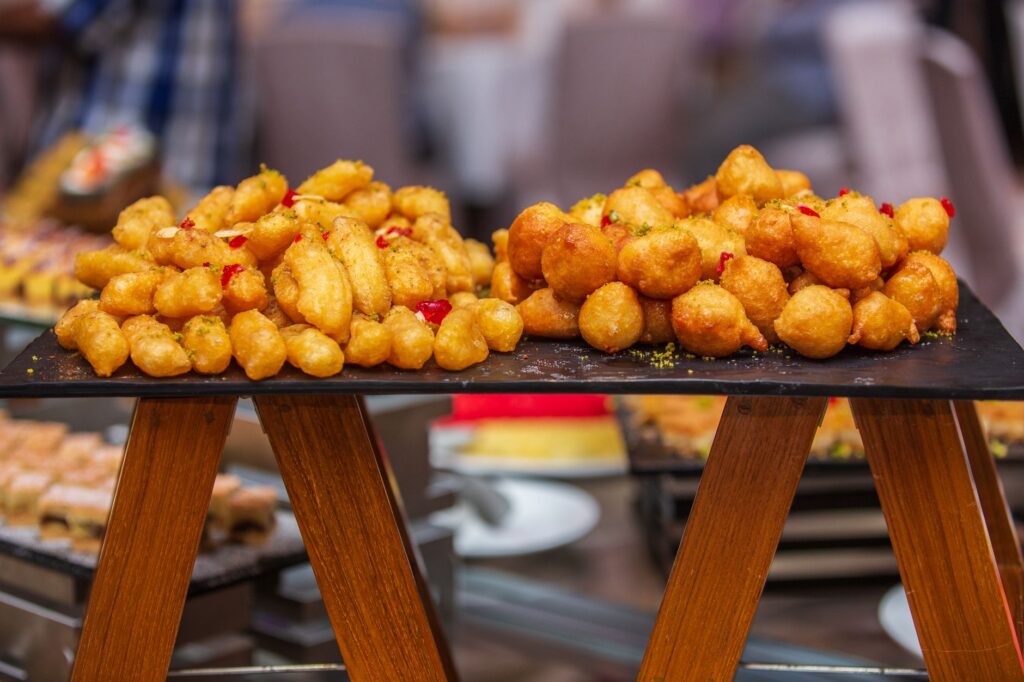
Santorini’s gastronomy undergoes a radical transformation as temperatures drop. Where summer demands light salads and grilled fish by the water, autumn invites travelers to step inside centuries-old tavernas to sample hearty stews and recipes rooted in the island’s volcanic larder. Kouloglou recommends visiting family-run establishments tucked away in agricultural villages, where the kitchen follows the strict seasonality of the land. Among the undisputed stars of the table is Santorini fava, a velvety purée made from indigenous yellow split peas grown in the island’s dusty fields, nourished solely by heavy morning dews.
The true luxury in Santorini during autumn is not artificial isolation, but a reconnection with the natural rhythms of land and sea.
Another seasonal treasure is tomatokeftedes, crispy fried fritters made from locally grown sun-dried tomatoes that concentrate all the sweetness and acidity of fruit cultivated under extreme drought. These dishes are regularly accompanied by fresh white goat cheese and a glass of Nykteri, a traditional wine crafted from grapes harvested in the dead of night and pressed before dawn, whose time in oak barrels imparts subtle notes of dried fruit and honey. Meals during this season are never rushed transactions between sightseeing stops; they are unhurried rituals that stretch out over hours in the warmth of candid conversation.
Trails of Ash and Sea
Falling temperatures make autumn the ideal season to traverse the ancient mule tracks linking the island’s historic settlements. The most famous route, tracing the cliff edge between Fira and Oia over roughly ten miles, takes on an entirely different dimension when walked without summer crowds. With firm earth beneath hiking boots and the Aegean stretching out to the left like a sheet of lead, walkers can stop to examine exposed geological strata that reveal the archipelago’s successive volcanic eruptions.
Kouloglou prefers, however, the lesser-traveled paths that wind downward from the monastery of Profitis Ilias to Ancient Thera, perched high on the ridge of Mesa Vouno. This meandering route cuts across hillsides covered in low thyme scrub and wild capers, offering sweeping 360-degree panoramas across the sea. As one descends, the ruins of Hellenistic and Roman temples emerge from the grey stone with quiet dignity. It is a tangible reminder that human civilizations pass, but the harsh, dramatic profile of the caldera remains utterly unaltered beneath the changing autumn sky.
Practical guide
- Getting there: During the autumn months, flight connectivity decreases significantly. The most common route is flying from Athens via local carriers or taking a traditional ferry from the port of Piraeus, a sea journey lasting between four and eight hours depending on the vessel chosen.
- Getting around: While public buses can feel chaotic in summer, autumn turns them into an efficient and economical way to connect main villages. Nevertheless, renting a compact car or scooter is highly recommended to reach remote wineries and secluded rural trailheads.
- Accommodation: High-end luxury cliffside hotels often close their doors by mid-November. Travelers will find excellent alternatives in traditional guesthouses and rural homes managed by local families in Pyrgos, Megalochori, or Emporio.
- Wine tasting: Kyanos Wines and other family-run vineyards across the island welcome visitors during autumn by appointment, offering intimate tasting experiences and detailed technical insights delivered directly by local producers.
- Seasonal dining: Look for village tavernas serving traditional dishes such as fava, tomatokeftedes, and goat stews, while avoiding mass-tourism-oriented restaurants clustered along first-line coastal strips.
Epilogue: Twilight Light and the Return to Calm
As the sun begins its descent toward the western horizon, Santorini’s light assumes an almost iridescent texture, washing the whitewashed walls of the villages in amber and mauve hues. From his vantage point high in the vineyards of Pyrgos, Michael Kouloglou watches twilight slowly claim the day, blanketing the caldera in profound stillness. This is the exact moment when the island reclaims its best-kept secret: the certainty that beneath its superficial tourist fragility beats an ancient, untamed, and deeply welcoming geography for those willing to listen in silence.
The autumn experience in Santorini does not seek to impress through artificial spectacle, but rather offers an intimate communion with the elemental forces of nature. Far from noise and haste, the island proves that its true beauty lies in its capacity for constant renewal—an eternal cycle where wine, volcanic stone, and sea converge in perfect harmony. Source in English: Condé Nast Traveler.