
The Two Shores of a Single Urban Heartbeat
The waters of the Bosphorus are not merely a geographical accident separating two landmasses; they constitute the primary artery upon which the daily narrative of Istanbul is written. Every dawn, when the sun begins to tint the domes of Sultanahmet with amber, a millimeter-precise choreography of white hulls and foam trails awakens in this channel, barely thirty kilometers long. This is not a tourist service conceived for the fleeting delight of the foreign visitor, but the circulatory system enabling millions of people to stitch their lives together on both sides of a continental boundary. The municipal company Şehir Hatları, alongside private operators, manages a fleet of vessels defying treacherous currents, sudden fogs, and the intense traffic of international cargo ships transiting from the Black Sea toward the Sea of Marmara.
Understanding the sheer magnitude of this mobility requires looking beyond the suspension bridges dominating the skyline with their steel majesty. While automobiles clog the viaducts during peak hours, the traveler opting for the ferry experiences a mode of transport where time seems to acquire a different density. Here, the crossing between Eminönü and Kadıköy is not just a utilitarian commute, but a social ritual where simit vendors, office workers with worn briefcases, and gulls accompanying the wake of the propeller with mathematical precision converge. This report examines how Istanbul’s nautical infrastructure balances technological modernization with reverence for a centuries-old maritime tradition, offering valuable lessons on modal integration in major global metropolises.
The Backbone of the Fleet and Its Technical Evolution
The backbone of this transportation system rests upon a heterogeneous fleet where traditional wooden and metal vessels coexist with modern, energy-efficient catamarans. The classic boats, recognizable by their double-funnel silhouettes and teak-paneled saloons, have undergone profound renovation processes to comply with contemporary environmental regulations without sacrificing their aesthetic identity. These traditional hulls possess remarkable stability against the northern crosswinds, locally known as the poyraz, which lash the channel with gusts capable of destabilizing smaller watercraft.
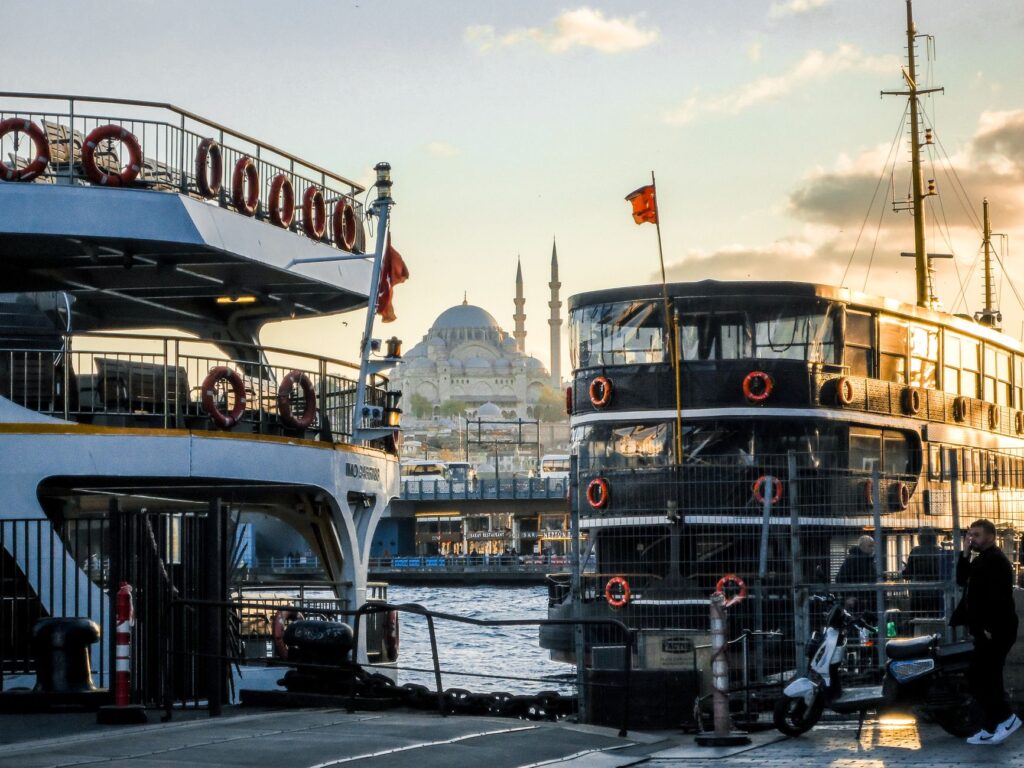
In parallel, the introduction of lighter vessels has optimized frequencies on high-demand routes, cutting waiting times at the key piers of Karaköy, Beşiktaş, and Üsküdar. The propulsion of these modern units combines low-emission diesel engines with onboard energy management systems monitoring fuel consumption in real time. Naval engineers in charge of maintenance face a unique daily challenge: the dense traffic of the Bosphorus demands exceptional maneuverability, as ferries must cross perpendicularly the paths of massive tankers and container ships transiting under the watchful eye of the strait’s vessel traffic service.
Intermodal Integration: From Pier to Metro
The operational success of Istanbul’s ferry system lies in its seamless articulation with the rest of the metropolitan public transit network. The piers are not isolated terminals, but intermodal nodes where underground subways, surface tram lines, and urban bus networks converge. This fluidity is supported by the standardized use of the contactless İstanbulkart, a technological medium unifying fare payment across the entire mobility infrastructure and allowing discounted transfers within specific time windows.
Disembarking in Üsküdar, for instance, passengers find a Marmaray metro line station just steps away from the ferry gangway, allowing an agile transfer connecting the maritime surface with the underwater rail tunnel crossing beneath the Bosphorus seabbed. This complementarity between subaqueous rail and surface navigation is the secret preventing total urban mobility collapse. When the metro experiences technical incidents or extreme rush-hour congestion, the ferries act as a flexible escape valve, absorbing demand peaks thanks to the capacity of their open decks and enclosed saloons.

Meteorological Challenges and Navigation Safety
Navigating the Bosphorus is not without risks stemming from the region’s capricious weather. Sudden pressure and temperature shifts between the Balkans and Anatolia generate dense fog banks, known locally as *pus*, reducing horizontal visibility to mere meters within minutes. Under such circumstances, ferry captains rely on high-precision radar systems, satellite positioning, and a profound empirical understanding of local currents, which reach considerable speeds due to the hydrological elevation difference between the Black Sea and the Sea of Marmara.
Beyond fog, surface and subsurface currents present a phenomenon known as countercurrent, where deep saline water flows in the opposite direction to the superficial freshwater outflow. This fluid dynamic requires skippers to maintain absolute mastery of the helm and azimuthing thrusters during docking maneuvers. The port authority maintains constant monitoring of atmospheric conditions, and in cases of severe storms with gale-force winds, exposed routes are temporarily suspended, always prioritizing passenger safety over strict adherence to operational timetables.
The Bosphorus tolerates no improvisation; every crossing is a calculated act where seamanship merges with the patience of a city that never stops.
Socioeconomic Impact on Daily Life
For the Istanbul resident, crossing the strait by ferry represents much more than physical displacement; it constitutes a reflective pause amid the frantic rhythm of the megalopolis. Urban sociological studies indicate this commute acts as a psychological decompressor for commuter workers. The opportunity to contemplate Ottoman palaces, imperial mosques, and traditional wooden mansions—the famous *yalı*—while sipping a steaming glass of black tea (*çay*) transforms a routine ride into a restorative aesthetic experience.

From an economic perspective, the ferry network sustains the labor cohesion of the metropolitan region. It enables thousands of professionals to reside on the Asian shore, where the cost of living is generally more accessible, and work in the European financial district without bearing the prohibitive costs and stress of private vehicle commuting. Likewise, small businesses located near the piers depend directly on the steady flow of passengers, generating a capillary economic ecosystem benefiting both bustling spice markets and small newsstands.
Sustainability and the Future of Nautical Transport in the Strait
Looking toward coming decades, the Istanbul Metropolitan Municipality has outlined a strategic plan focused on the gradual decarbonization of the ferry fleet. Dependence on fossil combustion engines is being reviewed through the gradual integration of hybrid and pure electric propulsion systems, specially designed for short-distance routes connecting historic neighborhoods. These new units significantly reduce acoustic emissions in the channel, a crucial factor for protecting local marine fauna, including dolphin populations frequenting the strait’s waters.

Simultaneously, an advanced digitization system for fleet management is being implemented, optimizing routes based on real-time demand analyzed via artificial intelligence. This technological approach seeks to minimize empty runs and maximize the energy efficiency of every voyage. The challenge lies in modernizing the infrastructure without eroding the cultural and visual heritage these vessels represent for Istanbul’s collective identity, ensuring the Bosphorus crossing remains a living bridge between civilizations.
Practical guide
Getting there and getting around: The ferry system connects Istanbul’s main piers: Eminönü, Karaköy, Beşiktaş, and Kabataş on the European side; Üsküdar and Kadıköy on the Asian side. Routes operate from 06:00 until past 23:00, with increased frequencies during rush hours.
Payment system: Acquiring the rechargeable İstanbulkart is essential, available at metro stations, piers, and authorized kiosks. It grants access to ferry turnstiles and offers reduced fares on subsequent connections with metro, tram, or bus.
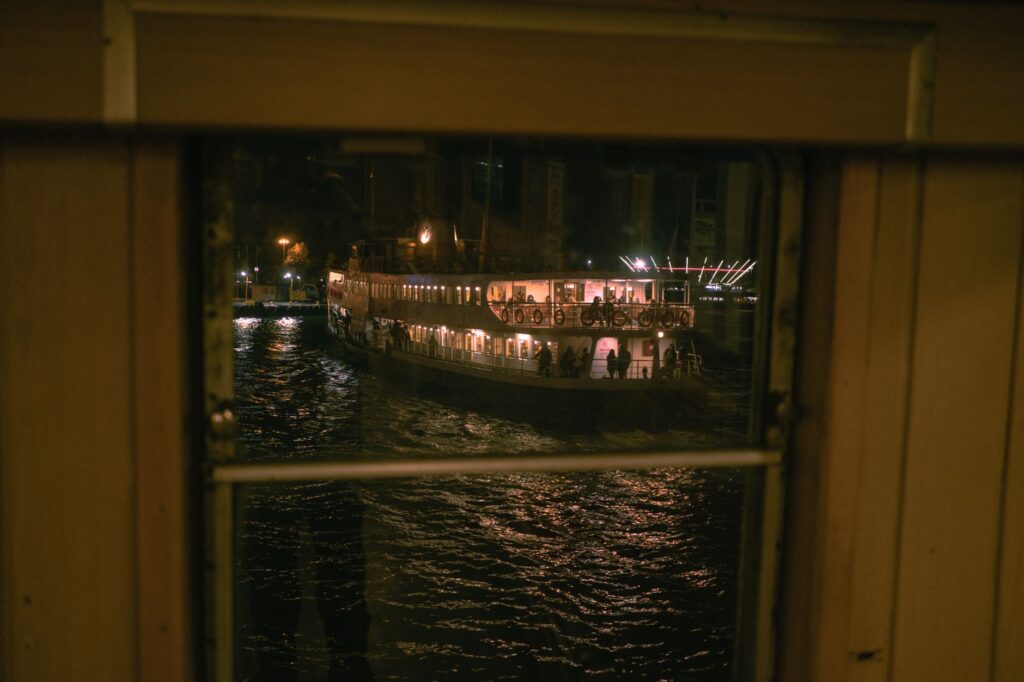
Best times for the crossing: To avoid crowds and enjoy optimal photographic light, undertaking journeys during early morning hours (07:30 – 09:00) or coinciding with sunset, when the city skyline silhouettes against the orange sky, is recommended.
Weather advice: In winter and transition months, northern winds can cause occasional cancellations. Consulting line statuses on the official Şehir Hatları mobile application before planning critical commutes is advisable.
Final Reflection on the Waters That Unite
As evening declines over the Golden Horn and the lights of the minarets begin to flicker across the historic peninsula, the Bosphorus regains its nocturnal calm. The ferries continue plowing the dark surface, carrying the final dreams and fatigue of a fading day. In this constant back-and-forth between continents, naval architecture and urban tradition embrace to demonstrate that great cities are defined not solely by skyscrapers or subterranean highways, but by the ability to keep alive the routes connecting the soul of their people with the horizon.