
Introduction to an Alpine Engineering Marvel
The central Alpine territory conceals one of the most daring railway arteries ever conceived by human ingenuity. The Bernina Railway, operated by the Rhaetian Railway company, is not merely a transport medium linking Swiss cantons with Italian Lombardy; it constitutes a marvel of applied orography that defies gravity and traditional civil engineering laws. Through a route winding between ancient glaciers and steep valleys, this line demonstrates how overcoming extreme natural barriers is possible through technical precision and absolute respect for the alpine environment. Its designation as a UNESCO World Heritage site corroborates the uniqueness of an infrastructure that, since the early twentieth century, has maintained an operational lifeline between two cultural worlds shaped by high mountains.
The genesis of this route responded to an urgent need for regional and commercial connectivity in the late nineteenth century, when the winter isolation of Graubünden threatened to stifle local economic development. The central question guiding the engineers of the era was formidable: how to trace a railway capable of ascending from the green pastures of Poschiavo to the frozen desolation of the Bernina Ospizio without resorting to the rack-and-pinion system that limited speed and freight capacity? The answer demanded a perfect symbiosis between natural topography and railway geometry, resulting in a metric-gauge corridor that continues to operate today as a global benchmark for resilience, sustainable transport, and operational efficiency under extreme meteorological conditions.
Alignment Architecture: Geometry and Friction on Slopes
The primary technical achievement of the Bernina Railway lies in its capacity to bridge an abrupt altitude difference of over 1,800 meters within a relatively short route, relying exclusively on the natural adhesion between steel wheel and rail. Unlike other mountain trains dependent on rack mechanisms to traction on steep inclines, the Bernina relies on the power of its electric locomotives and meticulously calculated track geometry. With maximum gradients reaching an impressive 7 percent, the convoys must endure extraordinary mechanical stresses, both in climbing effort and during prolonged braking descents toward the Inn River valley or the Italian slope of Tirano.
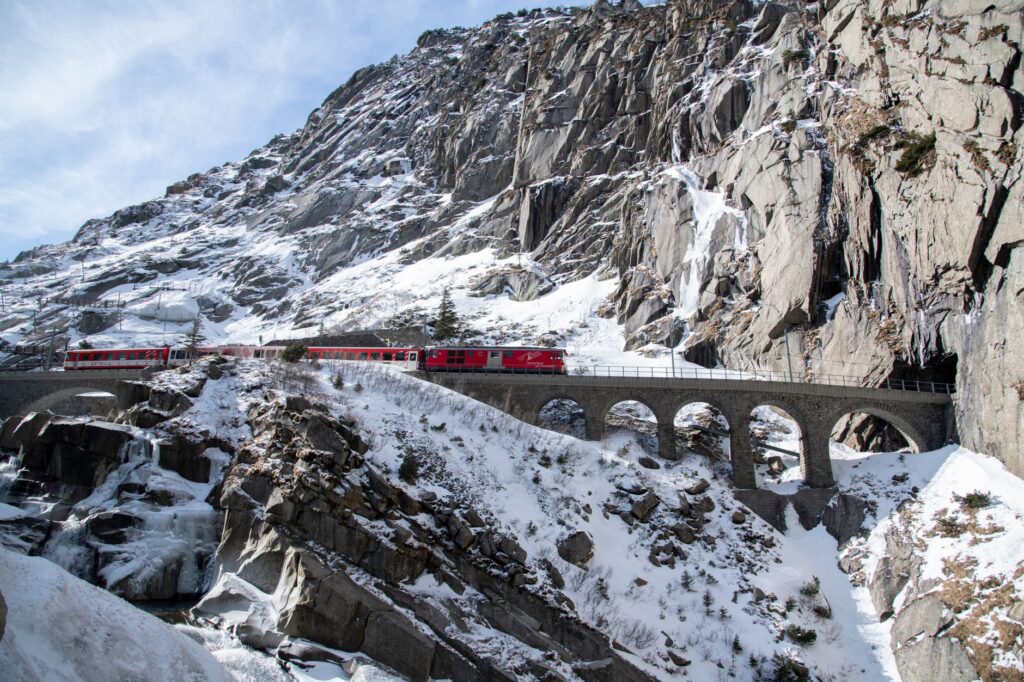
To smooth these impossible grades without drastically altering the bedrock, engineers resorted to complex loop alignments and the construction of impressive masonry structures. The most celebrated example of this architecture is the Brusio circular viaduct, a helical stone loop specifically designed to allow the train to gain or lose height gradually within an extremely restricted space. This design not only resolves an insurmountable physical problem but visually integrates into the agricultural landscape with formal elegance that has fascinated travelers and engineers for generations. Precision in calculating curvature radii and dynamic load distribution ensures that rail bogies negotiate these tight curves with minimal wear and absolute safety.
The Cryogenic Challenge and Winter Logistics
Operating a railway line reaching 2,253 meters above sea level at the Bernina Pass entails confronting one of Europe’s most hostile climatic environments on a daily basis. During winter months, blizzards, avalanches, and temperatures plunging well below freezing transform infrastructure management into a precision military operation. The railway company maintains a constant deployment of specialized snow-clearing equipment, including powerful self-propelled rotary blowers and historic steam locomotives equipped with reinforced steel front wedges designed to carve through meters of compacted snow.
The stability of track in high mountains depends on a fragile balance between preventive civil engineering and immediate logistical responsiveness to the unpredictable caprices of alpine meteorology.
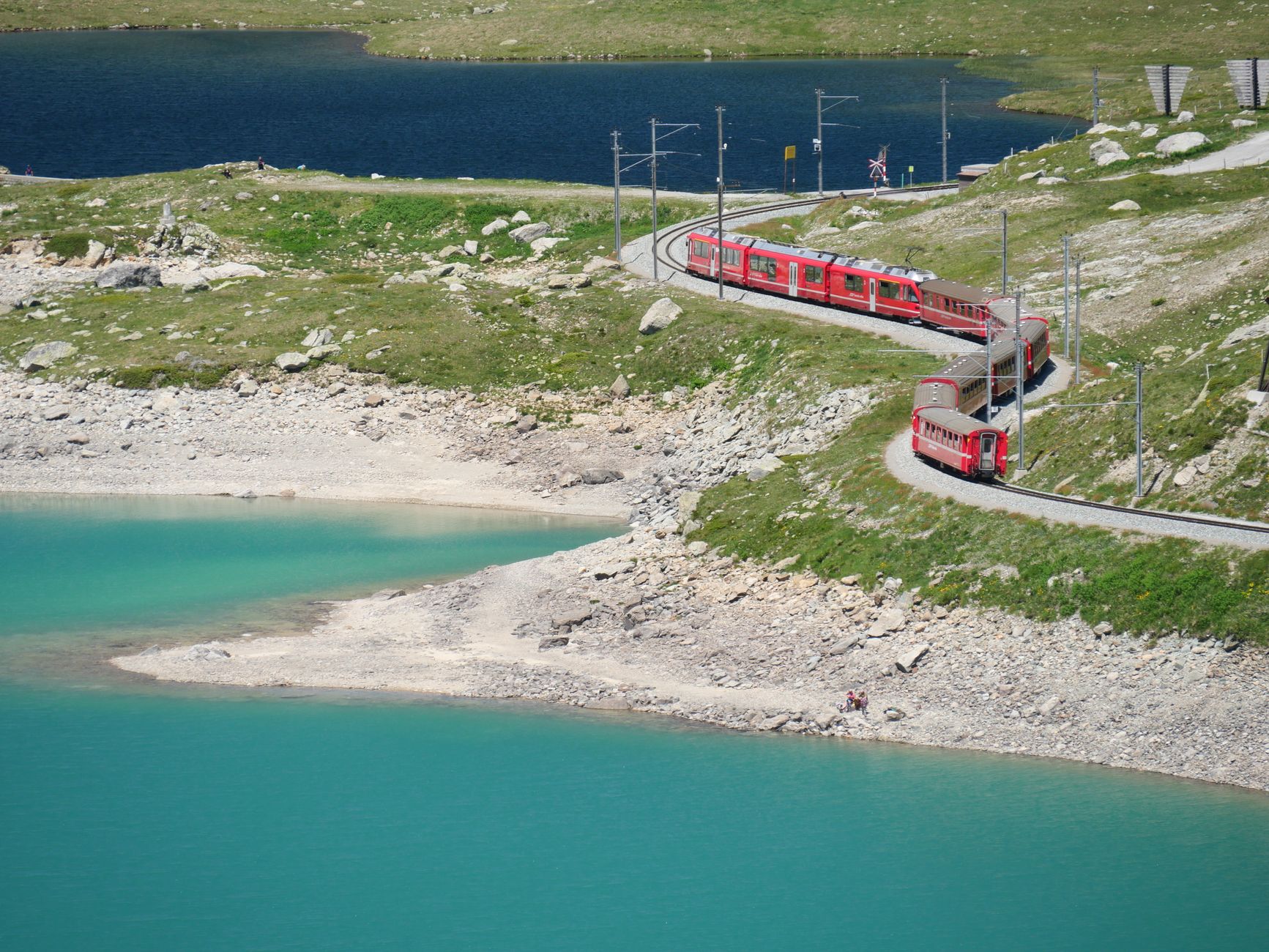
Risks associated with avalanches have required the construction of extensive protective galleries and reinforced concrete retaining walls along the most exposed stretches, especially near the Bianco Lake. Furthermore, power supply management at these extreme altitudes presents unique logistical challenges; traction substations must withstand considerable overloads and voltage fluctuations derived from the simultaneous effort of multiple trains on steep ramps. Telemetric monitoring of overhead catenaries and track switches allows ice formation and frost accumulation to be detected before they compromise service continuity, ensuring the artery remains operational virtually three hundred and sixty-five days a year.
Landscape Transition: From Glaciers to Palm Trees
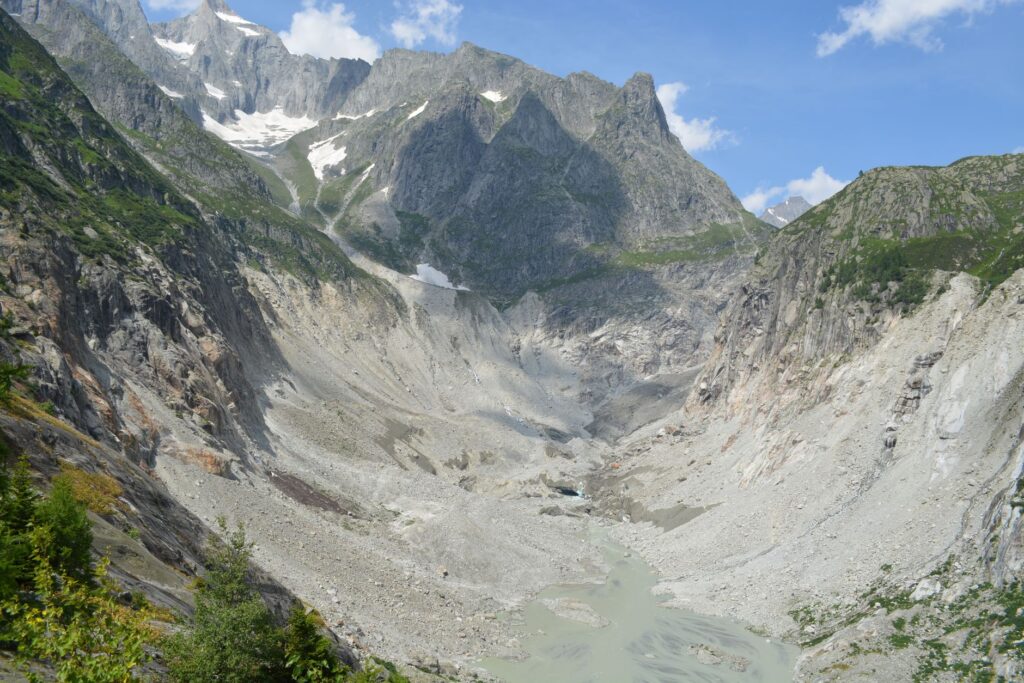
One of the most fascinating characteristics of the Bernina Railway is the radical landscape transformation experienced by travelers in little over two hours of continuous transit. Departing from the freezing, austere high alpine mountain dominated by the imposing mass of the Morteratsch Glacier and the turquoise waters of the Nero Lake, the train embarks on a dizzying descent crossing successive bioclimatic zones within kilometers. As pine needles and perpetual snows recede, vegetation adopts a subalpine character before giving way to hay meadows and deciduous forests of the Poschiavo Valley.
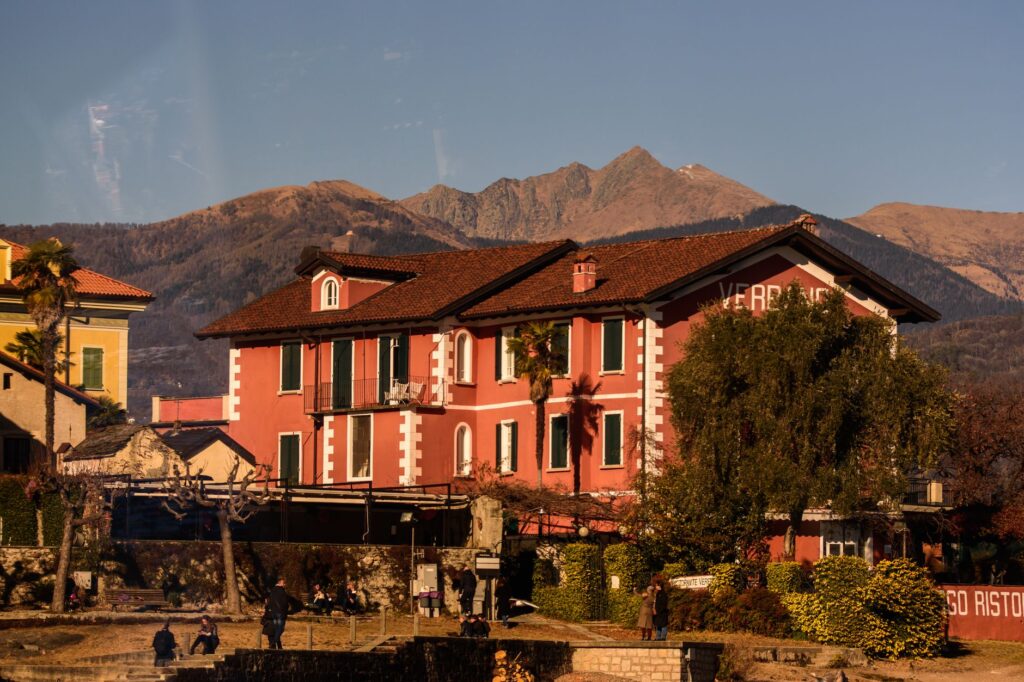
The climax of this visual and environmental metamorphosis is reached upon crossing the Italian border and approaching the Tirano terminal, situated just over four hundred meters above sea level. Here, the high-mountain landscape completely vanishes to merge with a Mediterranean environment where palm trees, terraced vineyards, and Renaissance-styled urban architecture proliferate. This geographic compression allows passengers to transition in record time from the absolute domain of ice to the thermal softness of the southern Alps, a phenomenon turning the journey into a unique sensory experience that redefines the perception of space and distance in Alpine Europe.
Sustainability and Public Transport in Protected Regions
In the contemporary context of tourism saturation and climate urgency, the Bernina Railway represents a paradigmatic model of sustainable mobility and territorial cohesion. By connecting isolated mountain communities with major European transport networks via trains exclusively powered by hydroelectric energy generated locally, the infrastructure drastically reduces the carbon footprint associated with vehicular transit over mountain road passes. Implicit prohibitions and physical limits on private traffic in designated protected areas reinforce the railway’s role as the indisputable backbone of the regional tourism economy.
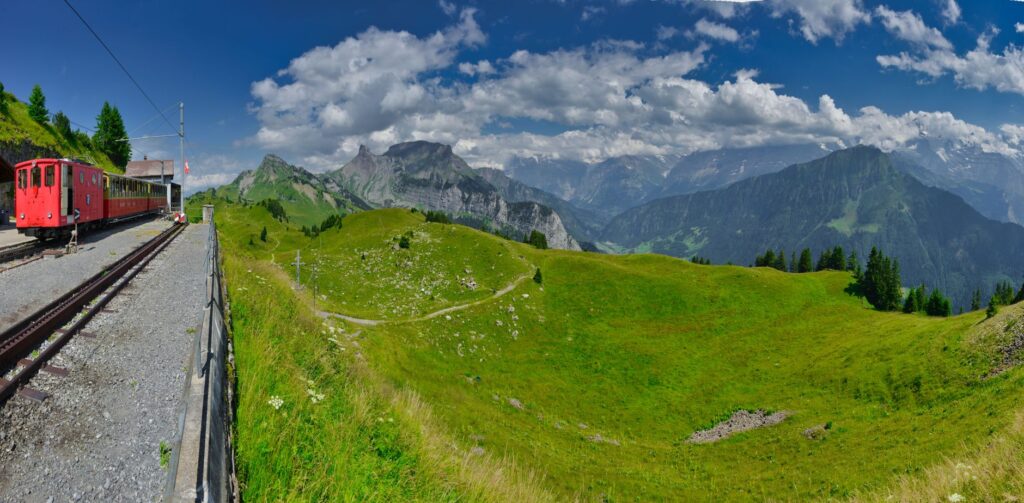
Transport capacity management is planned with scientific rigor to prevent congestion at high-altitude stations and preserve the integrity of fragile ecosystems bordering the track. Panoramic trains with expansive glass surfaces coexist in perfect operational harmony with regional commuter services utilized daily by local residents, students, and cross-border workers. This integrated approach demonstrates that high-end rail tourism can coexist virtuously with the daily needs of rural populations, turning the infrastructure into an indispensable social asset that transcends mere recreational appeal.
Practical guide
Planning a trip aboard the Bernina Railway requires understanding the operational particularities of this cross-border line and its seamless integration into the Swiss and Italian rail networks. Essential logistical aspects to optimize the travel experience are detailed below.
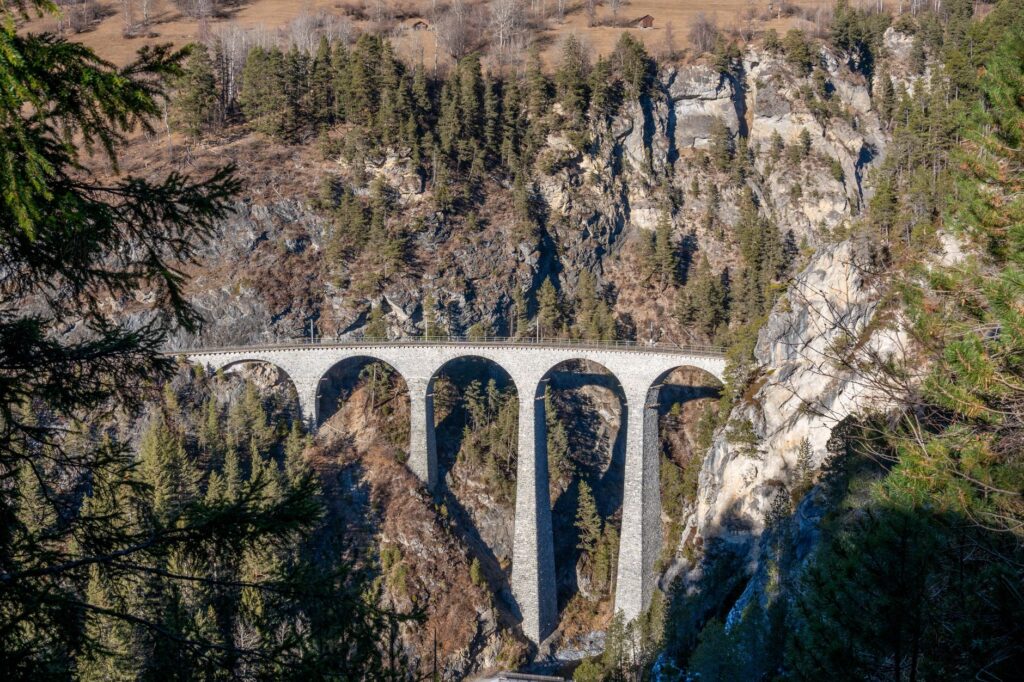
Main Route and Connections: The complete route extends for 61 kilometers between the Swiss station of St. Moritz and the Italian town of Tirano, crossing the Bernina mountain pass. Primary rail access is achieved via Chur or Zurich connecting to the Rhaetian Railway network.
Rail Service Types: Two main train modalities operate on the same track: regular regional trains stopping at all intermediate stations with open windows, and the Bernina Express, a panoramic tourist service requiring mandatory seat reservations and high-visibility glazed carriages.
Documentation and Customs Requirements: Although both Switzerland and Italy are part of the Schengen area, carrying a valid passport or identity document is mandatory throughout the cross-border journey, as random customs checks may occur at the Tirano terminal station.
Seasonal Planning: The line operates year-round, but the experience varies radically. Winter months (December to March) guarantee extreme snowy landscapes, while late spring and summer (June to September) allow access to high-difficulty alpine hiking trails.
Seat Reservations and Fares: The Bernina Express requires payment of a seat reservation fee in addition to standard tickets or rail passes like Interrail or Swiss Travel Pass. During peak summer season, seats sell out weeks in advance, making advance planning essential.
Visual Epilogue at the Ice Frontier
When the last ray of alpine sun sets the granitic crests of the Bernina massif ablaze and casts long shadows over the frozen waters of Lake Bianco, the high mountain recovers its ancestral silence. In that crepuscular instant, the train’s passage ceases to be a mere demonstration of technological supremacy and becomes a subtle reminder of human frailty before geological vastness. The warm lights of the carriages, reflected upon the immaculate snow surface, trace a luminous line uniting shadowed valleys and defying the secular isolation of the summit. It is on this threshold between ancient rock and the warmth of the cabin that the journey acquires its most profoundly human dimension, a lasting testimony to engineering’s capacity to bridge the frozen abyss of the world.