A horizon of stone and water in the Breton borderlands
There are places that, the moment you arrive, invite you to slow down a little. The kind of places that make you take a deep breath without you even deciding to, simply because the surroundings demand it. Exactly that happens in this location: you see a quiet valley, an old town, a river moving calmly between meticulously tended gardens, and in the background, a granite silhouette that commands attention without needing to impose itself. It is one of those ideal spots to practice slow tourism, a term easy to use but difficult to put into practice in our fast-paced times: walking without haste, noticing the details, listening to the water, smelling the wood of ancient houses, and letting the landscape converse directly with the traveler.
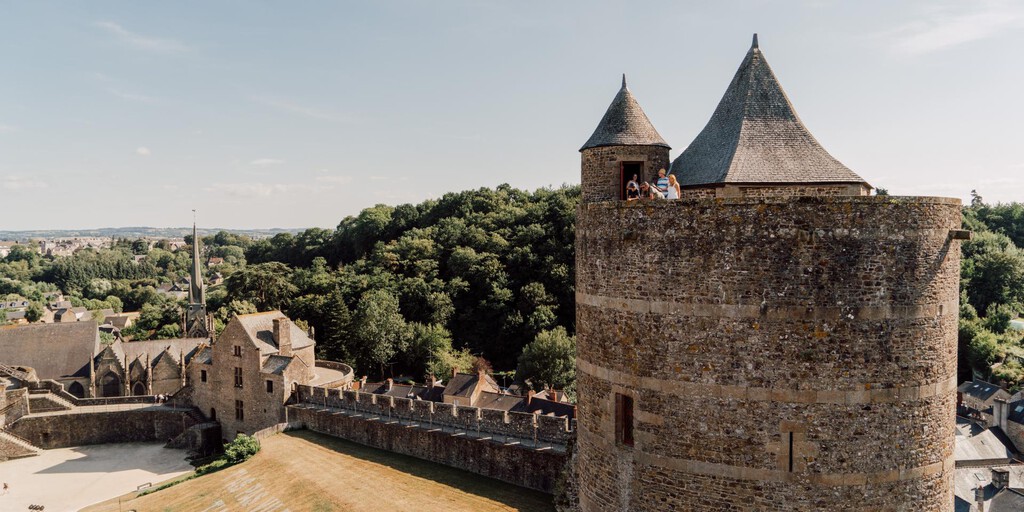
The setting for this journey is Fougères, a town located in the Ille-et-Vilaine department within the historic region of French Brittany. Far from the heavily crowded coastal routes of the pink granite cliffs or the maritime ramparts of Saint-Malo, this interior corner offers a deep immersion into the European Middle Ages. Its greatest appeal is not merely aesthetic, but structural: it houses the largest continuous medieval fortified complex in the entire continent, a true labyrinth of towers, wallwalks, and ramparts that have defied the passage of time for over eight hundred years.
The defensive geography of a frontier March
To grasp the scale of Fougères, one must understand its historical geopolitical position. For centuries, the Duchy of Brittany was a territory fiercely protective of its independence, constantly disputed by the French crown and the kings of England. The town functioned as one of the master keys of the eastern Breton defensive system, the so-called ‘March of Brittany’, a containment strip designed to halt enemy incursions before they could reach the agricultural and commercial heart of the region.
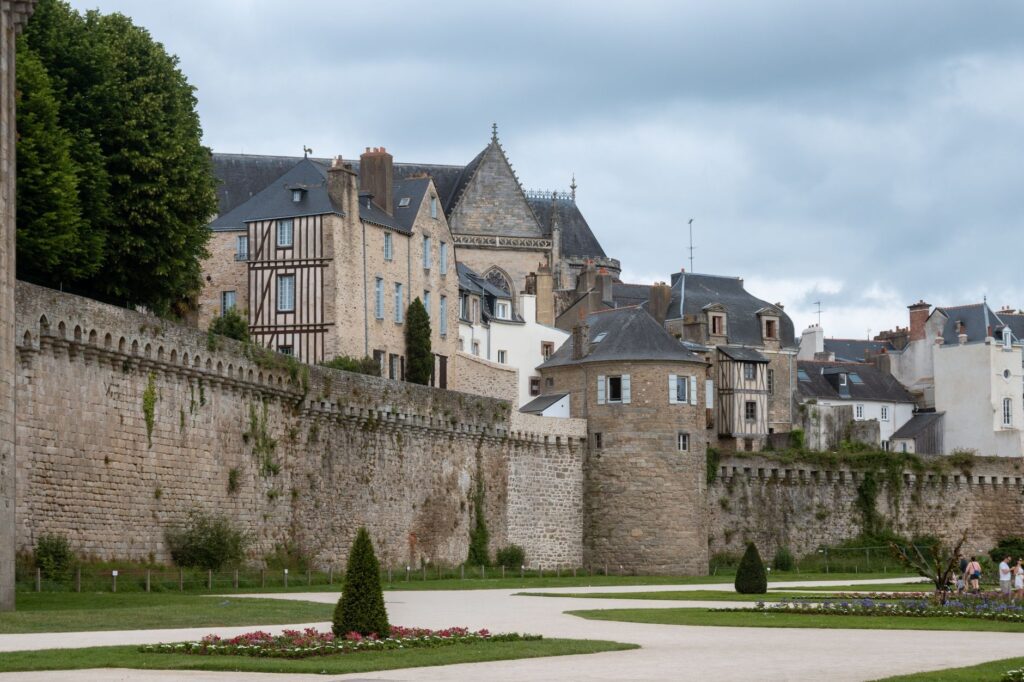
The castle’s site responds to relentless military logic. It was strategically built in a low meander of the Nançon river, surrounded by steep slopes that created a natural trap for any attacking army. Although this lowland position robbed it of long-range visibility advantages, it more than compensated by making the deployment of heavy siege machinery extremely difficult. The river water fed an unassailable perimeter moat, turning the complex into a fortified island practically impossible to take by brute force.
Hiking between ramparts and the Nançon valley
The best way to approach Fougères from a perspective of hiking and cultural adventure is on foot, connecting local trails that descend from the agricultural plateaus down to the valley floor. Waymarked paths allow the traveler to circle the outer perimeter of the fortifications, following ancient bridle paths once used by shepherds and soldiers in feudal times.
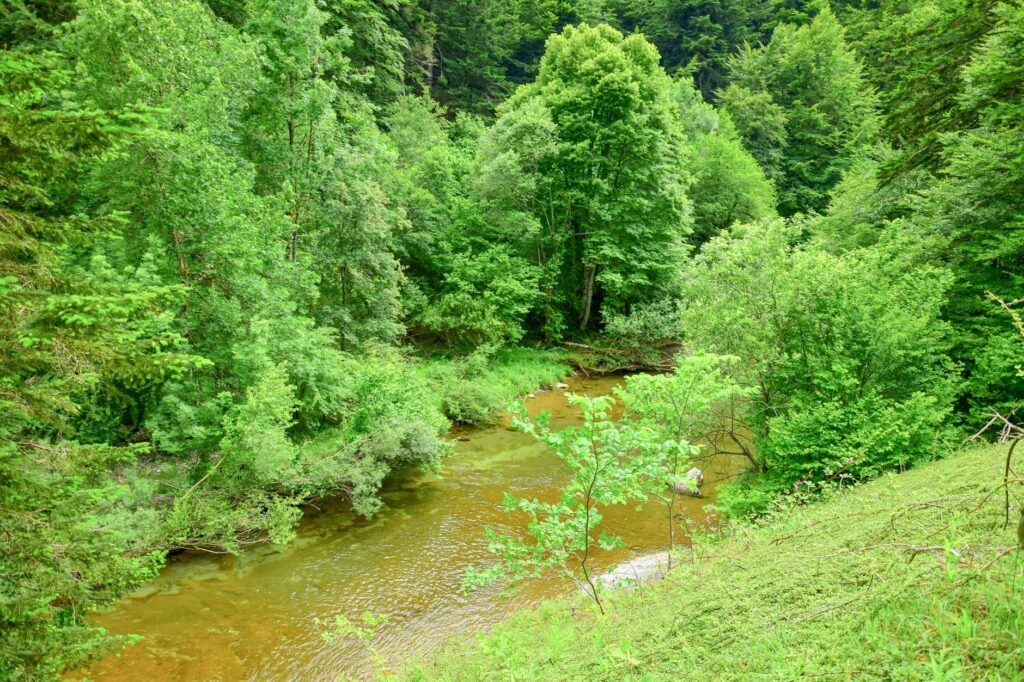
The terrain combines stretches of compacted earth, wooden boardwalks over wetland areas, and stone staircases worn down by centuries of use. Throughout the route, riparian vegetation—composed of alders, willows, and ferns—contrasts sharply with the severity of the schist and dark granite of the walls. This duality between wild nature and monumental military architecture defines the identity of the landscape, turning every walk into a living lesson in geography and history.
Military architecture and the evolution of towers
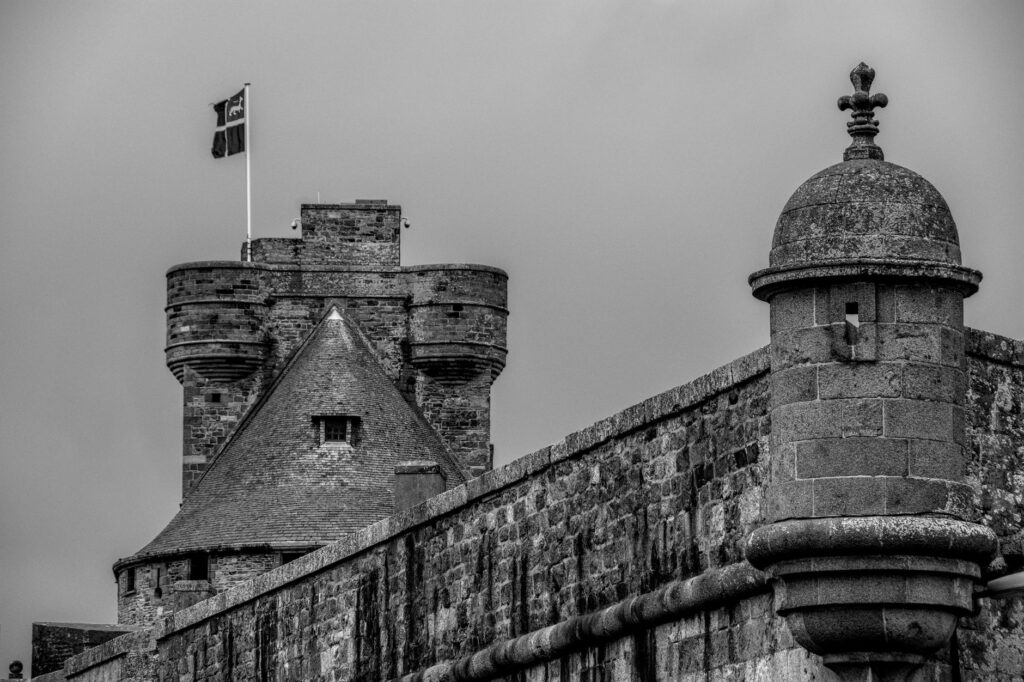
The castle of Fougères is not a structure built in a single phase, but an architectural palimpsest narrating the evolution of poliorcetics from the 12th to the 15th centuries. The earliest structures were made of wood and earth, but successive wars forced feudal lords to rebuild them in solid stone. Visitors exploring the interior can observe the clear transition between massive cylindrical towers, designed to withstand the impact of early gunpowder projectiles, and curtain walls equipped with complex embrasures for crossbows.
Three major defensive towers stand out in particular: the Melusine Tower, the Raoul Tower, and the Dwarves’ Tower. Each features an internal multi-level structure connected by steep spiral staircases, where it is still possible to sense the cold dampness of the stone and the original gloom. Stonemasons’ marks, precisely chiseled into the granite ashlar blocks, bear witness to the titanic effort of hundreds of medieval craftsmen who raised these massive structures with no tools other than animal traction and mechanical ingenuity.

The stone of Fougères does not shout of distant battles; it whispers the ancient patience of a people who learned to build unassailable refuges upon the damp earth of the river.
Daily life in the lower town and historic quarters
The urban layout of Fougères is traditionally divided into two complementary worlds: the upper town, with a more modern and administrative layout, and the lower or medieval town, situated at the foot of the castle. It is in the latter that time truly seems to have stopped. Cobblestone streets are flanked by timber-framed houses, locally known as à pans de bois, whose upper overhanging floors narrow to maximize light in the tight public pathways.
Strolling through the Place du Marchix or alongside the ancient churches of Saint-Sulpice and Saint-Léonard connects the visitor with the guild atmosphere of the Middle Ages. Here operated the tanners, weavers, and dyers who brought prosperity to the town through the wool and linen trade. The artificial canals and public washhouses, perfectly preserved by the river, illustrate how the community harnessed the river flow for early industrial development, integrating human activity with the natural setting.
Chateaubriand and the romanticism of the Breton landscape
This melancholic, forested landscape did not go unnoticed by the great intellectuals of French literature. François-René de Chateaubriand, father of romanticism and a native of nearby Saint-Malo, found an inexhaustible source of inspiration in these interior lands. In his memoirs and writings, he described Brittany as a land where the past never truly dies, but remains latent beneath the morning mist and the dense foliage of its ancestral forests.
Today’s traveler can retrace the steps of those romantic writers by following trails ascending towards the Forest of Fougères, a woodland mass spanning over 1,600 hectares located a few kilometers from the urban center. This forest, crossed by long-distance trails, preserves megalithic dolmens and Neolithic menhirs reminding visitors that human history in this corner of France extends far beyond feudal the Middle Ages.
Practical information for the adventure traveler
To fully enjoy the experience in Fougères without rush, planning a minimum stay of two full days is recommended, combining one day dedicated to the fortified complex and another to the surrounding natural trails.
- How to get there: The town is located about 50 kilometers northeast of Rennes, the regional capital. It is accessible by bus via regular lines from Rennes or by private vehicle via the A84 highway.
- Recommended season: The spring months (May and June) and early autumn (September) offer ideal temperatures for walking, with lower tourist numbers and river landscapes at their chromatic peak.
- Equipment: Hiking footwear with good non-slip soles is essential, as the medieval cobblestones and riverside paths can become slippery with the area’s characteristic humidity.
- Accessibility: Due to the historical nature of the castle and the old town, featuring numerous slopes, stairs, and uneven floors, the visit presents significant limitations for people with reduced mobility.
Traveling slowly is not merely about moving at a low speed, but about allowing the territory to transform you at the pace set by its own geography.
A living legacy enduring through time
Fougères transcends the category of a simple tourist attraction to become a tangible testament to human resilience and the beauty of the European landscape. Walking its ramparts, listening to the steady murmur of the Nançon river, and getting lost in its timber-framed alleyways offers a much-needed pause in the fast-paced rhythm of the contemporary world. It is an invitation to rediscover the value of heritage on a human scale, where every stone tells a millenary story and every trail calls for further exploration.
Source in Diario del Viajero: The largest and best-preserved medieval fortress in Europe is in French Brittany: visiting it makes you feel like you’ve entered another century