Introduction to the Edge of the Planet and Steel Heritage
At the southernmost tip of the American continent, where the Andes mountain range plunges abruptly into the freezing waters of the Beagle Channel, a singular testament to engineering and Argentina’s penal history survives: the Southern Fueguino Railway, universally known as the End of the World Train. This narrow-gauge railway, located within Tierra del Fuego National Park, is far more than a contemporary tourist attraction. Its existence is deeply rooted in the complex and somber penal colonization of the region at the beginning of the 20th century, when geographic isolation transformed Ushuaia into the chosen destination for confining the nation’s most dangerous inmates.
Understanding the magnitude of this infrastructure requires looking back to 1902, the year a prison was established on Ushuaia Bay. To supply firewood and construction materials to the growing convict and military population, the prisoners themselves began laying rudimentary tracks into the surrounding forested valleys. This primitive route, popularly known as the convicts’ little train, expanded through decades of forced labor under extreme climatic conditions. Today, the heritage recovery of this railway corridor allows the contemporary traveler to journey through the very subantarctic landscapes that once bore witness to human suffering and resilience in absolute isolation.
Penal Origins and the Original Narrow-Gauge Layout
The construction of the Ushuaia prison and its railway network represented an unprecedented logistical challenge for the Argentine state. At a time when navigation south of the Strait of Magellan was perilous and sporadic, the self-sufficiency of the penal colony depended on the intensive exploitation of local natural resources. The Patagonian Andean forest, composed primarily of lenga, sour cherry, and Antarctic beech trees, was the sole source of heating and energy for the prison’s inhabitants.
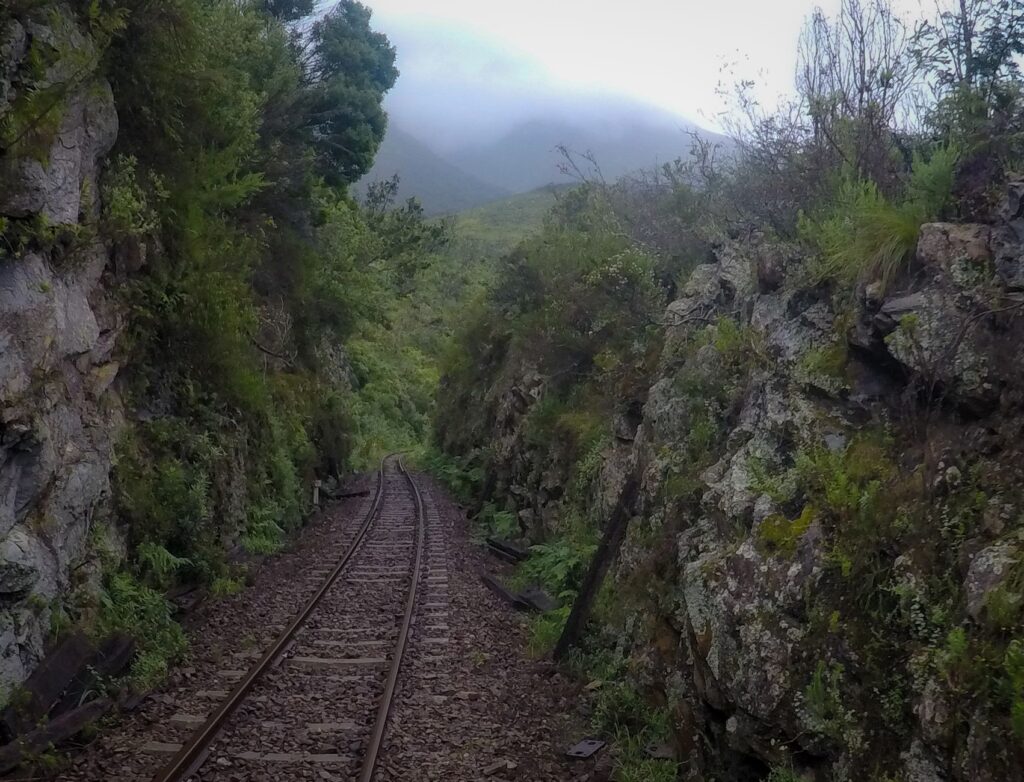
The inmates, equipped with rudimentary tools and exposed to sub-zero temperatures, snowstorms, and gale-force winds, laid the tracks foot by foot. The initial track gauge chosen was 500 millimeters, an extremely narrow width that facilitated the transport of heavy loads across marshy terrain, peat bogs, and steep slopes. The original steam locomotives pulled freight cars laden with logs descending from the slopes of Mount Susana to the prison workshops. This transport system not only sustained the survival economy of the colony but also formed an umbilical lifeline connecting the untamed heart of the island with the confinement center.
The southern railway did not originate as a recreational whim, but rather as the survival artery of a forgotten prison at the edge of the world.
Following the definitive closure of the prison in 1947 by order of President Juan Domingo Perón and the subsequent reorganization of the territorial government, the railway fell into deep abandonment. The tracks were gradually reclaimed by native vegetation, wooden structures deteriorated, and the harsh climate erased traces of the gauge. For nearly four decades, Ushuaia’s railway history seemed destined for oblivion, relegated to memories stored in yellowed photographs and chroniclers’ accounts.

Heritage Renaissance: From Ruin to 600-Millimeter Gauge
The turning point for the Southern Fueguino Railway arrived in the late 1980s, when a private initiative undertook the titanic task of rescuing the region’s railway heritage. The project was not a simple superficial restoration, but rather an integral reconstruction involving the partial redesign of the route to comply with strict tourist and environmental safety regulations, given that the new alignment skirted the boundaries of Tierra del Fuego National Park.
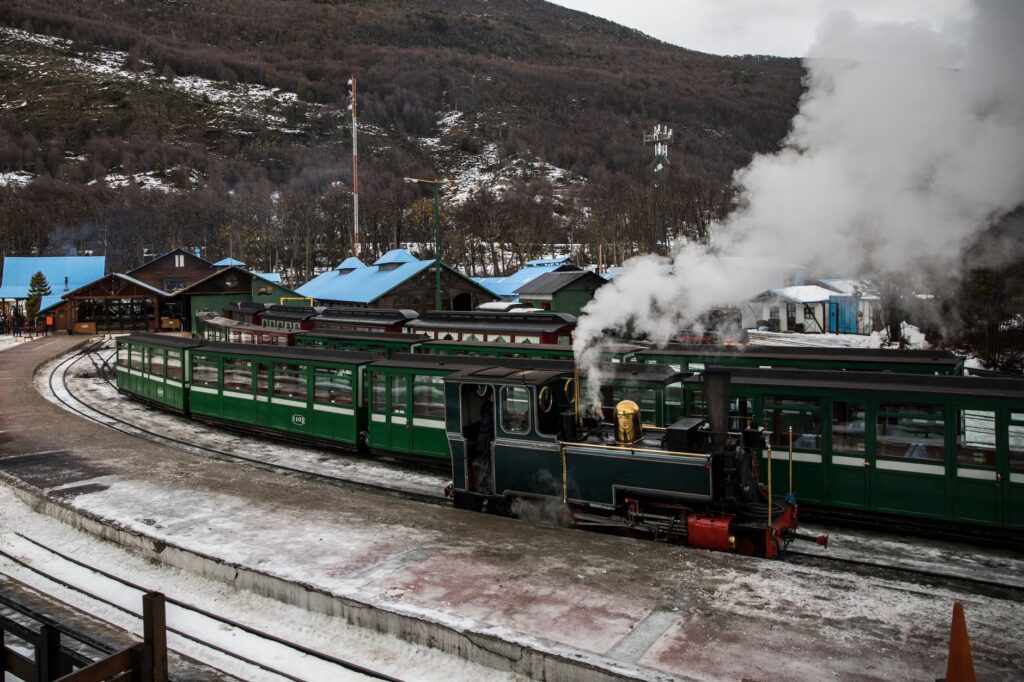
To ensure operational viability and improve passenger comfort, the promoters decided to slightly widen the gauge from 500 to 600 millimeters. This modification allowed for the import and manufacture of classic steam locomotives—featuring boilers fueled by oil and clean wood—faithfully emulating early 20th-century British and German industrial engines. Furthermore, glazed and heated passenger coaches were built, equipped with multilingual audio systems narrating the history of the prison and local geography along the route.
Engineering and Geological Challenges in the Pipo River Valley
Operating a railway at the southern tip of America entails severe geotechnical constraints. The Pipo River Valley, traversed by the current route, features soil composed primarily of peat bogs and glacial sediments with low bearing capacity. This demands constant maintenance of the ballast bed and periodic replacement of sleepers to prevent track geometry distortions caused by freeze-thaw cycles.

The current route runs for approximately seven kilometers from the End of the World Station to Macarena Station, penetrating the National Park. Along the way, the train crosses the Pipo River via metal bridges designed to withstand summer flood surges and winter ice accumulation. The engineers tasked with modernization had to lay tight-radius curves to navigate the steep elevation changes of the forested terrain without irreversibly altering the delicate ecosystem of mosses, lichens, and native trees characteristic of the nature reserve.
The Onboard Experience: Stations, Landmarks, and Subantarctic Scenery
The journey aboard the End of the World Train is a sensory immersion into the wild nature of Tierra del Fuego. The trip begins at the Main Station, located about eight kilometers west of Ushuaia. At this facility, passengers can observe steam locomotive preparation tasks, as engineers adjust pressure levels and lubricate the complex mechanisms of rods and pistons.
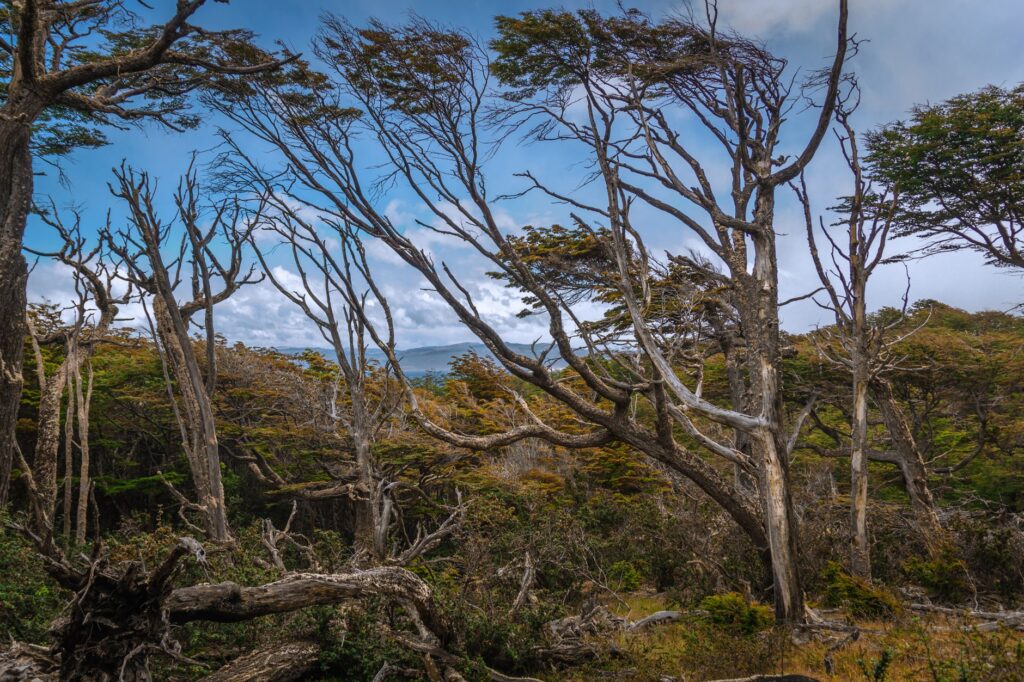
Upon departure, the formation slowly winds along the Toro Gorge, offering a privileged perspective on the remnants of forests logged by former prisoners. The sharply cut tree stumps, still visible among the vegetation, act as a silent reminder of past human effort. One of the mandatory stops along the route is Macarena Station, where visitors have time to disembark, observe a reconstruction of a native wooden camp, and view a waterfall formed by seasonal snowmelt.
Subsequently, the train formally enters the domains of Tierra del Fuego National Park, culminating its journey at El Parque Station. From this point, travelers can connect with land transport services continuing toward Lapataia Bay, thus completing the southernmost geographical journey possible on rails on the planet.
Logistical Planning, Accessibility, and Connectivity for the Global Traveler
To incorporate the Southern Fueguino Railway into a global travel itinerary, it is essential to understand its integration with Ushuaia’s transportation infrastructure. The city is connected primarily via Ushuaia-Malvinas Argentinas International Airport (USH), which receives multiple daily frequencies from Buenos Aires operated by flag carriers and low-cost airlines. From the urban center, access to the railway station is achieved via private transfer services, taxis, or tour agencies combining the train ticket with national park admission.
It is important to note that due to high seasonal demand during the southern summer months (December to March), advance ticket reservation is an essential requirement. Seating per carriage is limited to preserve the intimate experience of the journey and comply with load regulations for historic rolling stock. Additionally, station infrastructure features ramps and adapted coaches for passengers with reduced mobility, ensuring inclusion on this heritage route.
Planning a visit to the Fueguino frontier requires anticipation and respect for a fragile natural environment where the climate dictates the rules of railway operation.
Practical Tips for the Global Traveler
- Advance Booking: Secure your tickets weeks in advance during high season (southern summer) to guarantee availability for morning departures.
- Appropriate Clothing: Although carriages are heated, the climate in Tierra del Fuego is highly volatile; layering with windproof and waterproof garments is recommended.
- Air Connectivity: Verify connections with Ushuaia International Airport and allow a margin of at least 24 hours for potential weather-related rescheduling in Patagonia.
- Transport Combination: Coordinate return travel from El Parque Station through combined excursions that include access to the interior of Tierra del Fuego National Park.
Conclusion: Relevance and Memory on Patagonian Rails
The Southern Fueguino Railway transcends the category of a simple tourist attraction to establish itself as a valuable moving historical document. Through its heritage rescue, the line not only pays homage to the thousands of men who suffered confinement at the edge of America, but also offers a masterclass on how engineering and private enterprise can transform a vestige of pain into an engine of sustainable cultural and tourism development. Traveling today aboard its small carriages is, ultimately, an exercise in memory and contemplation before the untouched immensity of the forests at the end of the world.