The Alchemy of Sinis: When the Inland Sea Yields its Golden Treasure
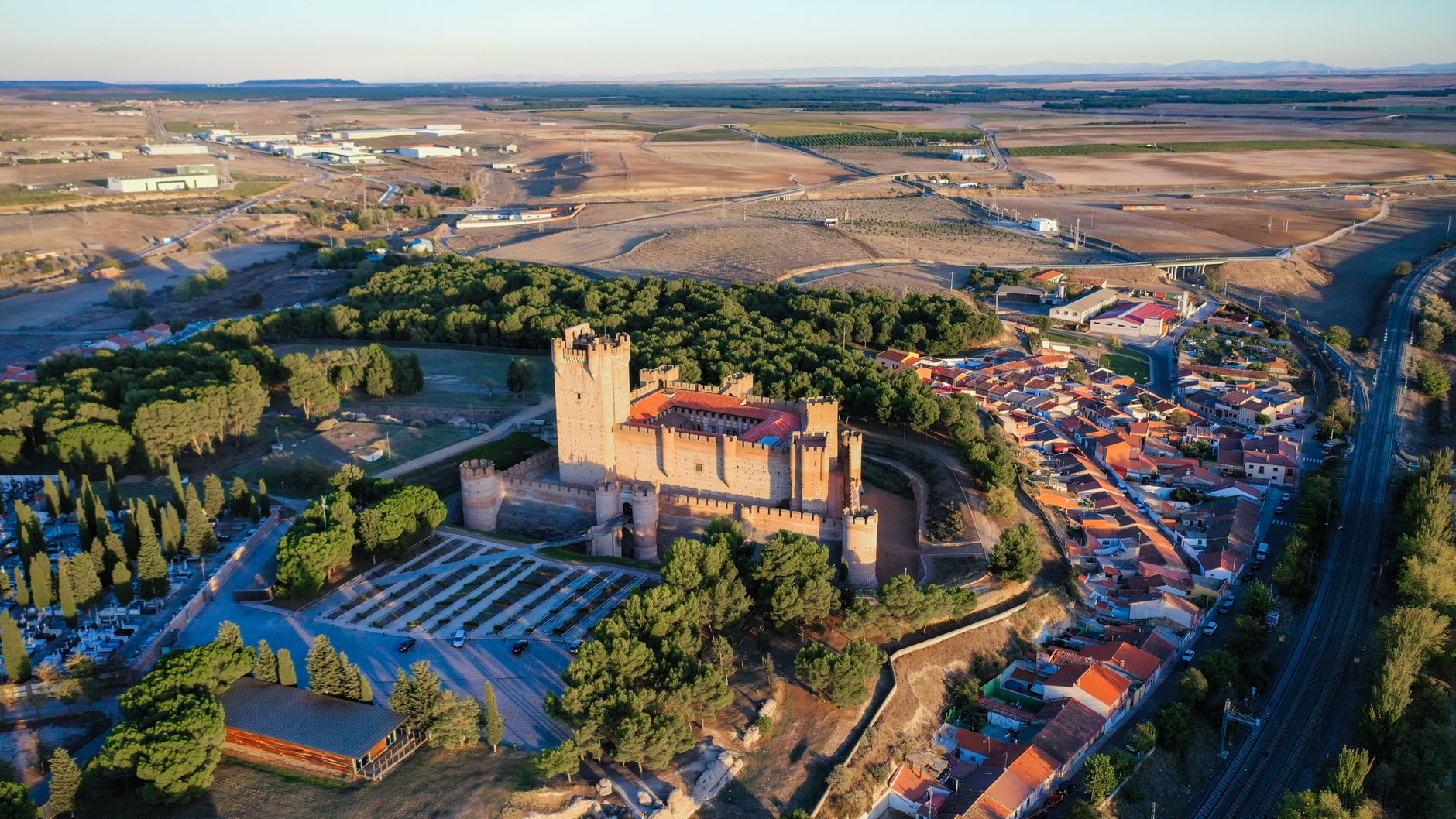
On the western edge of Sardinia, where the Sinis Peninsula breaks the fury of the Tyrrhenian Sea and transforms it into a vast mirror of brackish water, time seems suspended by the steady rhythm of the mistral wind. The Stagno di Cabras, one of the largest and most ecologically vibrant coastal lagoons in the Mediterranean basin, is far more than a physical landmark; it is the nourishing heart of an amphibious civilization. Within these shallow, sun-warmed shallows thrives the grey mullet (Mugil cephalus), an unassuming fish that, as late summer approaches, stars in one of the most revered culinary transformations on earth: the production of authentic bottarga di muggine.
Far removed from industrial food processing, the craft of turning the mullet’s paired egg sacs into dense, amber bars of savory, sea-bright richness relies on an unwritten, generational knowledge. The fishing families of Cabras regard this body of water as an extension of their own community, attentively monitoring the biological cycles of schools that migrate from the open sea to feed on the nutrient-dense silt of the lagoon. Here, culinary craft ascends to an act of territorial guardianship, safeguarding a meticulous practice that refuses to yield to modern shortcuts.
The hue of newly cured bottarga glows with a color palette shifting from bright orange to deep mahogany and liquid honey. Every piece constitutes a unique biological ledger—a pure concentrate of salt, sun, and maritime breeze introduced by Phoenician sailors nearly three thousand years ago and vigilantly protected by local guilds against modern culinary homogenization.
Phoenician Roots and Reed Memories: The Living History of the Lavoriero
To understand the depth of this delicacy, one must look south toward the ancient ruins of Tharros, perched at the tip of the peninsula. Phoenician navigators, seeking durable provisions for long voyages across unpredictable seas, discovered that salted and air-dried grey mullet roe could keep for months without spoiling, providing dense nourishment packed with essential minerals. The word itself, derived from the Arabic batarij (cured fish roe), reflects the ancient cultural crossroads that shaped the foodways of the western Mediterranean.
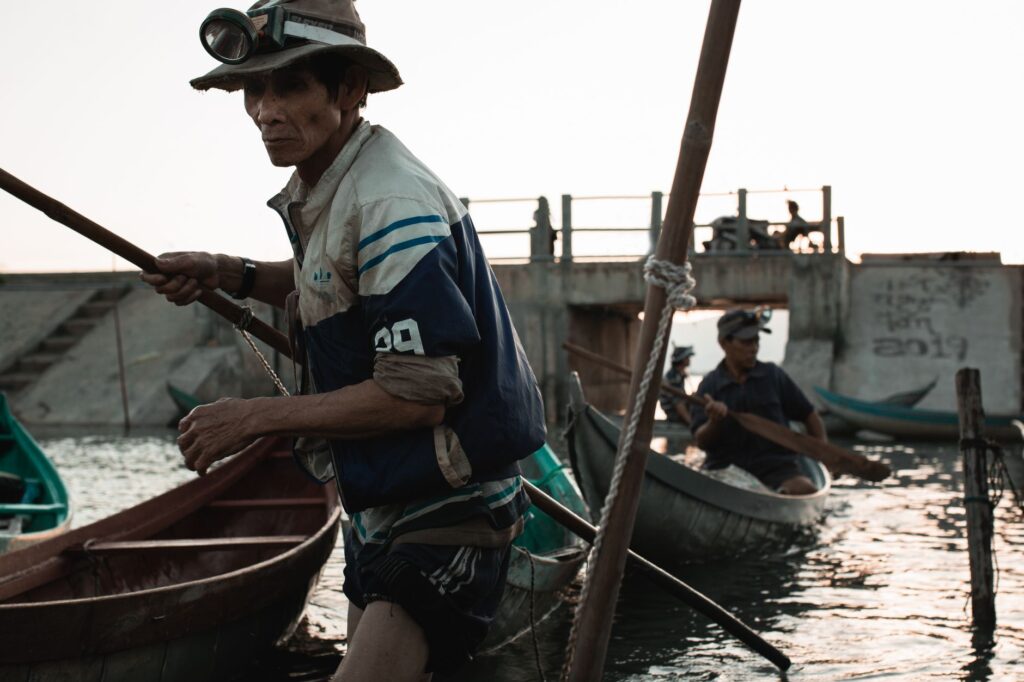
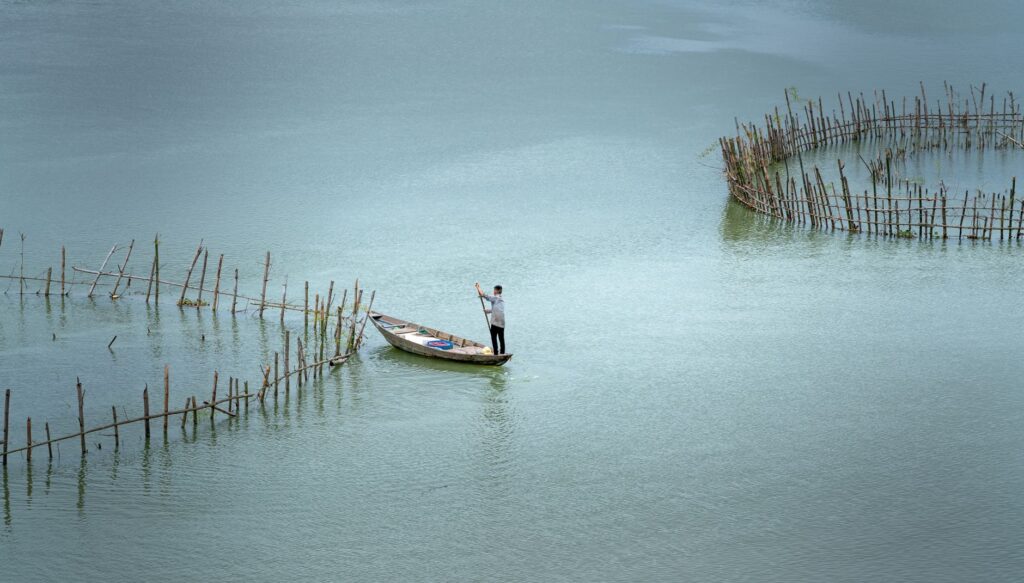
The operational center of this sustainable harvest remains the lavoriero: an intricate, fixed barrier system historically crafted from marsh reeds and wooden poles that works with the natural instincts of the fish. In August and September, mature females laden with ripe roe instinctively seek to leave the brackish waters and return to the oxygen-rich open currents of the gulf to spawn. The labyrinthine structure of the lavoriero allows water to circulate unimpeded while guiding adult mullets into designated collection chambers, ensuring a selective, gentle harvest based on size, health, and maturity.
The lagoon cannot be forced like a modern factory; it remains an unhurried conversation between the patience of the fisher, the tide, and the migratory call of the sea.
This vernacular engineering, seamlessly woven into the protected lagoon landscape, is still operated today by historic fishing cooperatives, most notably the Pontis guild. Traditional structural wisdom functions alongside strict community oversight that bans bottom trawling and mechanized extraction, ensuring that the fragile biological equilibrium of the wetland endures from one generation to the next.
The Ritual of the Workshop: Sea Salt, Wooden Boards, and Silent Pressure
The true craft of bottarga unfolds in the cool, shaded confines of Cabras’ traditional workshops—quiet spaces filled with the clean aroma of brine and seasoned pine. The first and most delicate operation is the cavatura: the surgical extraction of the two intact egg sacs joined by their natural apex. A single misstep with the blade would pierce the delicate outer membrane, releasing millions of microscopic eggs and ruining weeks of labor.
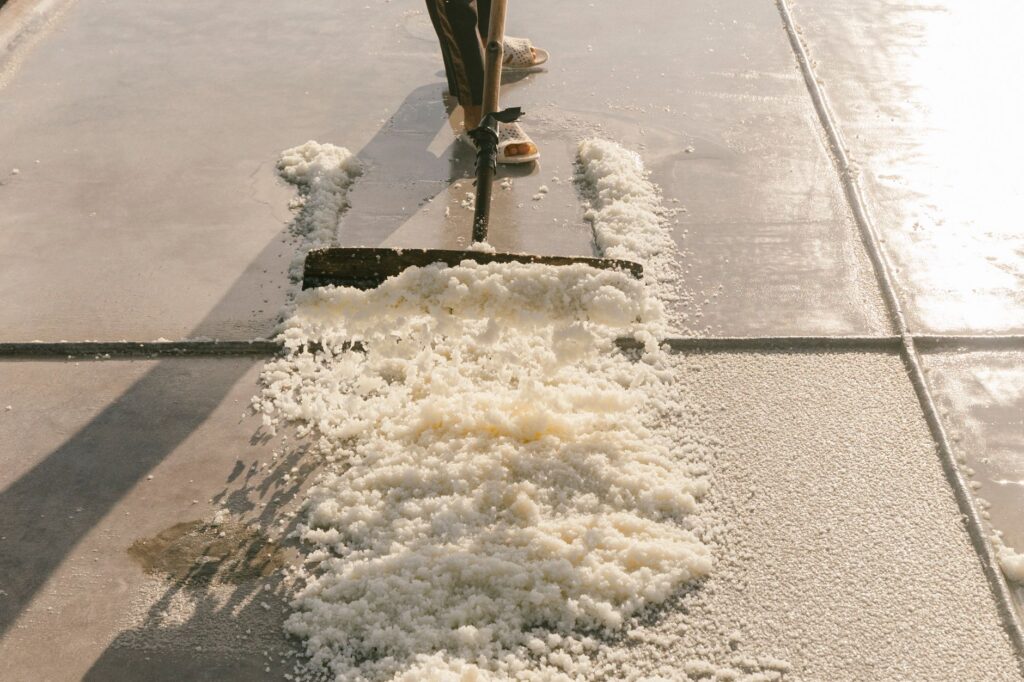
After being thoroughly rinsed in fresh, cold brine to remove any residual trace of blood, the twin lobes undergo salting. At this stage, master curers rely exclusively on untreated Sardinian sea salt, calibrating the exact amount not by digital scales, but through years of tactile experience, judging the thickness, moisture levels, and natural fat content of each individual sac.
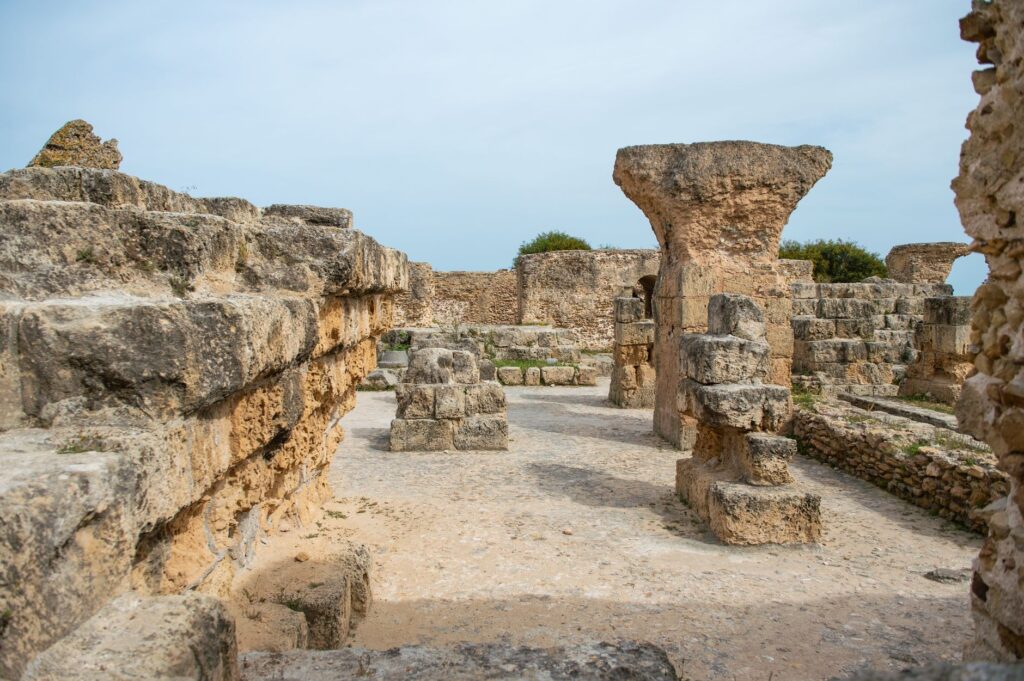
- Sorting and cleansing: Precise anatomical extraction without rupturing the membrane, followed by gentle cleansing in pure saline water.
- Manual dry-salting: Careful burial in natural sea salt crystals for a measured period of three to six hours.
- Timber pressing: Layering the salted lobes between untreated pine or poplar planks, weighted down with calibrated stones to expel moisture evenly.
- Air-curing: Natural maturation in well-ventilated drying rooms swept by prevailing mistral currents for ten to twenty-five days.
Pressing is a delicate balancing act. Unlike modern industrial imitations that rely on artificial heat chambers and aggressive hydraulic presses, the artisans of Cabras arrange the lobes between planks of untreated wood, applying gentle, progressive weight. The timber breathes, absorbing moisture slowly and allowing the roe to compact without crushing its delicate internal matrix.
Cured by the Mistral: The Invisible Signature of the Sardinian Climate
Following the pressing stage comes the most critical and weather-dependent phase: ambient air-drying. The bottarga slabs are suspended from timber rafters or laid across open drying racks in rooms where adjustable shutters capture the prevailing winds. The mistral—dry, cool, and infused with the aromatic wild herbs of the Mediterranean maquis, such as lentisk, myrtle, and rosemary—completes the curing process naturally.
Over two to three weeks, the pale, milky color of the fresh roe deepens into its signature glowing amber. Its interior tightens into a firm yet supple texture, losing moisture while concentrating the marine oils and omega-3 fatty acids that provide its distinctive melting mouthfeel. Curing masters inspect every piece daily, testing flexibility and density by hand; only when the bar yields gently without cracking is it declared ready for the table.
An authentic bar of Cabras bottarga must never feel dry as stone or slick with surface oil; it should yield to a sharp blade like cool beeswax and dissolve cleanly across the palate.
This natural reliance on ambient conditions explains why true artisan bottarga remains inherently seasonal and finite in quantity. No two years yield the same profile: spring precipitation levels, summer water salinity, and the temperature curve of autumn all leave their sensory imprint on the roe, giving Cabras bottarga a terroir-driven complexity comparable to that of vintage estate wines.
The Organoleptic Profile: Iodized Notes, Dried Nuts, and Silky Texture
Tasting prime bottarga from Cabras is a revelatory sensory experience. Sliced thinly along its length with a sharp, straight blade, the cut reveals a compact, translucent interior free of air pockets or harsh salt crystals. Its initial aroma is never aggressively fishy; instead, it offers notes of pristine sea air, dried almond skins, sweet citrus zest, and a subtle mineral undertone.
On the palate, the experience evolves in three distinct movements:
- First Impression: An elegant, mouth-coating salinity that awakens the palate without harshness, carried by a rich, waxy texture that softens with body heat.
- Mid-Palate: Complex notes of toasted hazelnut, clarified butter, wild sea greens, and a faint natural sweetness inherent to lagoon-fed mullet roe.
- Finish: An exceptionally long, noble-bitter persistence that leaves a clean, umami-rich impression lingering on the tongue.
This depth explains the vast difference between authentic whole-lobe bottarga and pre-ground commercial powders sold in small jars, which often suffer from harsh dehydration and rely on frozen roe imported from distant industrial fisheries.
Liturgy at the Sardinian Table: From Peasant Mortar to Haute Cuisine
In the home kitchens of Cabras and the rustic trattorias across the Oristano lowlands, bottarga is never exposed to direct, blistering heat. High temperatures destroy its delicate volatile compounds and render its fats unpleasantly bitter and metallic. Instead, it is treated as a finishing element, enjoyed raw or warmed gently through residual contact with freshly cooked food.
The Pristine Crudo Pairing
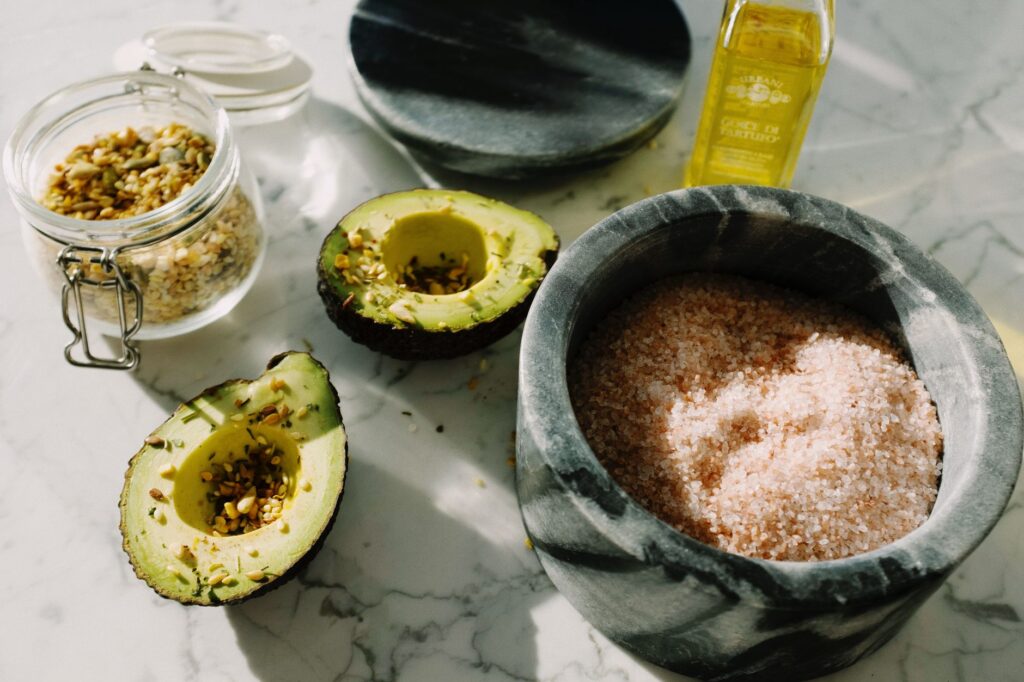
The purest traditional way to appreciate its qualities is thinly sliced with a truffle plane over crisp ribbons of raw Sardinian spiny artichoke (Carciofo Spinoso di Sardegna PDO), dressed with a single thread of local extra virgin olive oil made from Semidana or Bosana olives. The interplay between the crunchy vegetable bitterness and the rich, savory depth of the cured roe defines Sardinian coastal balance at its best.
The Icon: Spaghetti alla Bottarga
The definitive pasta dish requires uncompromising technique beneath its simple guise. Coarse bronze-die spaghetti is boiled in lightly salted water. In a warm pan off the burner, a lightly bruised clove of garlic steeps in high-quality extra virgin olive oil, emulsified with a splash of starchy cooking water. The al dente pasta is tossed vigorously off the heat, generously dusted with freshly grated bottarga to create a creamy sauce, and crowned with paper-thin shavings for textural contrast.
The Heritage Match: Vernaccia di Oristano
No discussion of Cabras bottarga is complete without its traditional wine partner: Vernaccia di Oristano DOC. This historic, golden-hued wine, aged under a veil of flor yeast in unfilled oak and chestnut casks for years, develops complex oxidative notes of toasted walnut, dried orange peel, and almond blossom that echo the rich, briny complexity of cured mullet roe perfectly.
Lagoon Resilience: Sustainability, Climate Change, and Community Fishing
Today, this ancient maritime tradition faces unprecedented environmental pressures. The ecological balance of the Stagno di Cabras relies on careful equilibrium between freshwater inflows from inland streams and tidal exchange through sea channels. Rising summer water temperatures and growing populations of predatory cormorants have tested the resilience of local fish stocks.
In response, the Nuovo Consorzio Cooperative Pontis has embraced forward-looking biomonitoring programs alongside traditional quota systems. Local fishers serve as active environmental stewards, dredging silted channels to prevent stagnant, oxygen-poor zones, clearing tidal mouths, and preserving shoreline reed beds to curb erosion.
Furthermore, slow food recognition and ongoing efforts toward a formal Protected Designation of Origin (PDO) status provide critical defenses for local craftspeople against commercial counterfeits that exploit the famous name while using imported, inferior raw materials.
Traveler’s Notebook and Pantry: Practical Guide to Experiencing Cabras
For culinary travelers planning a visit to the Oristano coast, experiencing this tradition requires moving in sync with the seasonal life of the lagoon.
When to Visit and What to See
The ideal window runs from late August through late October, when the lavorieri are actively operating at sunrise and curing rooms begin filling with fresh harvest. The mild autumn weather also offers comfortable conditions for exploring the nearby archaeological ruins of Mont’e Prama and the coastal promontory of Tharros without summer crowds.
How to Choose Authentic Bottarga
- The Natural Apex: Authentic artisan bottarga from Cabras typically retains a small piece of cartilage tissue at the top, confirming manual extraction of the paired lobes.
- Color Clarity: Avoid bars with dark, irregular blotches or excessively brittle edges; look for an even, warm amber tone that glows slightly against backlighting.
- Supple Density: When gently pressed with a thumb, the center should yield slightly without leaving an indent or feeling dry and hollow.
- Clear Provenance: Ensure labeling explicitly confirms wild catch from the Gulf of Oristano or Cabras Lagoon by registered local artisanal cooperatives.
Proper Home Storage
An unopened whole lobe keeps in prime condition for over a year when stored in a cool, dark pantry. Once sliced, wrap the exposed cut tightly in parchment paper and store it in the vegetable crisper of the refrigerator. Always bring the slab to room temperature for thirty minutes before slicing to allow its natural aromatics and oils to shine fully.