
The Persistence of Historic Sound Within Stone Walls
Silence inside a Castilian cathedral is never absolute. Beneath rib-vaulted ceilings and between ashlar masonry walls, the air stores centuries of acoustic resonance. Yet for decades, a vast share of the Iberian Peninsula’s organ heritage remained mute, reduced to ornamental scenery of polychrome wood and silent pipes. Today, an elite group of master organ builders, restorers, and musicologists is leading an unprecedented technical and aesthetic renaissance, breathing life back into century-old instruments that defined the golden age of Spanish music.
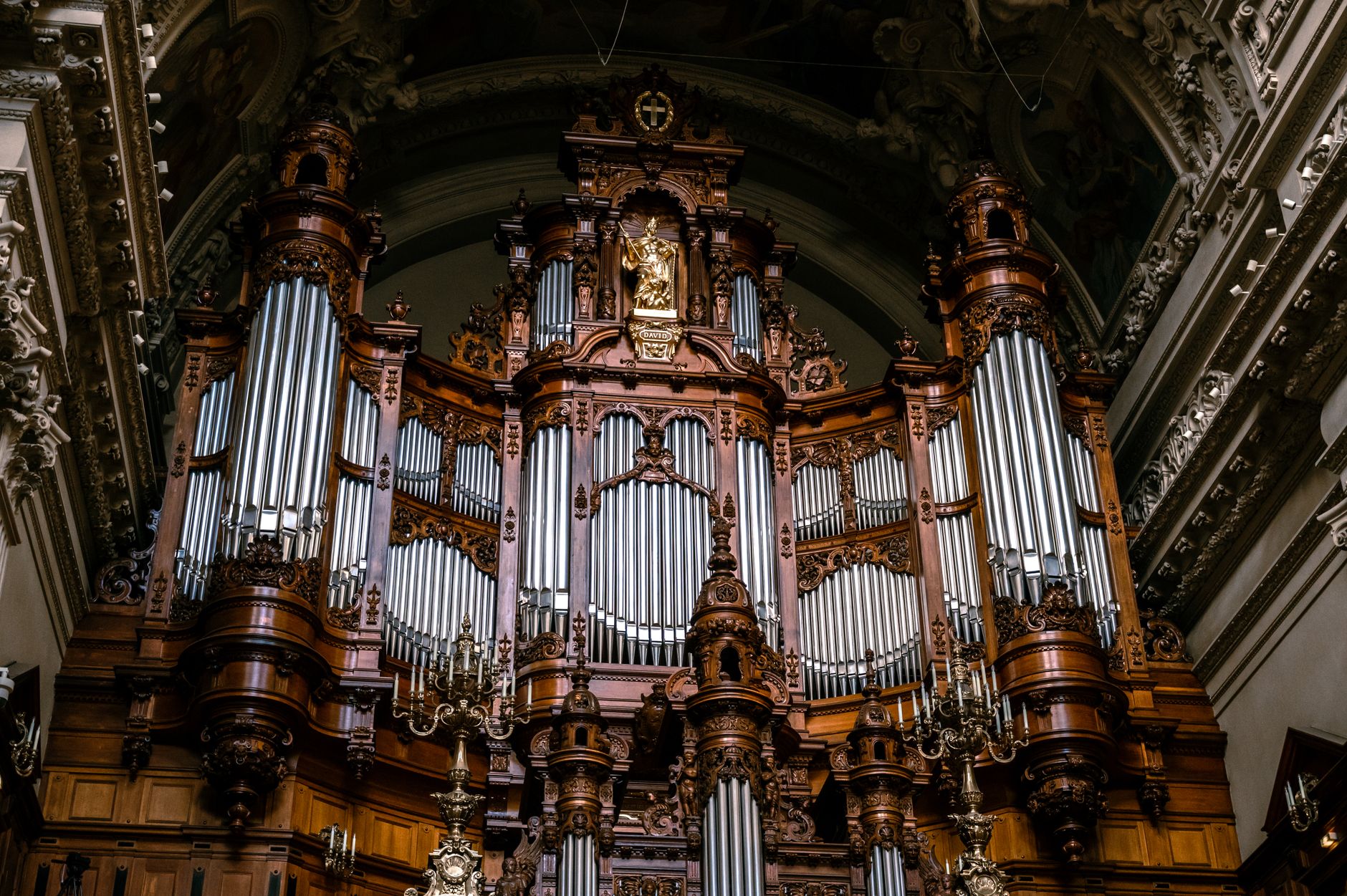
This endeavor is far more than a nostalgic exercise in heritage preservation; it is a complex scientific and artistic intervention. Restoring a historic organ requires decoding the acoustic physics conceived by master builders during the seventeenth and eighteenth centuries, understanding the chemistry of original lead-tin alloys, and repairing the intricate woodworking of wind chests and bellows. Castile and León holds one of the richest organ legacies in the world, a three-dimensional sound archive that is once again vibrating thanks to the convergence of nearly extinct crafts and rigorous conservation methodologies.
The Sacred Geography of Restoration Workshops
The revitalization process for these musical colossi begins far from major urban centers, inside specialized workshops where time moves at a different pace. Here, artisans work with hand tools remarkably similar to those used three hundred years ago, complemented by non-invasive diagnostic technology. Craftsmen examine every piece of oak, walnut, or Aleppo pine, assessing damage caused by woodworms, humidity, and misguided interventions from the twentieth century, when many instruments were electrified or altered in ways that compromised their original architectural integrity.

Working on a baroque organ demands absolute respect for historical materiality. The goal is not to modernize, but to restore the artifact’s functional and aesthetic wholeness. Each pipe is meticulously cleaned, recast if structurally compromised while strictly respecting the primitive alloy, and tuned according to the historical temperaments used by period composers like Antonio de Cabezón or Francisco Correa de Arauxo. This rigorous approach transforms contemporary workshops into true centers of applied musicological research.
Restoring a historic organ is not about returning an object to the past, but about allowing the past to speak once again with its own voice in the space for which it was conceived.
The Architecture of Horizontal Trumpetry
One of the most distinctive and recognizable features of the Iberian organ is the horizontal trompetería de batalla, or battle trumpet array. Unlike Central European instruments, where pipes are arranged internally and uniformly, the Spanish school projected reed pipes outward, mounting them horizontally across the building facade like acoustic cannons. This arrangement served both aesthetic and theatrical purposes, as well as an acoustic necessity to project sound with force and brilliance down the center of vast cathedral naves.
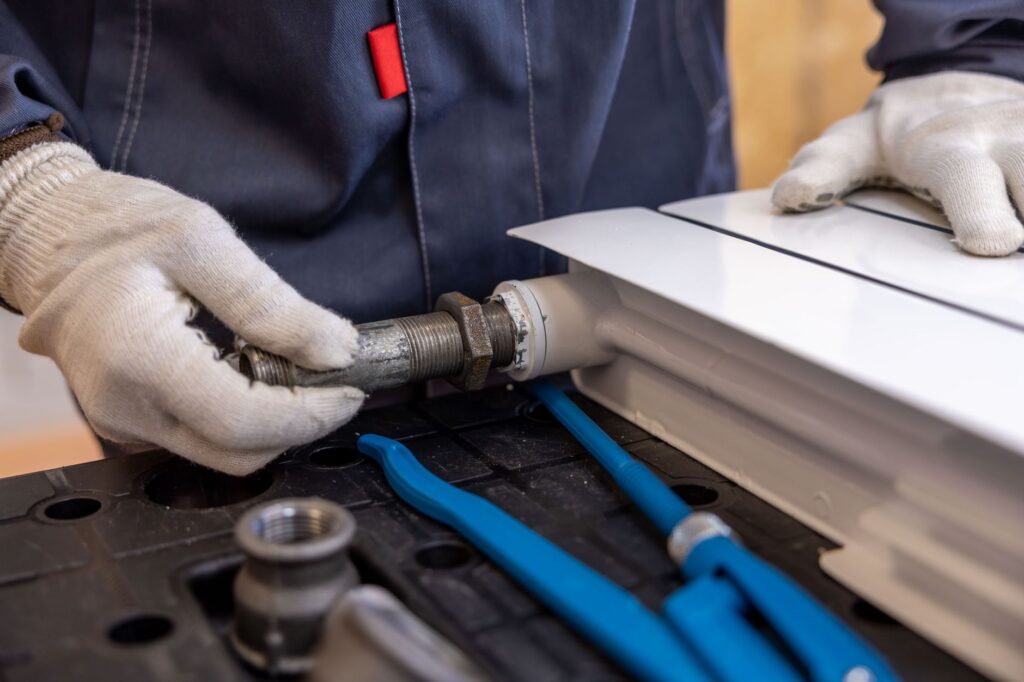
Constructing these trumpets requires extraordinary manual dexterity. The metal sheet, composed of a precise ratio of tin and lead, is hand-planed to the desired millimeter thickness, rolled around a wooden mandrel, and soldered with pure tin using fire-heated copper soldering irons. Any imperceptible irregularity in the taper of the pipe or the brass tongue alters the timbre and pitch. Master organ builders tune these stops entirely by ear, searching for that exact point of vibration where the metal comes alive and projects its characteristically sharp, incisive brilliance.
The Wind Chest: The Mechanical Heart of the Instrument
Hidden beneath the keyboards, out of sight from the audience, lies the wind chest: a highly complex wooden box where compressed air is distributed to the appropriate pipes whenever the organist depresses a key. This intricate system of channels, valves, trackers, and pallets constitutes a masterpiece of precision woodworking. In historic Iberian organs, wind chests are typically constructed from fine hardwoods capable of withstanding constant changes in humidity and temperature without warping by even a tenth of a millimeter.
Restoring a wind chest requires disassembling hundreds of tiny components piece by piece, replacing the lambskins and hemp threads that ensure pneumatic tightness. An imperceptible air leak in the chest ruins the wind pressure across an entire stop. Consequently, work in this section is meticulous, almost surgical. Artisans spend weeks adjusting the tension of brass springs and the tactile smoothness of the keyboard action, seeking the perfect balance between the mechanical pressure exerted by the player’s finger and the immediate response of the wind.
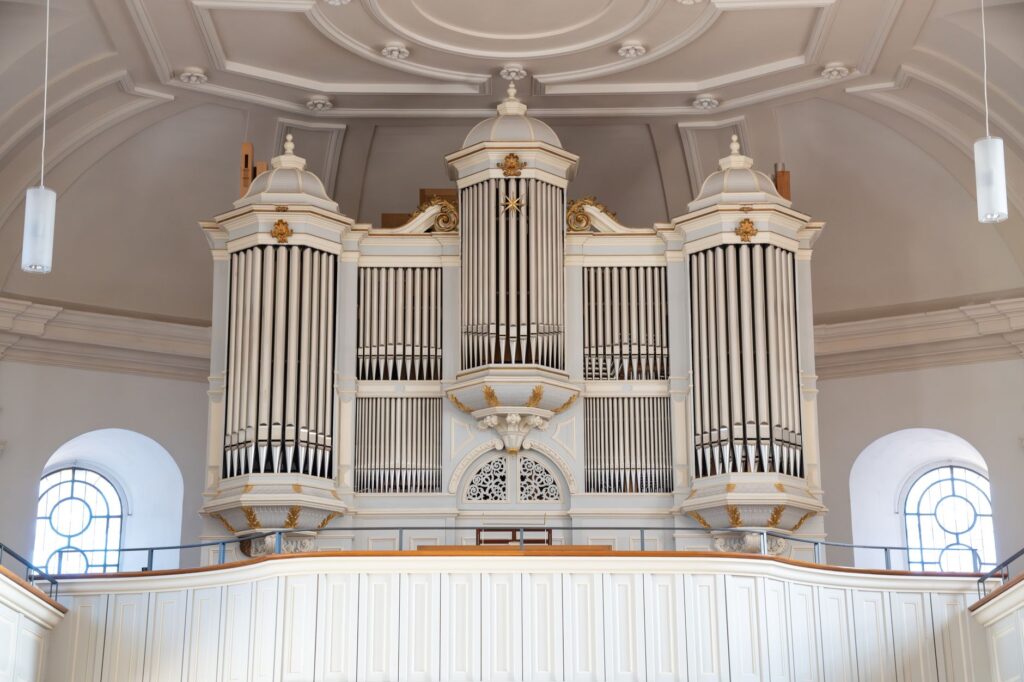
Bellows and the Respiration of the Instrument
For centuries, the wind that fed these organs was generated through the physical effort of human pumpers operating large wooden levers to force air into storage reservoirs. Today, although most instruments incorporate silent electric blowers, restorers insist on preserving and maintaining the original manual pumping systems. The motivation is strictly acoustic and musical: air generated by an electric motor is perfectly steady, whereas manual supply possesses a slight elasticity and flexibility that grants the sound a unique organic quality.
This subtle, real-world oscillation in air pressure endows the music with a natural respiration, akin to human singing or the performance of acoustic wind instruments. Master organists invited to inaugurate these restored instruments deeply value this tactile quality of the air, which turns performance into an intimate collaboration between the musician, the machine mechanics, and the temple acoustics.
Patronage, Institutions, and Heritage Sustainability
The recovery of this monumental sound heritage would be impossible without a complex web of collaboration between cathedral chapters, public administrations, private foundations, and universities. In Spain, the Spanish Cultural Heritage Institute (IPCE) and regional cultural ministries have driven specific master plans for the inventory, protection, and restoration of historic organs. However, the challenge extends far beyond the initial technical intervention; it requires continuous maintenance plans and the training of new generations of organ builders.
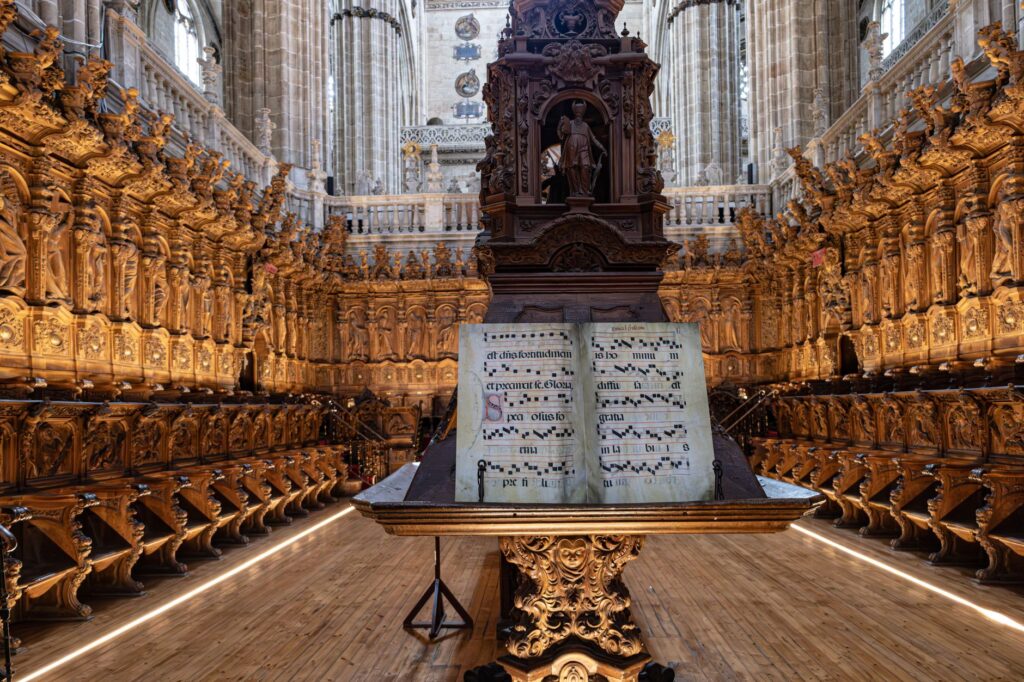
A shortage of specialists remains one of the greatest risks to the continuity of this craft. Today, European workshops also function as high-specialization academies where young artisans learn acoustic woodworking, historical metallurgy, and music theory. Ensuring the sustainability of these workshops guarantees that the heritage will not fall into neglect once more and that cathedrals will remain living spaces for collective creation and listening.
Contemporary Dimensions: Concerts, Research, and Cultural Tourism
A restored organ ceases to be a silent museum piece and becomes a premier cultural attraction. International early music festivals and organ concert series draw performers and enthusiasts from around the globe each year to cities like Salamanca, Segovia, Burgos, and León. These events not only stimulate cultural tourism in Spain’s interior but also place Castilian cathedrals squarely on the global map of musical excellence.
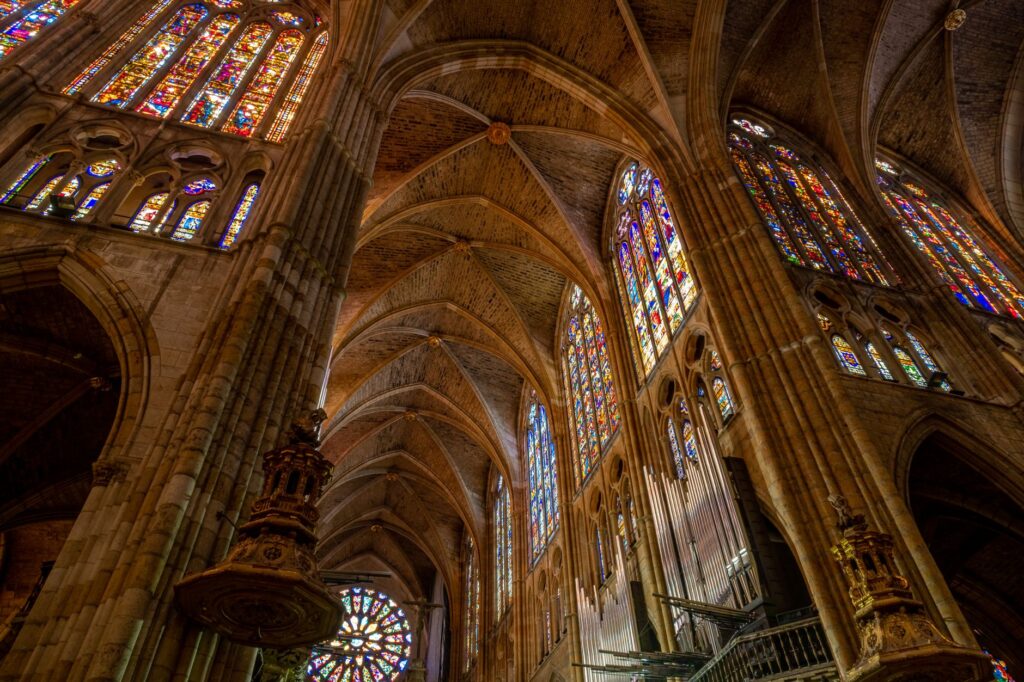
Furthermore, musicological research advances hand-in-hand with restorations. Analyzing tablatures found in chapter archives allows scholars to unearth previously unknown works by sixteenth- to eighteenth-century composers, performed today with the precise timbre and acoustic criteria for which they were written. Thus, Castile’s sonic past projects into the future, proving that heritage conservation is a dynamic act of intellectual and sensory creation.
Listening to an Iberian baroque organ in its original setting is to experience the pinnacle of a civilization that entrusted wood and metal with the task of moving the senses and transcending the earthly.
Practical Information for Travelers and Music Lovers
Planning a journey through the organ heritage of Castile and León requires checking cultural agendas managed by dioceses and music festivals, as access to choir stalls and galleries is generally restricted outside of worship hours or scheduled concerts.
- Recommended Routes: The triangle formed by the cathedrals of Segovia, Valladolid, and Burgos offers some of the finest examples of Castilian Renaissance and Baroque organ building.
- Featured Festivals: The León Province Organ Cycle and the International Organ Festival of León Cathedral typically run between July and October, drawing world-class organists.
- Workshop Visits: Although most artisan workshops are private workspaces, institutions such as the Castile and León Cultural Heritage Foundation occasionally organize open doors days and temporary exhibitions focused on the restoration process.
- Visitor Etiquette: Because these are active places of worship, visitors are kindly requested to maintain silence during performances and follow conservator guidelines when accessing gallery and choir areas.
Epilogue: The Future of a Millennial Voice
The renaissance of Iberian organs proves that cultural heritage preservation is not a static task, but a permanent dialogue between matter and spirit. In Castilian workshops, the sound of the past is reconstructed with micrometric patience, using files, soldering irons, and fine woods to defy oblivion. Every time an organist depresses the keys of a newly restored instrument and air sweeps through the horizontal trumpetry, the stone walls tremble and cathedrals reclaim, fully intact, their highest and most intricate sonic memory.