Introduction to Northern Spain’s Metric Gauge Network
Spain’s Cantabrian coast is a territory of abrupt geographical contrasts, where the foothills of the Cantabrian Mountains plunge almost vertically into the Bay of Biscay. Across this landscape of deep river valleys, rugged cliffs, and dense forests, overland transport has historically posed a monumental challenge to civil engineering. Unlike the vast Iberian-gauge or standard-gauge networks connecting Spain’s central plateau, the northern strip has traditionally relied on a singular infrastructure: the narrow-gauge railway. This network, a direct heir to the 19th-century mining and industrial revolution, stands today as a fascinating testament to technical resilience and an indispensable artery for both local mobility and tourism.
Far from the mass flows of the country’s high-speed rail corridors, the historic FEVE network—now integrated under the management of Adif and Renfe—operates as a low-speed system of immense strategic and scenic value. Understanding its operation requires delving into an infrastructure that defied topographic logic with impossible curves, endless tunnels, and metallic bridges suspended over river gorges. This report examines the technical, historical, and operational realities of the line linking Bilbao and Ferrol, uncovering the core mechanics of a journey where time acquires an entirely different dimension.
Industrial Genesis and the Topographical Challenge of Narrow Tracks
The implementation of the one-meter (1,000 mm) rail gauge in northern Spain was not driven by aesthetic whims, but by rigorous economic and geological necessity. At the end of the 19th century, the intensive extraction of coal and iron ore deposits across the Asturian and Cantabrian basins demanded an efficient evacuation system toward the Cantabrian ports. Engineers of the era faced terrain utterly impassable for heavy conventional-gauge convoys. The metric gauge offered a much tighter turning radius, permitting winding layouts that clung to mountain slopes at a fraction of the excavation costs.
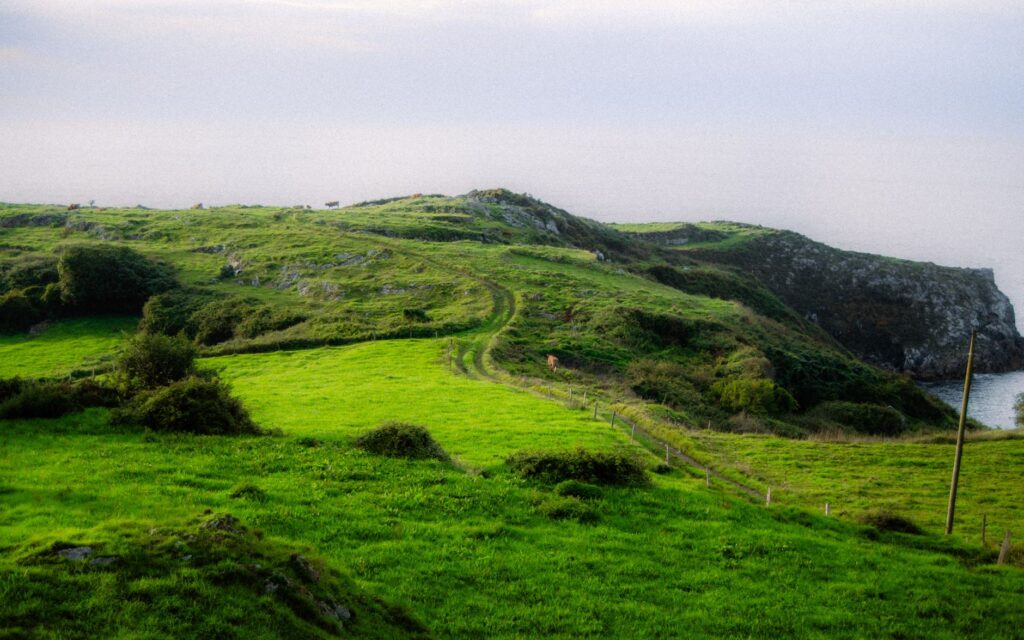
However, this geometric advantage translated over time into a chronic operational limitation. Steep gradients and sharp turning angles preclude the operation of heavy-freight trains or high speeds. Every kilometer of track is punctuated by unstable slopes, vulnerable to landslides caused by the region’s intense rainfall. The infrastructure demands intensive, continuous maintenance, with crews patrolling the alignment daily to prevent erosion from collapsing embankments or overwhelming subterranean drainage systems.
Rolling Stock: The Evolution of Diesel Traction on Metric Rails
Unlike the electrified networks dominating the Mediterranean corridor or the central plateau, a vast portion of northern Spain’s narrow-gauge network maintains sections where diesel traction remains the only viable alternative. Historically, steam locomotives gave way to iconic diesel units such as the 2400 and 2700 series, engineered specifically to handle the severe profiles of the northern coast without compromising the structural safety of the track.
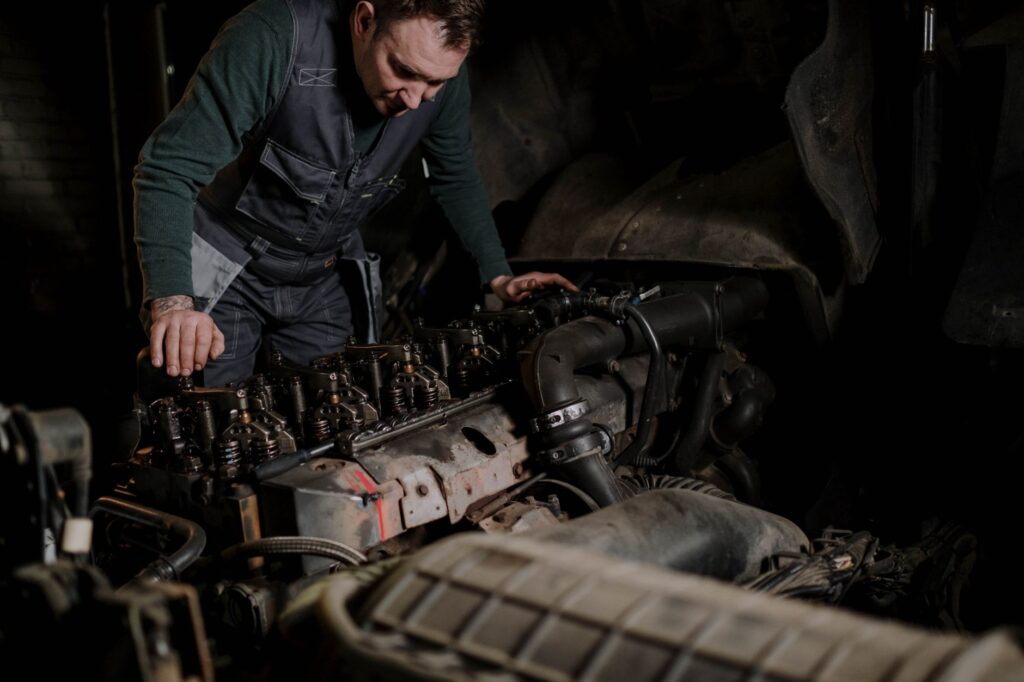
Railway workshops located in strategic hubs like El Berrón in Asturias or Balmaseda in Biscay serve as the beating heart where the operational lifespan of this unique rolling stock is extended. Mechanical engineers must contend with a scarcity of standardized replacement parts, frequently fabricating custom components to keep units running after decades of uninterrupted service. This technological reliance endows the line with a quasi-artisanal character, where electronic diagnostics coexist with traditional mechanical expertise.

Intermodality and Public Service in the Face of Rural Depopulation
The true value of northern Spain’s narrow-gauge railway lies not merely in its tourist appeal, but in its role as a social backbone for dozens of rural hamlets and coastal towns isolated from major multi-lane highways. For many residents living in enclosed valleys across Cantabria, Asturias, and northern León and Palencia, the train represents the sole reliable public transport option for accessing healthcare, educational, and administrative centers.
Nevertheless, the line faces severe demographic and budgetary challenges. The ongoing depopulation of rural areas steadily diminishes daily passenger numbers, prompting complex debates over the financial sustainability of the service. Public authorities strive to balance economic viability with the obligation to guarantee territorial cohesion, implementing timetables tailored to local students and workers, alongside subsidized fares designed to encourage ridership over private road transport.
El Transcantábrico: When Transport Transforms Into Luxury Travel
At the polar opposite of commuter and regional services lies the tourist facet of the infrastructure: El Transcantábrico. Conceived in the 1980s as Spain’s first luxury tourist train, this convoy mimics the aesthetic of interwar European grand express trains while adapting to the strict clearance gauge constraints of the metric track.
The lounge cars, finished with fine woods and modernist decorative elements, stand in stark contrast to the modest operational reality of the tracks they traverse. Operating the journey requires millimeter-level logistical synchronization. Because the line shares alignment with freight and regional services, Adif’s traffic dispatchers must slot the tourist convoy into paths without disrupting ordinary schedules. At night, the train halts in secondary stations to ensure passenger comfort, avoiding the vibrations and noise of steep gradient segments.
“Traveling along northern Spain’s metric gauge is not an exercise in speed, but in geographical restitution; the train forces us to view the landscape with the patience of those who understand that mountains are not conquered, but skirted.”
Invisible Civil Engineering: Viaducts, Tunnels, and the Battle Against the Sea
Maintaining the railway cornice requires monumental structural engineering works that largely go unnoticed by the casual traveler. Across the more than six hundred kilometers separating the Basque Country from Galicia, the track cuts through thousands of tunnels hand-excavated in the late 19th and early 20th centuries. Many of these subterranean passages suffer from permanent water infiltration, requiring continuous renovation of lining systems and the installation of drainage channels to prevent winter ice formation.
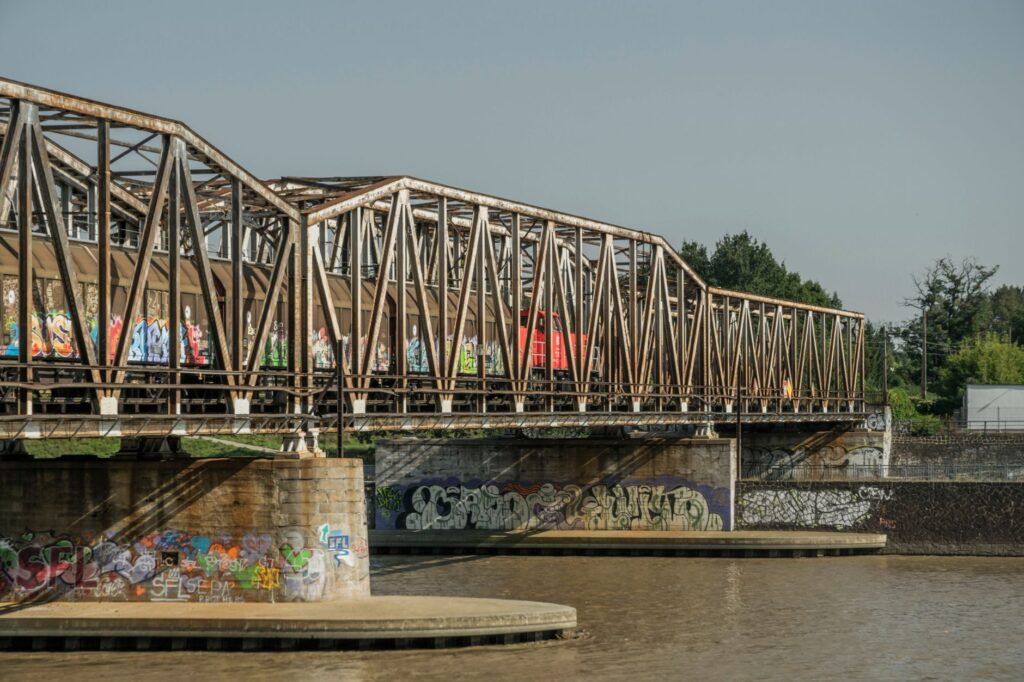
Similarly, the metallic bridges spanning estuaries and rias in Galicia, Asturias, and Cantabria demand periodic ultrasonic testing to detect steel fatigue. Marine corrosion, driven by the proximity of the Cantabrian Sea, acts as an implacable degrading agent that requires systematic sandblasting and repainting campaigns under strict environmental regulations.
Operational Safety and the Challenge of Level Crossings
The modernization of signaling and safety systems represents another critical front in the management of the metric gauge network. Although automatic block signaling and advanced telecommunications have been introduced, a significant proportion of rural level crossings lacks automatic barriers, relying instead on passive warnings and mutual awareness between train drivers and agricultural vehicle operators.
Engineers operating these lines possess exceptional expertise. They must memorize hundreds of singular track features, from curves with restricted visibility caused by vegetation to zones prone to falling rock debris. The gradual implementation of automatic braking systems and satellite geolocation aims to mitigate the human factor risk in an environment where reaction margins during unforeseen events remain exceptionally narrow.

“Beneath the surface of an idyllic postcard featuring green valleys and wild beaches operates an invisible human machinery, where every meter of track is sustained by the steady pulse of engineers and mechanics.”
Practical Information for Travelers and Rail Researchers
- Network and Operators: Infrastructure ownership rests with Adif (Administrator of Railway Infrastructures), while passenger, regional, and tourist services are operated by Renfe Viajeros.
- Main Corridors: The longitudinal axis links Bilbao (Concordia station) with Ferrol, connecting regional capitals such as Santander and Oviedo via direct routes or scheduled transfers.
- Journey Planning: Due to lower service frequencies on certain cross-regional sections, checking updated timetables through official Renfe channels is essential, as maintenance works frequently trigger temporary schedule modifications.
- Accessibility: Older rolling stock units feature mobility limitations for passengers with reduced mobility due to platform heights and coach steps, although ongoing fleet renewal programs aim to address this shortcoming.
- Intermodal Connectivity: At most principal stations, narrow-gauge terminals are situated directly adjacent to bus stations, facilitating seamless transfers to inland areas beyond the reach of the rail network.
Conclusion: The Heritage Value of an Irreplaceable Line
Northern Spain’s narrow-gauge railway is much more than a secondary transport medium; it is a three-dimensional archive of the industrial history, geography, and sociology of the Cantabrian cornice. In an era obsessed with immediacy and the systematic trimming of travel times, this network offers a counterpoint perspective: the rehabilitation of the journey as an essential component of territorial experience.
Securing the survival and modernization of this infrastructure responds not only to environmental sustainability and social cohesion criteria, but to the preservation of a technical heritage unique in Europe. As long as metric gauge convoys continue crossing estuary bridges and whistling along Asturian hillsides, the northern peninsula will keep alive the pulse of a human engineering feat that chose to partner with the mountains rather than flatten them.