The Renaissance of Overnight Rail Mobility in Europe
Over recent decades, the landscape of medium- and long-distance travel in Europe underwent a profound structural shift, driven primarily by the deregulation of airspace, the proliferation of low-cost airlines, and the gradual expansion of daytime high-speed rail lines. While this model democratized geographic access between continental capitals, it relegated conventional overnight transport to the background. Several state-owned operators progressively dismantled their fleets of sleeping cars and couchette coaches, citing high operating costs and diminishing profitability against the apparent speed of air travel. However, the contemporary paradigm of global mobility has shifted strongly toward ecological sustainability, energy efficiency, and the optimization of travel time.
Within this transformation scenario, sleeper trains have not only returned to the public debate but have also consolidated as a cornerstone in the European Union’s transport decarbonization strategy. The urgent need to reduce greenhouse gas emissions has highlighted an unsustainable paradox: while flying distances under one thousand kilometers generates a disproportionate carbon footprint per passenger, sleeping aboard a railway convoy allows travelers to cross international borders while resting. The travel experience thus recovers a human, unhurried, and environment-friendly dimension, where the journey ceases to be a mere logistical hurdle and becomes an integral part of the tourism and cultural experience.
The Leading Role of ÖBB Nightjet in Today’s Rail Map
The undisputed standard-bearer of this revival is the Austrian federal railway company ÖBB (Österreichische Bundesbahnen), which foresaw the strategic potential of the sector when other continental operators were abandoning the service. Through its specialized Nightjet brand, ÖBB took over key routes in Central and Western Europe, proving that there is real and growing demand from travelers who prioritize comfort, predictability, and environmental sustainability. The company did not merely maintain historical routes; it invested heavily in modernizing its fleet, introducing new generations of trains designed under strict ergonomics and energy efficiency standards.

Nightjet’s operations are supported by a networked structure that directly connects hub cities such as Vienna, Munich, Berlin, Zurich, Amsterdam, Rome, and Paris. This overnight web acts as a transcontinental bridge allowing passengers to maximize their days: boarding the train at dusk in one Central European metropolis and waking up the next day in the heart of another nation without losing useful hours of tourism or work. Punctuality and integration with the schedules of national high-speed networks complement a service that has earned the trust of a new generation of global travelers.
The New Generation of Rolling Stock and Onboard Comfort
One of the historical bottlenecks of overnight rail was the disparity in sleep quality and the perception of a lack of privacy in traditional shared compartments. To overcome this barrier, ÖBB’s investment in the latest generation of Nightjet trains has represented an unprecedented qualitative leap. The new convoys, manufactured by Siemens, incorporate advanced modular designs that redefine the concept of rolling accommodation, offering everything from reclining seat coaches to deluxe sleeper compartments with private bathrooms and showers.

Among the standout innovations are individual sleeping pods, commercially known as ‘Mini Cabins’. These hive-like structures provide a private, intimate space for solo travelers, equipped with USB charging ports, adjustable reading lights, hand luggage storage, and a small folding table. Likewise, conventional couchette compartments have been redesigned to accommodate four passengers instead of six, reducing overcrowding and ensuring a quieter, more comfortable environment during nighttime hours. The integrated showers and restrooms in sleeping cars eliminate one of the classic discomforts of long train journeys.
Logistical Integration with Eurail and Interrail Passes
For the global traveler planning to tour multiple European countries, combining the Nightjet network with Eurail passes (for non-European residents) or Interrail passes (for European citizens) represents the most powerful planning tool in the current market. These passes offer extraordinary flexibility, but utilizing overnight trains requires understanding specific advance reservation rules to guarantee bunk availability, given that couchettes and beds are limited, and passengers cannot travel standing or without a designated seat during the night.
Correctly booking an overnight journey via Eurail involves paying a mandatory supplement for the selected accommodation type (seat, couchette, or private cabin). This additional cost covers onboard services and the right to a guaranteed bed.
The smart use of a Eurail pass combined with an overnight journey saves not only on the cost of the individual ticket but also on hotel accommodation expenses during transit nights between distant destinations.
ÖBB’s booking platform and the official Eurail app have synchronized to facilitate this process, though advance booking remains a critical success factor, especially during peak seasonal and holiday demand periods.
Main Corridors and Key Routes in Central and Western Europe
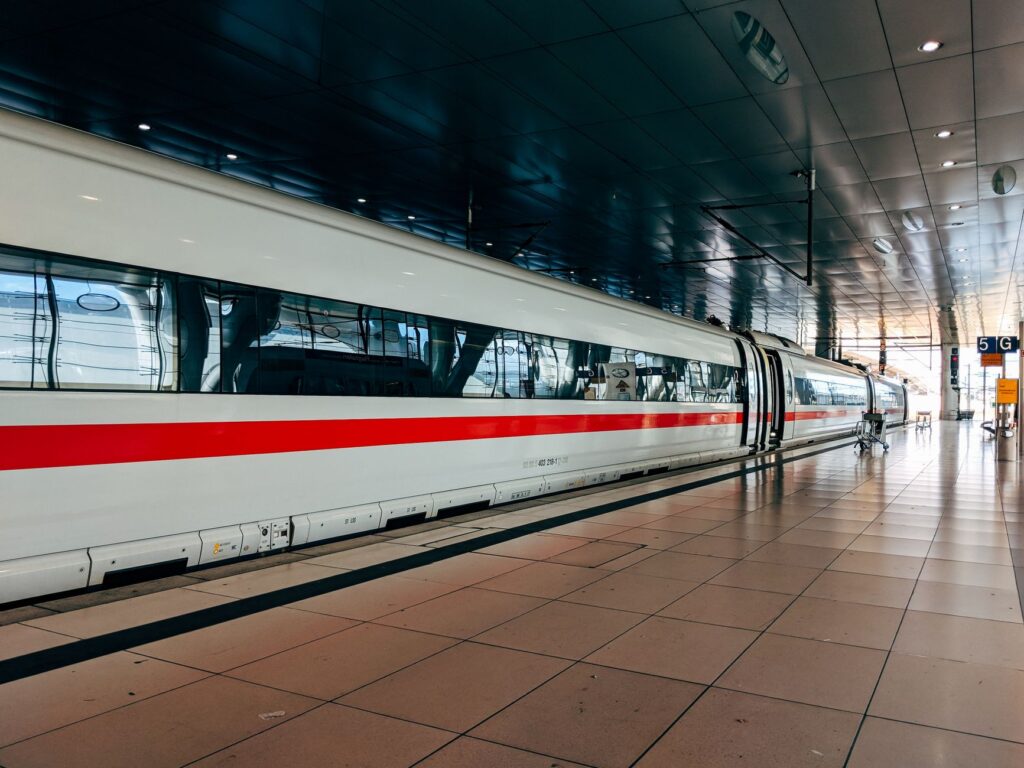
The operational geography of sleeper trains in Europe is structured around several strategic corridors that concentrate the highest passenger volume and the best frequency of connections. Among them is the route linking Amsterdam and Berlin with Vienna and Innsbruck, an axis that vertebrates the north and center of the continent, facilitating passenger transfers between the Netherlands, Germany, and Austria without requiring multiple daytime layovers.
Another fundamental corridor is the one connecting Zurich and Munich with Hamburg and Berlin, as well as the trans-Alpine connections linking Austria and Italy, allowing passengers to travel comfortably between Vienna, Salzburg, Florence, and Rome. These routes not only serve vacation tourists but are highly valued by professionals seeking a sustainable and productive alternative to the air bridge. Planning these routes requires checking updated maps from operators such as ÖBB, Deutsche Bahn, SNCF, and Trenitalia, as international rail cooperation constantly evolves to add new cities to the overnight network.
Practical Planning: Schedules, Reservations, and Boarding Requirements
Embarking on a journey on a European night train requires greater logistical rigor than is demanded by daytime high-speed routes. The first unavoidable step is the advance acquisition of seat, couchette, or cabin reservations, a procedure that must be completed weeks or even months in advance on the most popular routes, such as those connecting to Italy or the Netherlands during the summer months. The transport ticket alone does not grant access to the train unless accompanied by the corresponding accommodation reservation.
Departure times are typically scheduled between 18:00 and 22:00, with morning arrivals anticipated between 06:00 and 09:00 the following day. It is highly recommended to arrive at the origin station at least thirty minutes early to calmly locate the assigned platform and carriage, as night trains are often formed by sections originating from different cities that couple or decouple at intermediate railway hubs during the early morning hours.
The Human Factor and the Onboard Experience
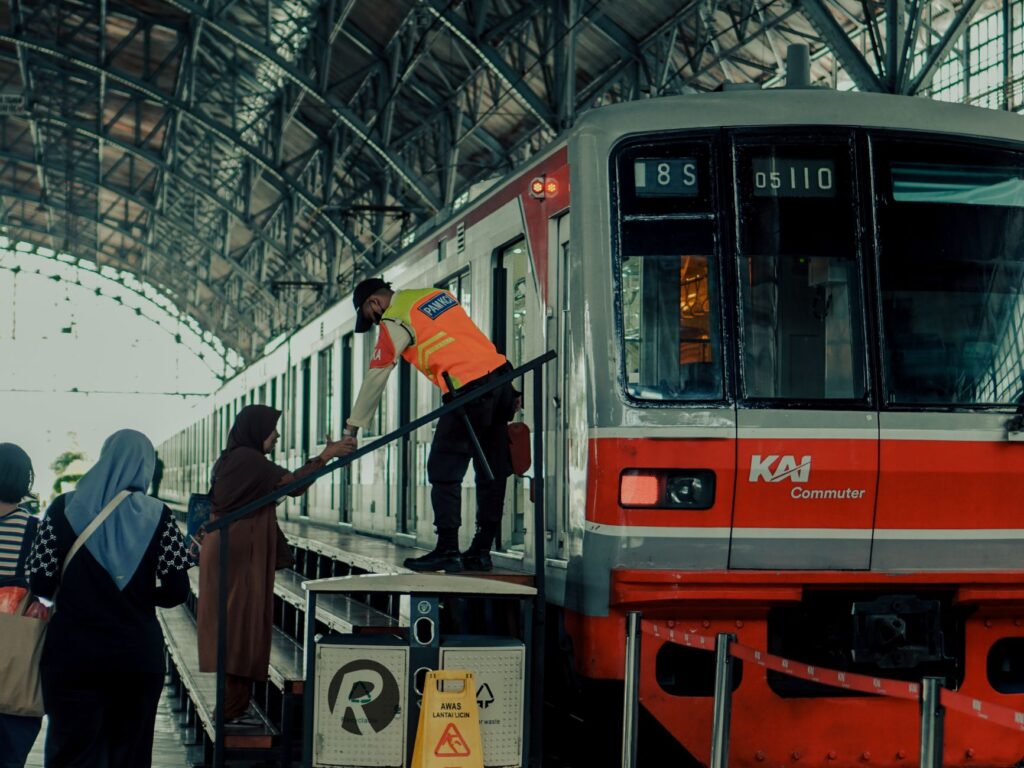
Beyond engineering and scheduling logistics, the essence of an overnight train journey lies in its human dimension and the tranquility transmitted by the steady pace of the convoy along the tracks. Onboard attendants, responsible for managing sleeping cars and couchettes, play a fundamental role in passenger safety and comfort, controlling access on platforms, delivering clean bed linen, and organizing the continental breakfast service typically included in couchette and cabin fares.

The atmosphere in the corridors at nightfall contrasts pleasantly with the bustle of airports or bus stations. The opportunity to converse with fellow travelers from diverse corners of the planet in common areas or share impressions about the upcoming destination culturally enriches the experience. Traveling overnight through Europe thus recovers the classic romanticism of railway transport, rigorously adapted to twenty-first-century standards of comfort and security.
Sustainability and the Future of Cross-Border Transport
The rise of sleeper trains is not a passing fad, but a structural transformation driven by international environmental commitments and an increasingly mature citizen awareness. By using electricity from renewable sources on electrified rail networks, the environmental impact of moving hundreds of people across multiple countries is drastically reduced compared to commercial aviation.
Future challenges to consolidate this European network include greater legislative and fiscal harmonization among member states, the simplification of cross-border ticketing systems, and the continuous expansion of available fleets by public and private operators. The shared objective is to ensure that the continental overnight network operates with the same fluidity and interoperability as roads or airspace, guaranteeing that rail remains the natural, preferred, and sustainable option for any medium- and long-distance journey on the European continent.