Introduction to the Fragmented Geography of the Central Aegean
The Lesser Cyclades archipelago, comprising islands such as Donoussa, Koufonisia, Schinoussa, and Iraklia, represents one of the most fascinating logistical challenges in the Eastern Mediterranean. In a region where seasonal tourism clashes head-on with a strict reliance on maritime supply chains, connectivity is not merely a tourist service, but the life support system sustaining the daily existence of local communities. Unlike heavily massified routes toward Santorini or Mykonos, this island labyrinth demands meticulous planning in travel logistics, where marine currents, seasonal Etesian winds, and the capacity of local ports dictate the rhythm of mobility.
The backbone of this transportation system unfolds from the colossal port hub of Piraeus, near Athens. From there, a heterogeneous fleet of conventional cargo-passenger ferries, known locally as large ferries, coexists with a vanguard of high-speed hydrojet vessels. This operational duality compels both residents and seasoned travelers to understand the dynamics of an intermodal model that balances high cargo capacity with the urgency of rapid transit between islets spanning barely a few square kilometers.
Fleet Typology and Vessel Categories Across the Archipelago
To understand how human and material cargo moves across the Central Aegean, it is essential to analyze the technical characteristics of the vessels operating secondary and tertiary lines. On one hand, conventional ro-pax ferries offer superior stability against open-sea weather inclemencies. These ships, though slower, permit the simultaneous boarding of automobiles, food distribution trucks, and passengers, operating as floating cargo ships that guarantee the autonomous provisioning of the smaller islands throughout the winter months.

On the other hand, catamarans and high-speed ferries belonging to the highspeed category have radically transformed summer accessibility. Capable of doubling the cruising speed of traditional vessels, they drastically shorten travel times from Piraeus or Naxos. However, their operability is subject to an unforgiving variable: wind force. When summer winds exceed seven or eight knots on the Beaufort scale, navigation restrictions are immediately triggered, forcing port authorities to cancel or temporarily suspend departures of these lightweight vessels, generating a ripple effect across traveler itineraries.
The Port of Piraeus as the Primary Intermodal Node
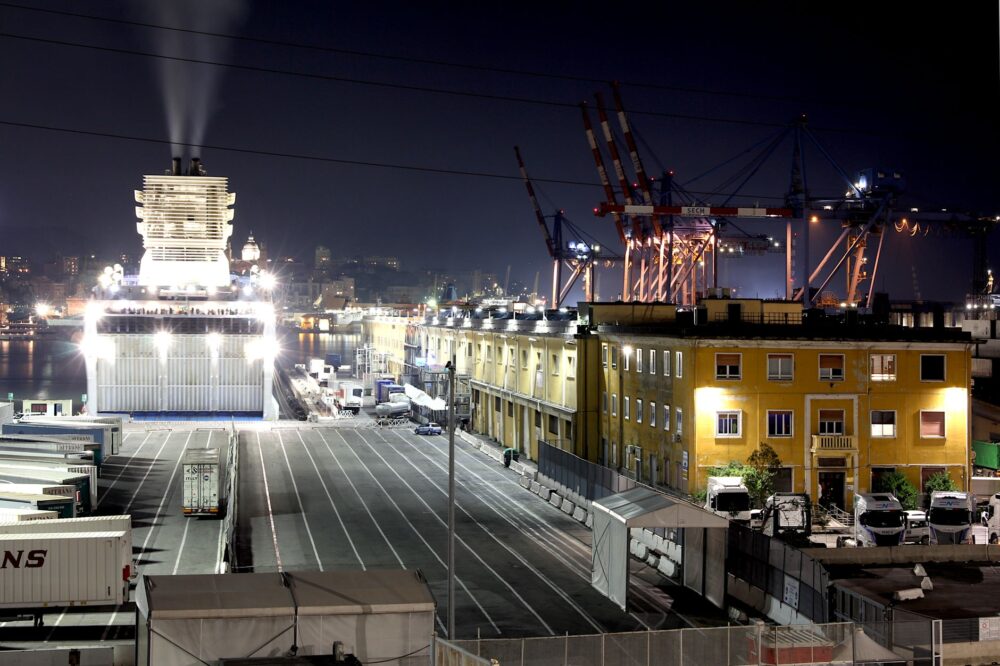
The starting point for any rigorous journey toward the Lesser Cyclades is the port of Piraeus, Greece’s largest maritime complex and one of the busiest in Europe. The logistical complexity of this node lies in its massive scale and the layout of its docks. Departure gates E6, E7, and E9 typically concentrate the bulk of passenger traffic bound for the Cyclades, requiring travelers to arrive well in advance to navigate access checkpoints and the physical distance between subway terminals and large ferry berths.
Integration with Athens’ urban transit system is tight yet demands close attention. Metro Line 1 (the green line) and Line 3 (the blue line, which directly connects to Athens International Airport) terminate just meters away from the port gates. Nonetheless, during peak season, vehicular congestion around port access points can delay internal shuttle buses. Rigorous planning of transfer times between international flights, the metro, and the ferry is the only guarantee to avoid missing the sole daily connection toward the smaller islands.
Berthing Operations in Small-Scale Island Ports
While Piraeus offers colossal infrastructure, the flip side of the coin is found in the tiny ports of Koufonisia, Schinoussa, Iraklia, and Donoussa. These harbors, historically designed to shelter local fishing boats and small coastal vessels, have been forced to adapt to receive steel giants over one hundred meters in length. The berthing process at these docks is a masterclass in seamanship, where captains must maneuver within tight spaces, often amidst crosswinds and without the assistance of port tugboats.
Shore infrastructure is minimalist. There are no grand telescopic boarding bridges or air-conditioned terminals; disembarkation takes place via the vessel’s stern ramp directly onto the concrete pier, where backpackers, local utility all-terrain vehicles, and freight pushcarts converge. This operational immediacy demands order and agility from travelers. The lack of automation in berthing processes and the absence of large shore personnel crews turn punctuality into a direct reflection of crew experience and prevailing weather conditions.
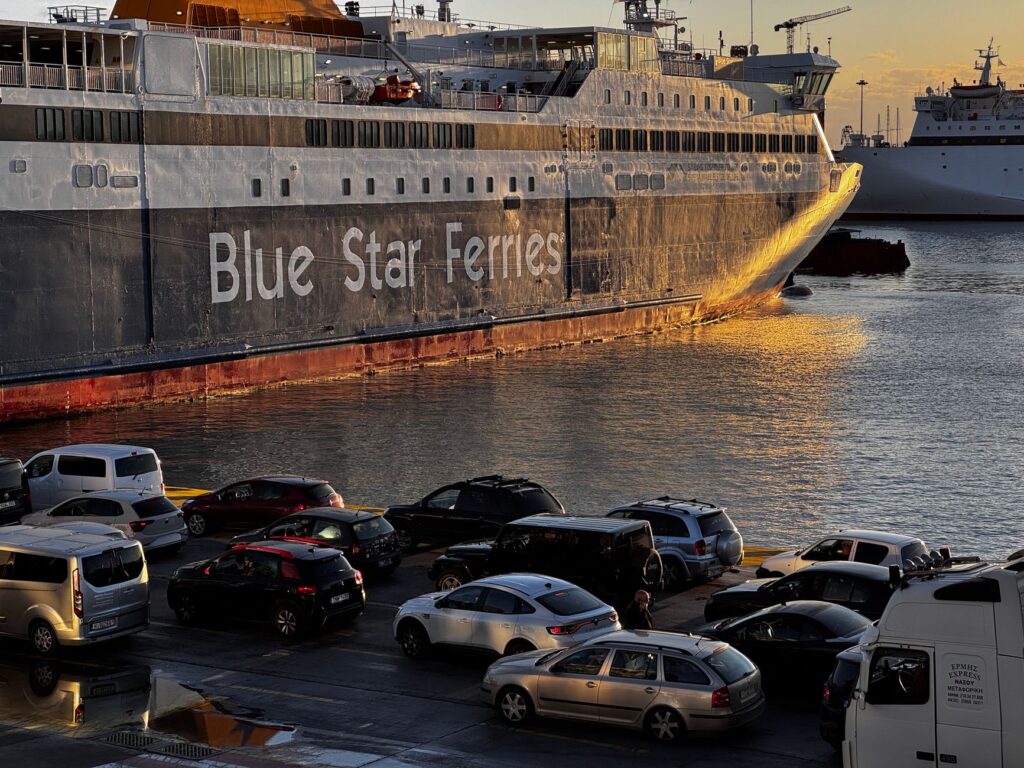
The precision of the maritime network in the Lesser Cyclades does not rely on the opulence of its terminals, but on the seamless harmony between crew expertise and the resilience of communities that have turned the sea into their sole and true highway.
Published schedules by shipping lines during the spring and summer months are, in practice, forecasts subject to constant review. Accumulated delays originating in departure ports like Naxos or Paros cascade along the entire chain of stops, altering ferry arrivals at the archipelago’s most remote islands. For this reason, local logistics operators strongly advise checking real-time vessel tracking applications before heading down to the boarding pier.
Navigation Strategies and Meteorological Factor Management
The wind regime in the Aegean Sea, dominated by the meltemi phenomenon during July and August, constitutes the greatest operational risk factor for maritime transport. This dry northern wind blows with unusual force across open channels between islands, generating short, high-height choppy waves that hinder the navigation of catamarans and high-speed vessels. Shipping companies maintain strict safety protocols based on weather bulletins issued by the Hellenic Coast Guard, which mandate the absolute prohibition of departure if established safety thresholds for specific hull types are exceeded.

Faced with this contingency, travelers must maintain a flexible contingency plan. Becoming stranded on a smaller island due to ferry service cancellations is not an anomaly, but a predictable seasonal occurrence. Secondary connections operated by traditional smaller-scale vessels, such as the historic Express Skopelitis, often act as the last line of unsinkable connectivity, as their design and lower speed allow them to navigate with a wider safety margin under moderately rough sea conditions, reliably linking the islands to one another on a daily basis.
Practical Information, Ticketing, and Intermodal Connectivity
The digitalization of transport services in Greece has advanced remarkably in recent years, streamlining pre-boarding documentation management. Today, most major shipping lines permit web check-in and the download of digital boarding passes directly onto mobile phones, eliminating the traditional need to queue at port ticket offices to validate physical tickets. Nevertheless, for certain lines operated by smaller local shipowners or state-subsidized routes, physical ticket collection at authorized agencies located in main ports may still be required.
When designing an itinerary through the Lesser Cyclades, it is imperative to keep the following operational recommendations in mind:

- Purchase tickets for primary routes between Piraeus and major transit islands (such as Naxos or Amorgos) weeks in advance during the peak summer season.
- Book local high-speed connecting legs only when the main itinerary is fully consolidated, leaving a margin of at least four hours to absorb potential delays in intermediate transfers.
- Always verify the operational status of the departure port on the day of travel through maritime geolocation apps or by consulting local port authorities directly.
- Carry basic provisions of water and light outerwear, as the open exterior decks of catamarans can register notably low temperatures due to wind chill during transit.
Planning a journey across the secondary routes of the Aegean requires accepting that time at sea is dictated by the laws of nature rather than passengers’ wristwatches.
Visual Close and Future Perspectives in Island Mobility
The future of transportation in the Lesser Cyclades balances the need to modernize fleets toward more sustainable models with the preservation of the maritime essence that has historically characterized these routes. Partial electrification projects for coastal cargo vessels and the improvement of local weather forecasting systems promise greater operational certainty for coming decades. Nonetheless, the charm and intrinsic difficulty of this maritime labyrinth will continue to demand from travelers an attitude of respect toward the archipelago’s natural rhythms.
When the ferry’s hull finally throttles down and glides smoothly into the sheltered pier of Donoussa or Koufonisia, the bustle of the big city is left decisively behind. The maritime transport system, with all its complexities, delays, and technical challenges, once again fulfills its age-old promise: keeping islands united in an archipelago where the sea is not a barrier that divides, but the only true path toward the horizon.