Introduction to Atlantic Isolation
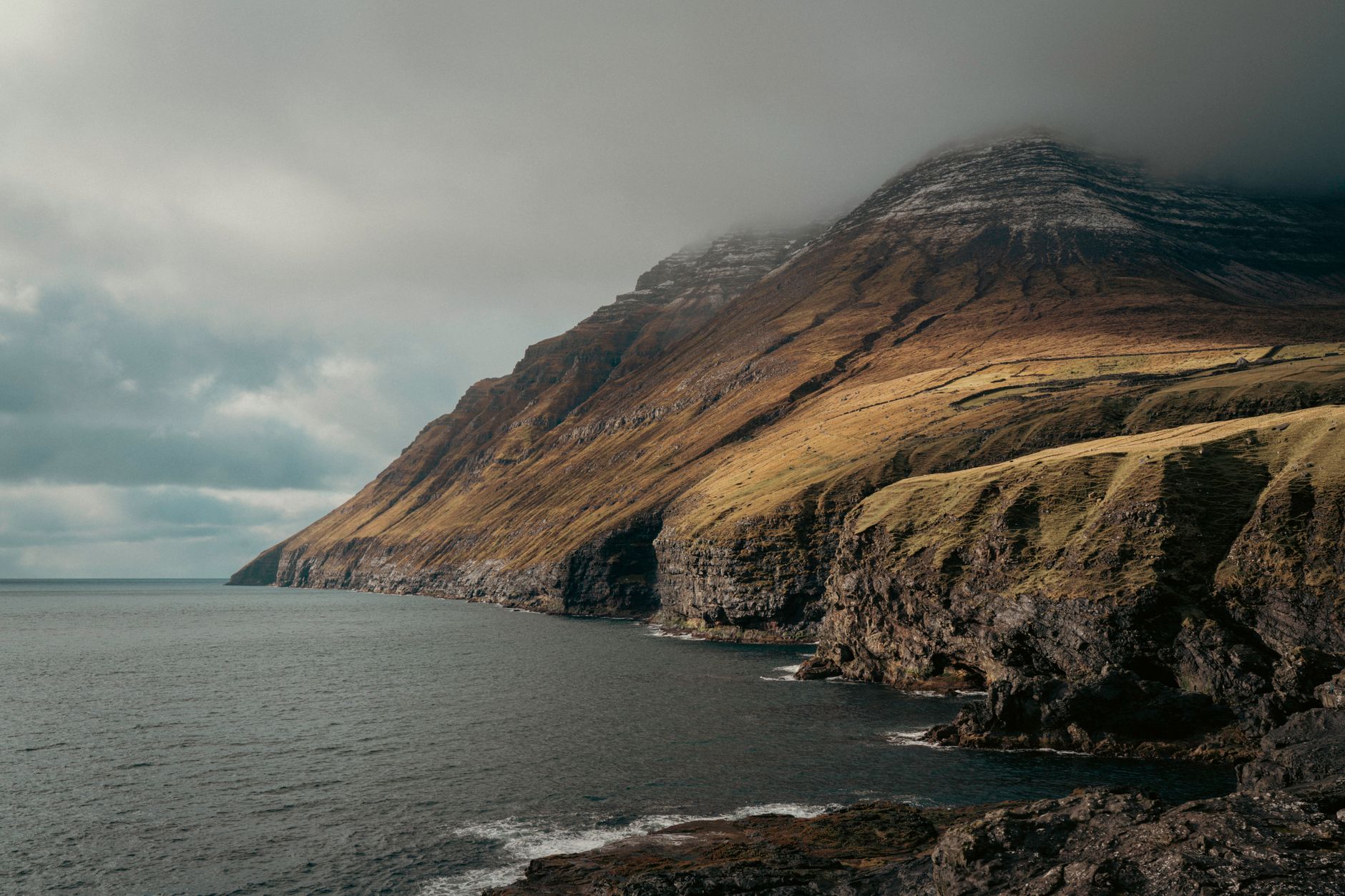
In the heart of the North Atlantic, situated between the coasts of Iceland, Norway, and Scotland, the Faroe Islands emerge with their dramatic silhouette of basalt cliffs and fjords carved by wind and time. This self-governing territory within the Kingdom of Denmark has historically relied on maritime navigation for its subsistence and external contact. However, the advent of commercial aviation fundamentally transformed its relationship with distance, converting what were once weeks of perilous sea travel into a journey of just a few hours. In this remote enclave, air connectivity is not merely a transport service; it is the vital lifeline sustaining the economy, healthcare, and social life of a dispersed island community.
Establishing aeronautical infrastructure in such an extreme geographical setting posed a monumental challenge for twentieth-century engineers and planners. The Faroese topography lacks natural flatlands of sufficient dimensions to host a conventional runway. Every takeoff and landing across the archipelago represents a masterclass in technical precision and human expertise. Understanding this connectivity model requires examining not only the technical specifications of its single operational terminal, but also the delicate balance between modern engineering daring and the relentless meteorological volatility of the ocean.
Vágar: The Only Gateway to the Clouds
Vágar Airport (Vágar Floghavn) serves as the exclusive epicenter of commercial aviation in the Faroe Islands. Situated on the island of the same name, this airport facility was originally constructed by British military engineers during the Second World War amid the strategic context of the allied occupation to secure North Atlantic shipping lanes. That initial turf and pierced-steel plank runway laid the groundwork for what is today a technologically advanced aerodrome, albeit deeply constrained by its rugged geographical origins.

Perched upon an elevated plateau and surrounded by steep mountain peaks, the airport presents one of the most complex approaches in commercial aviation. Pilots operating into Vágar must navigate a narrow flight corridor bounded by sheer rock walls and subjected to severe crosswind turbulence. The runway extension completed over the past decade—extending its length beyond seventeen hundred meters—enabled the introduction of higher-capacity jet aircraft, reducing reliance on smaller turboprops and optimizing the flow of passengers and essential cargo vital to the archipelago.
Extreme Meteorology and the Fog Factor
Faroese climatology acts as a decisive factor in the daily operational rhythms of air transport. The convergence of warm ocean currents and cold polar air masses generates persistent cloud formations, gale-force winds, and dense fogs that can reduce visibility to zero within minutes. Managing these contingencies requires an instrument navigation system of supreme precision, highlighted by the advanced implementation of satellite-based approach technologies that guide aircraft through the topographical labyrinth when visual cues are entirely absent.
Despite technological leaps, flight cancellations and diversions remain part of operational reality at Vágar. Airlines servicing the route must maintain exceptional logistical flexibility, enforcing strict contingency protocols for stranded passengers. Flight commanders assigned to this route undergo rigorous certifications and exhaustive simulator training that replicate the archipelago’s turbulent conditions with millimetric accuracy, ensuring safety consistently supersedes commercial scheduling pressures.

Landing at Vágar is no standard procedure; it is an exercise in absolute respect for the geography and atmosphere of the North Atlantic, where every approach is written with millimetric precision.
Atlantic Airways and the Sovereignty of Insular Skies
The maintenance of uninterrupted air connectivity rests largely upon the shoulders of Atlantic Airways, the national carrier of the Faroe Islands. Founded in 1987 in response to the need for a stable airline not exclusively beholden to the commercial whims of major international corporations, the company plays an irreplaceable strategic role. Its fleet, specifically tailored for short runways and adverse weather operations, directly links Vágar with key European hubs such as Copenhagen, Edinburgh, Reykjavik, and Paris, alongside seasonal routes that invigorate the tourism sector.
Atlantic Airways’ integration into the local economy extends well beyond passenger transport. The airline also operates the archipelago-wide helicopter service, a fundamental network ensuring connectivity for smaller, remote islands where ferry access is frequently cut off by severe marine storms. This bimodal system—jet airliners for international leaps and helicopters for internal territorial cohesion—constitutes a uniquely successful case study in European insular logistics planning.
The Socioeconomic Impact of the Air Bridge
The evolution of air traffic in the Faroe Islands has profoundly reshaped the local socioeconomic fabric. Traditionally anchored in the fishing industry and seafood export, the Faroese economy has successfully diversified its revenue streams, with international tourism emerging as a vital pillar. The controlled yet substantial influx of global visitors is directly attributable to improved air connectivity, which has effectively compressed the psychological and physical distance separating the archipelago from primary source markets in Europe and North America.

Furthermore, air transport guarantees the mobility of local professionals, students pursuing higher education abroad, and patients requiring specialized medical referrals to hospitals in Denmark. The reliability of this air bridge stands as a direct indicator of quality of life and sustainable development for a society refusing geographical marginalization. Ongoing investments in airport modernization reflect the political will to keep this window to the world wide open.
Complementary Infrastructure: Subsea Tunnels and Heliports
While international aviation relies exclusively on Vágar airfield, the wider connectivity of the archipelago benefits from unprecedented multimodal integration. In recent years, the construction of kilometer-long subsea tunnels featuring illuminated roundabouts beneath the seabed has linked critical islands, drastically reducing terrestrial travel times toward the airport. This synergy between underground road infrastructure and air transport has rendered Vágar an accessible node for the vast majority of the Faroese population within less than an hour’s drive.
Concurrently, the official heliport network distributed across minor islands ensures that emergency medical logistics and postal services maintain their rhythm even during the harshest winters. Each rotorcraft platform is equipped with remote beacon systems and weather monitoring arrays, permitting rapid interventions across inaccessible sea cliffs and isolated coastal settlements cut off by storms.
The true modernity of an insular territory is measured not by the height of its buildings, but by the efficiency with which its transport network bridges remoteness with the pulse of the global world.
Future Challenges Amid Global Tourism Pressure
Sustained passenger growth introduces fresh planning and sustainability challenges for Faroese authorities. Balancing tourism-driven economic development with the preservation of a fragile island ecosystem demands rigorous airport management policies. Vágar terminal’s capacity and high-season visitor flow management undergo continuous strategic reviews to prevent local infrastructure saturation.
Coupled with this is the Faroese aviation sector’s commitment to energy transition. While long-haul electric or hydrogen-powered flight remains experimental, local administration and airlines collaborate on operational efficiency initiatives and emissions offsetting, seeking to mitigate the ecological footprint of an indispensable yet carbon-intensive activity. The future of Faroese air connectivity rests upon its ability to innovate without compromising the pristine landscape that justifies its existence.

Practical Information for Travelers
Planning an air journey to the Faroe Islands requires factoring in specific logistical considerations to avoid disruptions driven by unique meteorological patterns:
- Arrival Airport: All international commercial air traffic lands at Vágar Airport (FAE), located approximately 45 kilometers from the capital, Tórshavn.
- Ground Connection: The airport links to Tórshavn via public buses (Route 300) or car rental services available at the terminal. Travel time incorporates passage through the Vágatunnilin subsea tunnel.
- Ticket Flexibility: Purchasing flexible fares and securing travel insurance covering weather-related delays or cancellations is strongly recommended.
- Baggage and Restrictions: Due to regional aircraft operating constraints, checking airline guidelines regarding baggage weight and dimensions is advised.
- Insular Services: For travel to outlying islands like Mykines or Fugloy, seats on Atlantic Airways’ helicopter network must be booked months in advance due to high demand and limited capacity.
Conclusion: The Fragile Equilibrium on the Horizon
The air connectivity of the Faroe Islands represents far more than a routine logistical line on international navigation maps. It stands as testimony to human adaptation within a wild environment, where aeronautical engineering continually challenges natural limits. From wartime pioneer flights to the modern fleet of jets and helicopters, the archipelago has demonstrated that geographical isolation can be overcome through technical audacity, rigorous planning, and deep respect for the elements.
Maintaining this bridge between clouds and sea demands ongoing investment, permanent meteorological surveillance, and a forward-looking sustainability strategy. For travelers crossing Vágar’s threshold, grasping this complex infrastructure adds a layer of profound appreciation for a territory that, despite engaging with the global rhythm, preserves the indomitable essence of the North Atlantic.