Introduction to the Vast Gobi Territory
The Gobi Desert is not an endless expanse of fine sand dunes like the Sahara, but rather a complex mosaic of sedimentary basins, stony steppes, rocky massifs, and infinite salt flats stretching across thousands of kilometers between southern Mongolia and northern China. For the contemporary traveler and expeditionary, venturing into this immensity represents one of the purest logistical and physical challenges remaining on the planet. Here, the absence of conventional infrastructure forces a complete rethinking of traditional exploration methods, replacing road signs with the rigorous use of satellite cartography, celestial navigation, and a deep understanding of the meteorological dynamics of the Asian plateau.
The central question guiding this expedition is not simply how to cross the territory, but how to do so while maintaining total autonomy without disrupting fragile ecosystems or ignoring the warnings of a radical climate. The Gobi steppe imposes its own rules: gale-force winds that kick up dust storms locally known as shoroo, extreme thermal swings exceeding forty degrees Celsius between day and night, and a water scarcity that turns every spring into a critical survival point. This report examines the anatomy of a land crossing through the southern Gobi, breaking down technical preparation, necessary equipment, historical caravan routes, and an indispensable respect for the nomadic communities inhabiting this sea of earth.
Geography and Climatology: Understanding the Sedimentary Basin
Understanding the Gobi requires shedding cinematic clichés. Geologically, it is a cold, rain-shadow desert, shielded from Pacific Ocean moisture by the massive mountain ranges of East Asia. Mean altitudes range between 900 and 1,500 meters above sea level, giving the region a transparent yet relentless atmosphere. Expeditions that underestimate the altitude and dryness of the air frequently suffer the consequences of mild altitude sickness and accelerated dehydration, phenomena exacerbated by low relative humidity.
The wind regime is another decisive factor in planning. During spring and early summer, air currents originating in Siberia generate sudden storms that reduce visibility to mere meters. Support vehicles and expedition members must carry redundant navigation systems, as magnetic compasses can be affected by local concentrations of minerals and GPS becomes the sole reliable tool for positioning. Timing must strictly avoid deep winter months, when temperatures plunge below minus forty degrees Celsius and water wells freeze solid to the subsurface.
Transport Logistics and Expedition Vehicles
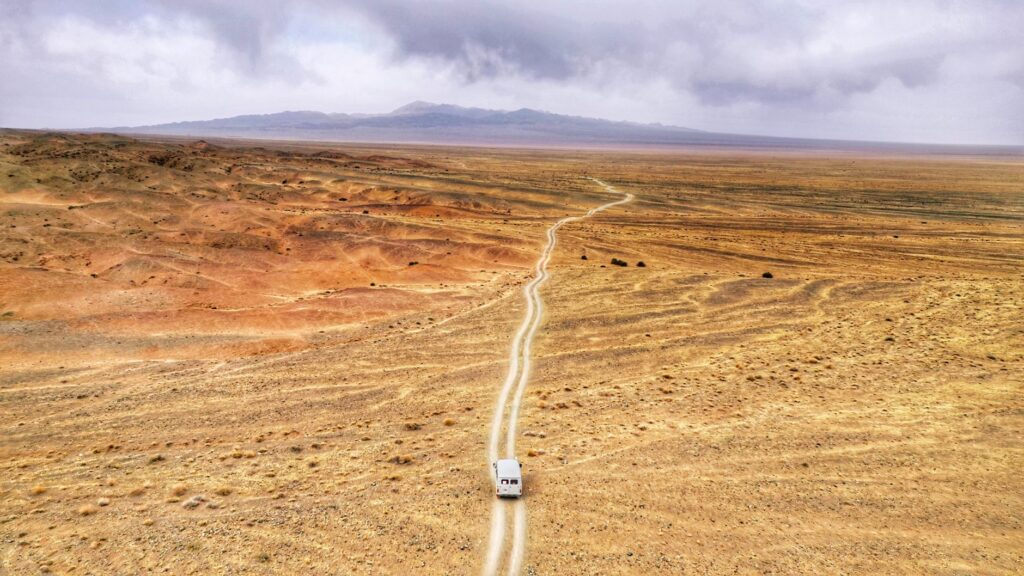
The backbone of any motorized traverse in the Gobi is the all-terrain vehicle, with classic Russian models such as the UAZ-452 van or adapted 4×4 trucks remaining the most reliable choices due to their mechanical simplicity. In a territory where the nearest repair shop may be five hundred kilometers away, the ability to fix a constant velocity joint, a leaf spring, or a fuel injection system with basic tools spells the difference between success and aerial rescue. Modern vehicles with complex digital electronics often fail in the face of the desert’s ultrafine dust, which infiltrates every joint and connector.
Load distribution is an exact science. Drinking water occupies the primary volume: a minimum consumption of five liters per person per day is calculated, plus a thirty percent safety margin for mechanical contingencies or weather delays. Fuel jerrycans must be secured to the central chassis structure to prevent destabilizing the center of gravity on loose gravel tracks and deep ruts. Likewise, a recovery kit is required, including sand ladders, heavy-duty tow straps, an inflatable exhaust jack, and at least two spare wheels with their respective inner tubes and reinforced patches.
Orientation and Terrain Navigation
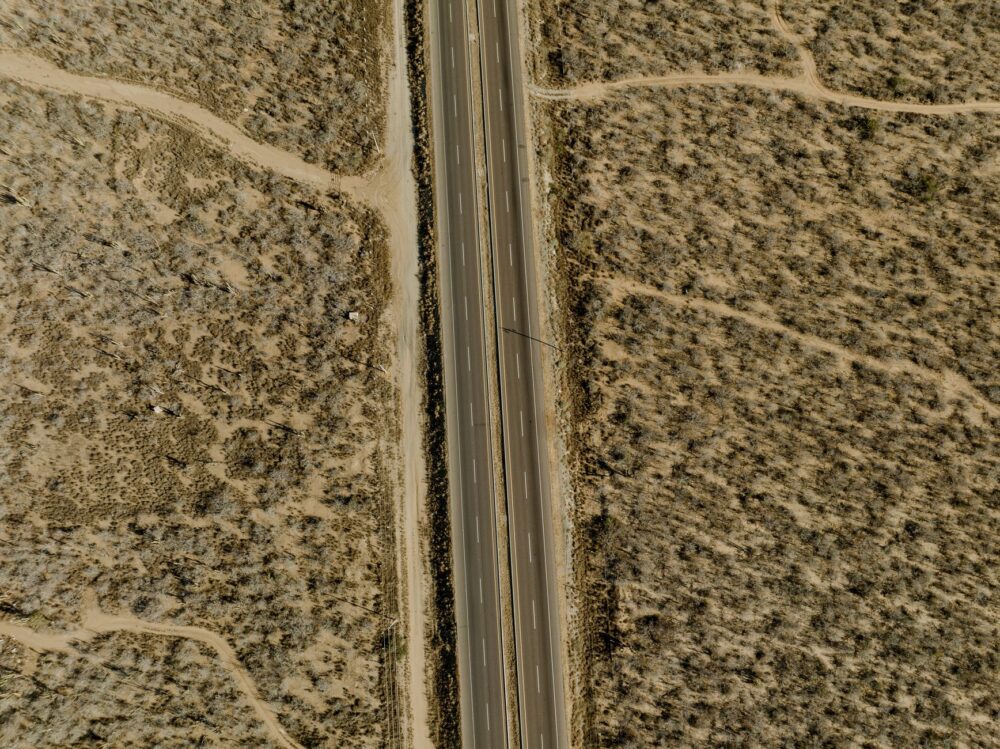
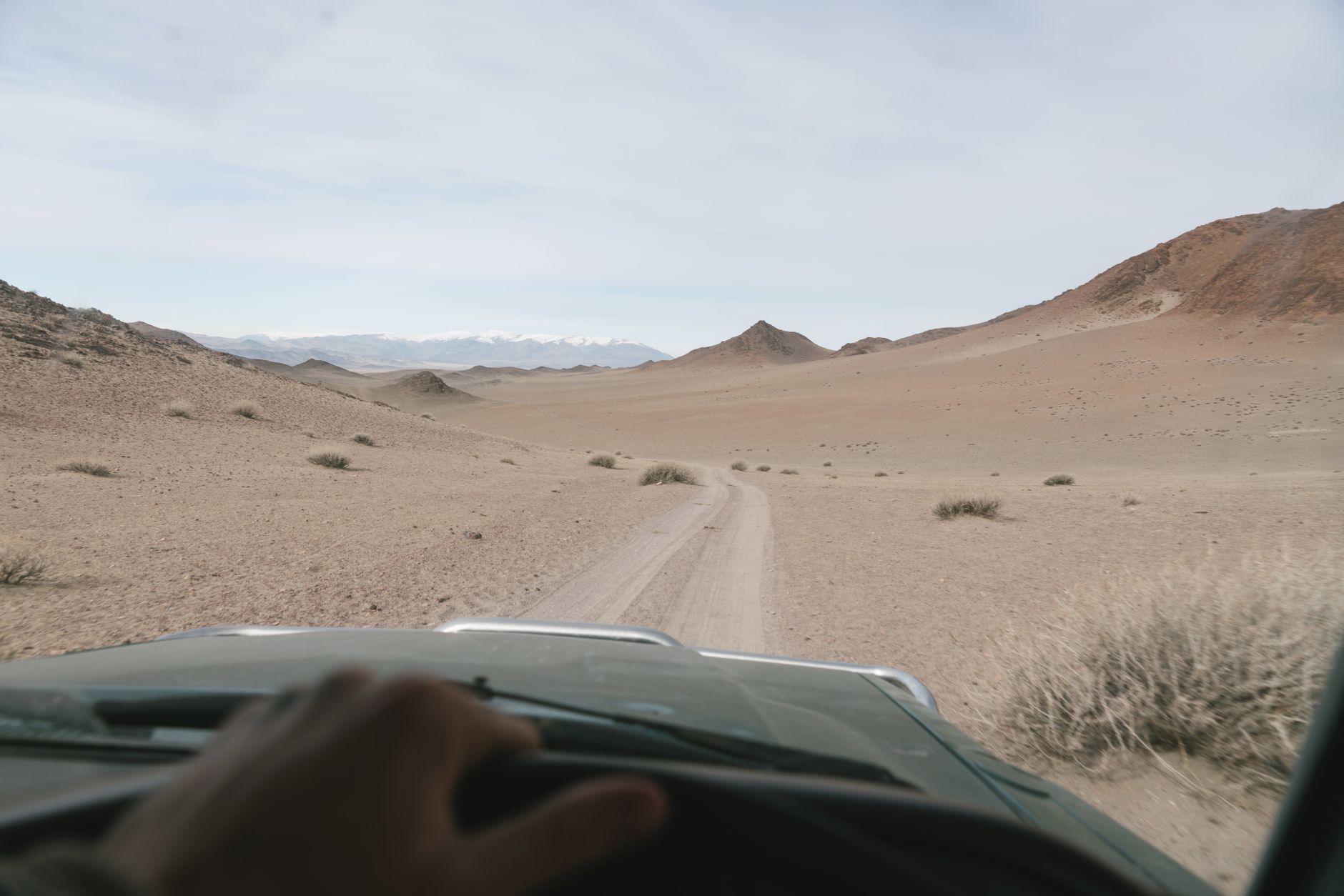
Unlike marked high-mountain trails, the Gobi is characterized by the absence of demarcated roads. Routes are a diffuse network of tire tracks that branch out and disappear depending on wind erosion or seasonal flooding. The expedition navigator must master the topographical reading of distant horizons, utilizing singular rock formations such as the red cliffs of Tugrugiin Shiree or the singing dunes of Khongoryn Els as visual reference points.
The use of pre-downloaded satellite imagery and 1:100,000 scale Russian military topographic maps remains the gold standard among veteran local guides. These maps detail traditional water wells (hudag), ruins of ancient monasteries, and terrain variations that modern digital systems sometimes omit. Maintaining a steady bearing requires constantly correcting for drift caused by the need to bypass basalt boulder fields or muddy saline depressions.
The true desert expedition does not measure its success by kilometers covered, but by the ability to read the silence of the landscape and match the pace to the heartbeat of the earth.
Communication Systems and Remote Self-Sufficiency
Mobile phone coverage is nonexistent across ninety percent of the southern Gobi’s surface. Relying on smartphones is a critical error; emergency communication must be handled via satellite messaging terminals and civil or military band radios for coordination among caravan vehicles. Active tracking devices allow support teams in Ulaanbaatar to monitor daily positions, an essential requirement to activate rescue protocols in the event of severe accidents or critical mechanical failure.
Self-sufficiency also encompasses managing electrical power. High-efficiency portable solar panels are essential for recharging camera batteries, GPS units, and medical devices, complemented by lithium power banks protected against extreme terrain vibrations. On the nutritional front, high-calorie dehydrated rations are prioritized and combined with durable local products such as aaruul (dried goat or mare’s milk curd), which provides mineral salts and sustained energy during prolonged marching days.
The Human Factor and Nomadic Culture
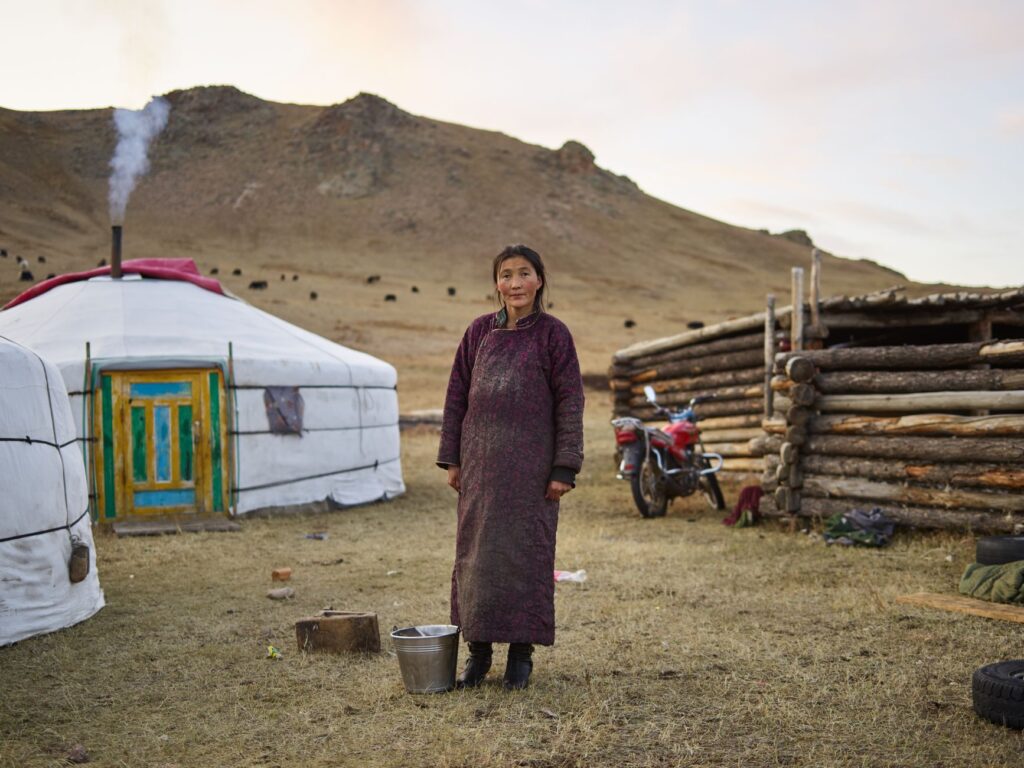
No journey through the Gobi can be understood as an isolated conquest of nature; it is, above all, a journey through a living cultural space. The families of nomadic herders living in traditional yurt camps (ger) scattered across the steppe are the true guardians of the territory. Stopping at their encampments is not merely a polite formality, but a vital necessity to obtain up-to-date information on water well conditions and pasture trends.

The approach protocol to a yurt requires turning off the vehicle engine at a distance, waiting for the owners to come out and greet visitors, and accepting with respect a bowl of airag (fermented mare’s milk) or salted milk tea offered as a symbol of hospitality. Ignoring these customary norms is considered a grave offense. Expedition members must exercise extreme respect for grazing areas and prevent waste accumulation, remembering that plastic trash takes decades to degrade under the relentless sun of the plateau.
Flora, Fauna, and Conservation in Arid Ecosystems
Far from being an inert wasteland, the Gobi harbors a highly specialized biodiversity that has developed extraordinary physiological adaptations to survive. Here live critically endangered species such as the wild Bactrian camel (Camelus ferus), the Gobi bear or maazaai, and small populations of Mongolian gazelles that roam freely across the plains. Naturalists participating in these expeditions must take extreme precautions not to disrupt migration routes or raptor nesting sites on rocky outcrops.
The fragility of the Gobi soil is extreme. Tire tracks off the main tracks can leave visible ruts for decades due to low precipitation and wind erosion. Therefore, modern expedition guidelines demand a zero-impact principle, prohibiting heavy vehicles in protected areas such as the Great Gobi Strictly Protected Area and promoting wildlife observation exclusively through long-range telephoto lenses without invasive approaches.
Physical Preparation and Health Safety
The harshness of a Gobi expedition relies not only on mechanical logistics, but also on the physical and mental resilience of each team member. Driving shifts across bumpy tracks subject the spine and joints to continuous stress. Prior training focused on core strength and lumbar stability is recommended, along with a comprehensive medical evaluation ruling out latent cardiorespiratory issues due to altitude and physical exertion under low humidity conditions.
The expedition medical kit must be exhaustive, including broad-spectrum antibiotics, oral rehydration salts, compression bandages, strong painkillers, and a clear protocol for emergency medical evacuation. Gastrointestinal infections resulting from consuming untreated water or spoiled food are the most frequent health hazard, making the use of UV filtration systems and purification tablets an inviolable routine at every camp.
The true wisdom of the traveler in extreme lands lies in knowing when to stop, observe the horizon, and accept that nature sets the timing of the route.
Practical Information for Planning
Best Time for Expedition: The optimal months run from late May to early September, when nighttime temperatures are moderate and winter snowstorms blocking secondary tracks are avoided.
Permits and Visas: It is mandatory to process entry visas for Mongolia in advance and obtain special permits from the Ministry of Environment if crossing strict nature reserves or border zones with China.

Travel Insurance: Purchasing a specific adventure tourism policy explicitly covering helicopter medical evacuation and rescue in remote areas without conventional ground coverage is required.
Currency and Payments: The Mongolian tugrik is the official currency, but in rural areas and for purchasing fuel and heavy supplies, carrying sufficient cash is essential, as ATMs and card terminals do not exist outside provincial urban centers.
Conclusion: The Legacy of Immensity
The Gobi Desert offers neither the comforts of conventional tourism nor concessions to the unprepared traveler. Its value lies precisely in its geographical extremity and the absolute silence reigning across its plains at dusk. Facing this traverse with rigor, respect, and meticulous logistical planning transforms the journey into a profound learning experience regarding the limits of human self-sufficiency and the vastness of a planet that still harbors untamed spaces. At the end of the trail, the dust accumulated on the skin and the memory of infinite horizons become the enduring testimony of an unforgettable expedition.