Introduction to the Carioca Air Labyrinth
Arriving in Rio de Janeiro by air involves understanding a unique airport duality in Latin America. The city is logistically divided between two main terminals operating under entirely different geographical, urban, and operational logics: Antonio Carlos Jobim International Airport, popularly known as Galeão (GIG), and Santos Dumont Airport (SDU), located right in the heart of the metropolis’s downtown fabric. This separation is not a mere technical detail, but a decisive factor that defines travel time, land transport costs, and the margin of error for any traveler landing in the Marvellous City.
While Galeão absorbs the vast majority of long-haul and intercontinental flights within its sprawling infrastructure located on Governor’s Island, Santos Dumont functions as the heart of the national air bridge, directly connecting Rio’s financial center with São Paulo, Brasília, and other key regional destinations. Understanding distances, operational restrictions, and common transit errors between the two terminals has become an essential skill to prevent catastrophic delays, missed connections, and unnecessary extra costs in taxis or private transport.
The Geography of Galeão (GIG): Intercontinental Gateway and Insular Vastness
Situated about twenty kilometers north of the city center, Galeão International Airport occupies a strategic position on Governor’s Island, an insular environment historically connected to the mainland by complex highway and bridge systems. Formally inaugurated decades ago and modernized multiple times, especially ahead of international sporting events hosted by Brazil, GIG features two main terminals (though operationally integrated) capable of handling wide-body aircraft such as the Airbus A380 or Boeing 747.
The scale of Galeão contrasts sharply with the compactness of other urban airports. Its wide aprons, extended boarding concourses, and expansive cargo areas require walking considerable distances. For international travelers, this means the estimated time from stepping off the aircraft, passing passport control, collecting baggage, and exiting to the main hall can easily exceed sixty minutes, even with moderate passenger flows. Furthermore, its relative isolation from traditional southern zone hotel districts—such as Copacabana, Ipanema, or Leblon—makes ground travel a critical factor that must be planned well in advance.
Santos Dumont (SDU): Urban Precision and the Runway Over the Bay
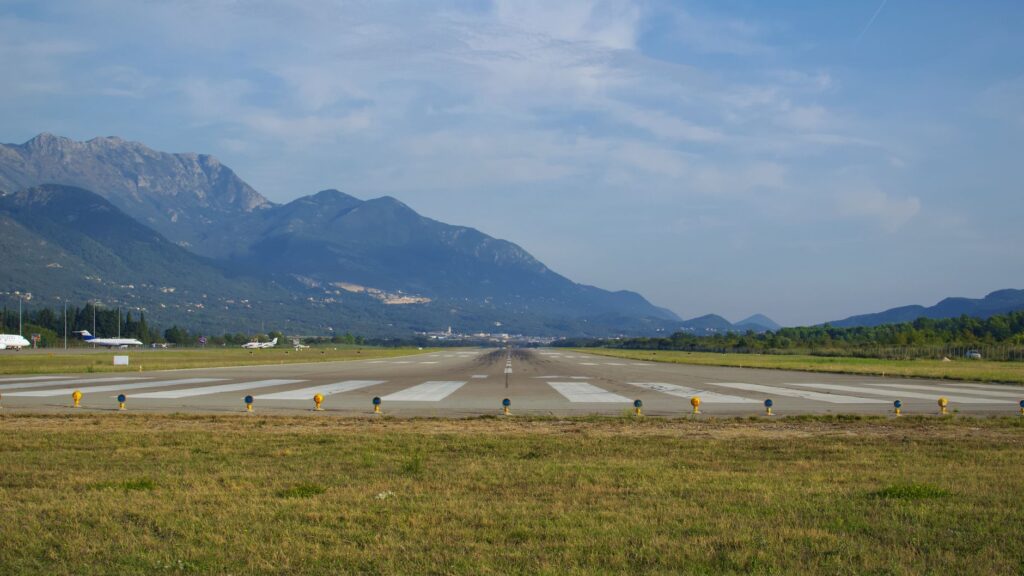
At the opposite end of the spectrum is Santos Dumont Airport. Located on Guanabara Bay, practically on the doorstep of Rio de Janeiro’s financial and cultural district, SDU offers one of the most beautiful and dramatic aerial approaches in the world, with privileged views of Sugarloaf Mountain and the historic center. However, this prime location entails severe physical limitations: its runways are relatively short and surrounded by water and dense urban fabric, preventing the regular operation of wide-body aircraft or direct transoceanic flights.
Santos Dumont is designed for agility. Its single terminal allows for a rapid flow of business passengers and regional tourists traveling with carry-on luggage or quick domestic connections. Exit times from the aircraft to the street are drastically reduced compared to GIG. Nevertheless, this same centrality generates monumental traffic jams in surrounding road access points during morning and evening rush hours, turning journeys into residential neighborhoods into a test of urban patience.
The Myth of the Fast Transfer: Distances, Times, and Traffic Reality
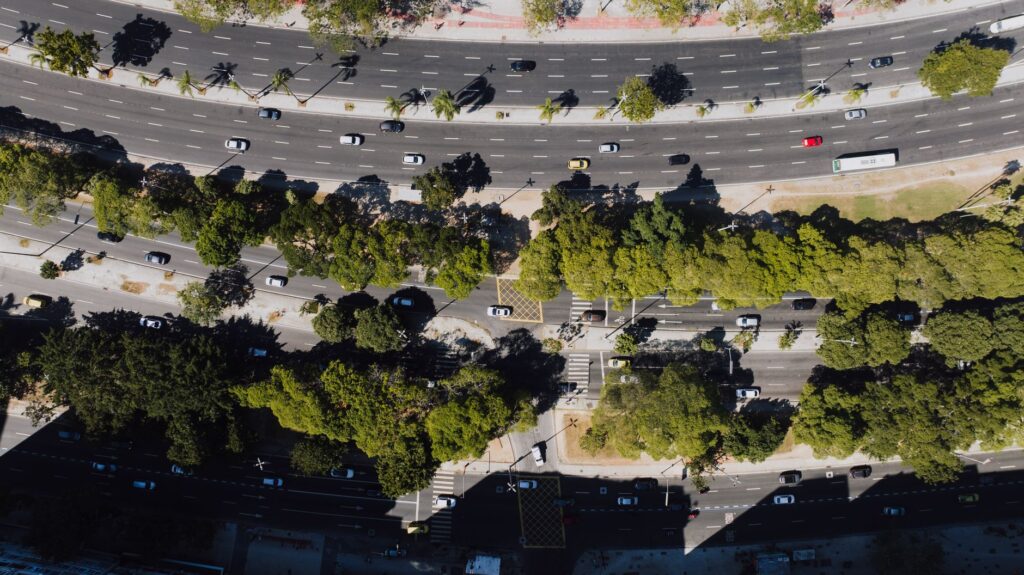
One of the most frequent mistakes made by novice travelers is underestimating the time required to travel between key points in Rio de Janeiro or, worse still, miscalculating a connection that requires changing airports. Although GIG and SDU are separated by barely twenty kilometers in a straight line, the road journey can range from 35 minutes under optimal early-morning conditions to more than two hours during moments of severe congestion on the Linha Vermelha or Avenida Brasil, the primary arterial roads connecting the North Zone to the center and south.
Rio de Janeiro’s urban traffic follows no predictable patterns; a minor incident on the expressways can completely paralyze the logistics of accessing Galeão, rendering any tight safety margin useless.
This variability requires that trips to Galeão be scheduled with considerable slack. Public transport services, such as executive buses (frescões) connecting GIG to the center and South Zone, represent an economical alternative, but their speed depends entirely on surface traffic fluidity. Official taxis and ride-hailing apps offer greater flexibility, although fares rise significantly during peak hours or periods of high tourist demand.
Common Critical Errors in the Carioca Airport Experience
The pattern of incidents experienced by passengers at Rio’s airports reveals recurring mistakes that can be avoided with proper logistical education. The first fundamental error is confusing terminals when issuing boarding passes or coordinating ground pickup services. It is not uncommon for a passenger to purchase an international flight assuming it departs from Santos Dumont, or vice versa, discovering the mistake when time to correct the route is practically non-existent.
A second critical error lies in managing arrival times at the check-in counter for international flights from GIG. Local regulations require being at the terminal at least three hours before the scheduled departure time. Ignoring this recommendation under the false assumption that controls are fast-paced usually ends in missed flights, especially due to rigorous security and immigration checks during peak departure hours for Europe and North America.
Infrastructure, Services, and Internal Connectivity in GIG and SDU
Both terminals have evolved to offer an acceptable range of passenger services, albeit with differing approaches. At Galeão, the offering includes a wider variety of duty-free shops, international VIP lounges, luggage storage services, and nearby hotel options within the airport perimeter. Its modular design facilitates wayfinding, though long walks between boarding gates are unavoidable.
Meanwhile, Santos Dumont prioritizes rapid commercial functionality. It features convenience stores, business traveler-oriented coffee shops, and well-established domestic airline service desks. Digital connectivity via public and private Wi-Fi networks operates stably in both facilities, allowing users to manage ground transport and itinerary modifications in real time without major setbacks.
Ground Transport Options: Pros, Cons, and Safety Recommendations
Choosing a means of transport to leave GIG or SDU must be based on a rigorous assessment of budget, luggage volume, and knowledge of the local environment. Official taxis with regulated meters and prepayment desks inside the terminals offer a safe and transparent option, though their cost exceeds ride-hailing app services (such as Uber or 99), which operate in designated pickup zones outside the main buildings.

Using regular public buses requires caution and route knowledge, making them generally inadvisable for travelers with bulky luggage or visiting the city for the first time. Official executive bus lines constitute a well-balanced middle ground, connecting strategic points of the South Zone directly from Galeão’s arrival doors.
Always prioritize official boarding points and distrust informal transport offers in arrival halls to protect yourself against abusive fares and unnecessary security risks.
Practical Tips for Efficient Layover and Transit
For passengers facing an extended layover or an airport change in Rio de Janeiro, early planning is the key to success. It is strongly recommended to avoid transitions between GIG and SDU that leave less than four hours of operational margin, always factoring in the worst-case traffic scenario on urban access highways.

Likewise, it is essential to verify flight statuses in real time through official apps of Brazilian airport authorities (Infraero or current concessionaire operators like RIOgaleão), as local weather conditions, especially morning mist over Guanabara Bay, can temporarily disrupt operations at Santos Dumont.
Conclusion: Mastering Logistics to Enjoy the Destination
Rio de Janeiro offers a vibrant experience that begins the moment the aircraft initiates its descent. However, the complexity of operating with two airports distributed across opposite geographical points demands an informed, methodical, and prudent attitude from the traveler. Knowing the strengths and limitations of Galeão and Santos Dumont, respecting urban transit times, and avoiding common planning mistakes ensures that the air transition is a smooth process rather than an obstacle that tarnishes the stay in this fascinating South American capital.
Source in EN: news.google.com (https://news.google.com/rss/articles/CBMiiwFBVV95cUxQdUZnSHJ4eXUzNE5mQVRsR3NCU3pqU21zUGV0YmdyNWhCQmxfX0t1WVgzdGF6M0JHUnRObXlGSHZxWHZpbU52RExlalBSNEx0Wmp0SFBfWkFJdkZkQ3Z0YkdKZ1JXMWM2eHBfbmxqM2xRWEYza0FzLXpDeE9XOFRabGQ5VWk0UzZ2NXhJ?oc=5)