


A Cathedral of Steel Across the Norwegian Plateau
Few railway journeys in the world possess the capacity to encapsulate the geography and character of a nation quite like the Bergen Line, known in Norwegian as the Bergensbanen. This high-mountain corridor is not merely a means of transportation between Oslo, the Norwegian capital, and Bergen, the jewel of the western coast. It represents one of the most audacious engineering feats of the early 20th century and a direct portal to landscapes where nature maintains an overwhelming scale. Over approximately seven hours of travel, the passenger crosses agricultural valleys, ascends river gorges, and traverses the Hardangervidda plateau, the largest high-mountain national park in Northern Europe.
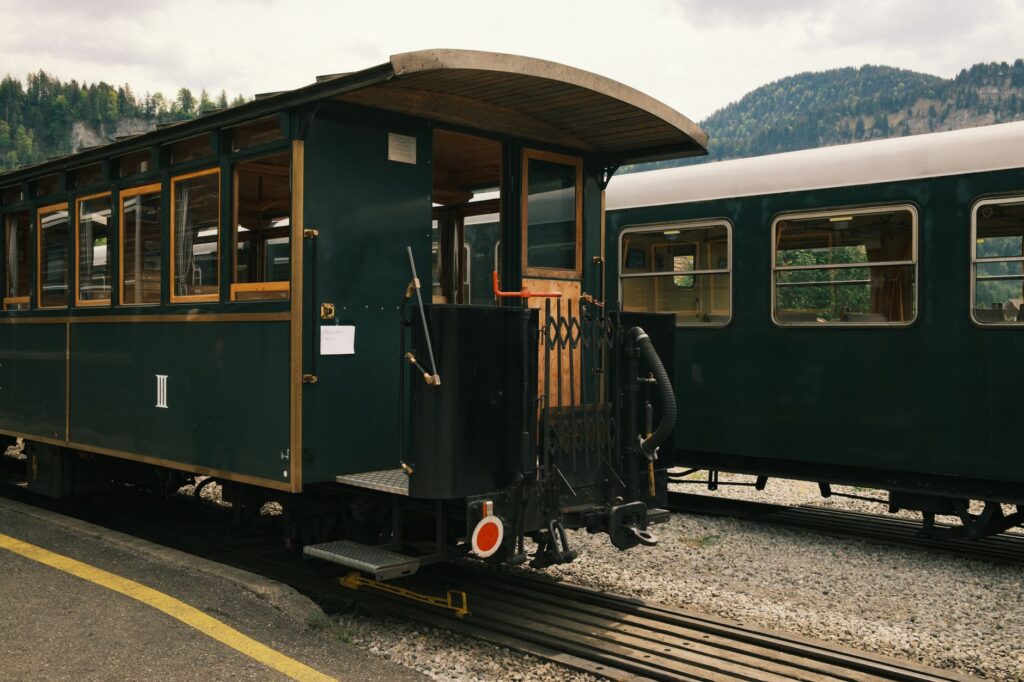
The genesis of this railway was marked by monumental challenges. Officially inaugurated in its entirety in 1909 by King Haakon VII, the project demanded the construction of more than 180 tunnels hand-carved into solid rock and the conquest of extreme weather conditions that paralyzed any attempt at year-round land communication during winter. Today, the line operates with admirable reliability, combining modern locomotives and carriages designed to offer panoramic views without compromising the structural safety required in high mountain environments.
The Departure from Oslo Central Station
The journey begins at the bustling Oslo Central Station (Oslo S), a crucial hub connecting commuter trains with international and domestic corridors. As the train pulls out toward the west, the dense urban fabric of the capital quickly dissolves to give way to the forested valleys of Buskerud and the fertile landscape of the Hallingdal valley. This first phase of the journey is characterized by fluvial serenity, following the course of the Hallingdalselva river, whose meltwater-fed streams flow swiftly, occasionally interrupted by small hydroelectric plants that recall the country’s energetic vocation.
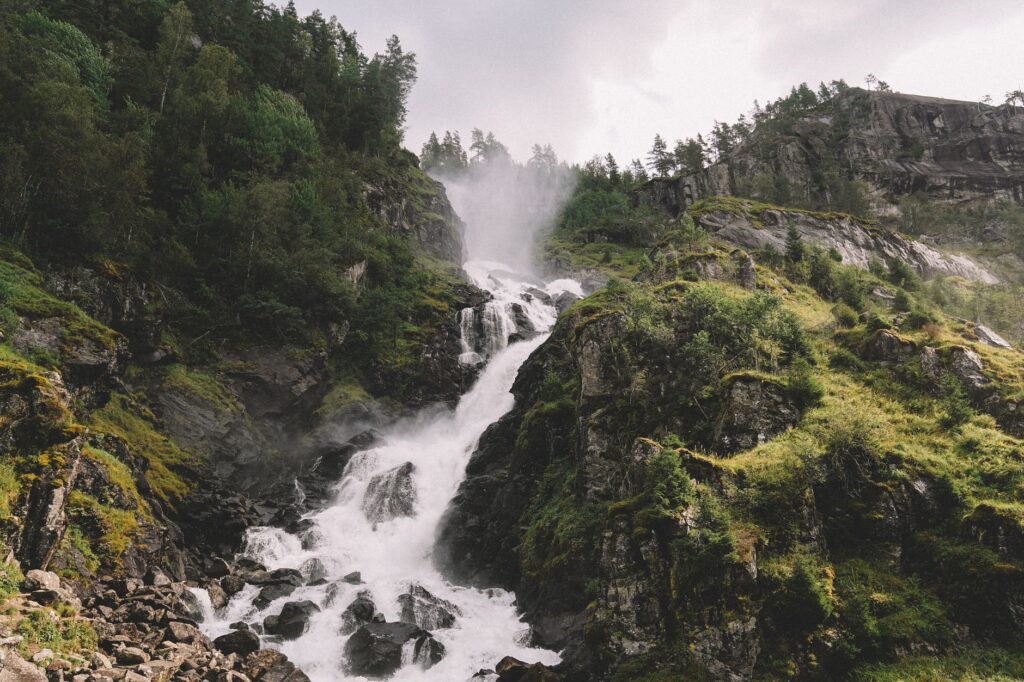
Intermediate stations, such as Gol and Ål, serve as supply and connection points for local residents and skiers seeking access to the region’s slopes. The pace of the train is unhurried yet steady, allowing passengers to gradually adapt to the transformation of the terrain. Tall conifers and green meadows dominate the first two hours of travel, offering a bucolic snapshot that contrasts sharply with the geological harshness awaiting in the upper elevations of the route.
The Ascent Toward the Hardangervidda Plateau
As altitude increases, tree vegetation abruptly disappears, ceding prominence to alpine tundra. The train reaches its highest elevation at Finse station, situated 1,222 meters above sea level, making it the highest railway station on Norway’s main network. Finse is not merely a key geographical point, but an historic enclave for polar expeditions. Explorers such as Fridtjof Nansen and Roald Amundsen used this inhospitable landscape as a training ground before their daring journeys toward the Arctic and the Antarctic.
At Finse station, time seems to stand still beneath the weight of perennial ice and the relentless wind blowing from the Hardangerjøkulen glacier.
The climate in this section of the line is notoriously fickle. Even in the dead of summer, it is possible to witness freezing gusts of wind or dense fog enveloping the tracks. To guarantee service continuity during Norway’s rigorous winters, kilometers of wooden snow-sheds and retaining walls have been constructed to protect the rails from avalanches. These structures, visible from the train windows, form an inseparable part of the route’s architectural landscape.
The Engineering Masterpiece in Flåm
One of the ultimate highlights for those exploring this railway corridor is the opportunity to make a strategic detour at Myrdal station. From there, travelers descend via the famous Flåmsbana, the Flåm Railway, considered one of the steepest conventional-track train rides in the world. With a gradient of 55 percent across eighty percent of its route, this secondary line descends in a zig-zag through the Flåmsdalen valley down to the shores of the Aurlandsfjord, an arm of the majestic Sognefjord.
The construction of the Flåmsbana, completed in 1940 after two decades of labor, required the excavation of twenty tunnels, eighteen of which were hand-carved entirely by workers. The train makes a brief photo stop next to the impressive Kjosfossen waterfall, where the roar of the water and cold mist envelop passengers stepping briefly onto the platform. This secondary railway connection demonstrates how Norwegian engineering successfully integrated heavy transport into vertical cliffs without irreversibly altering the delicate balance of the ecosystem.
Voss and the Transition Toward the Atlantic Coast
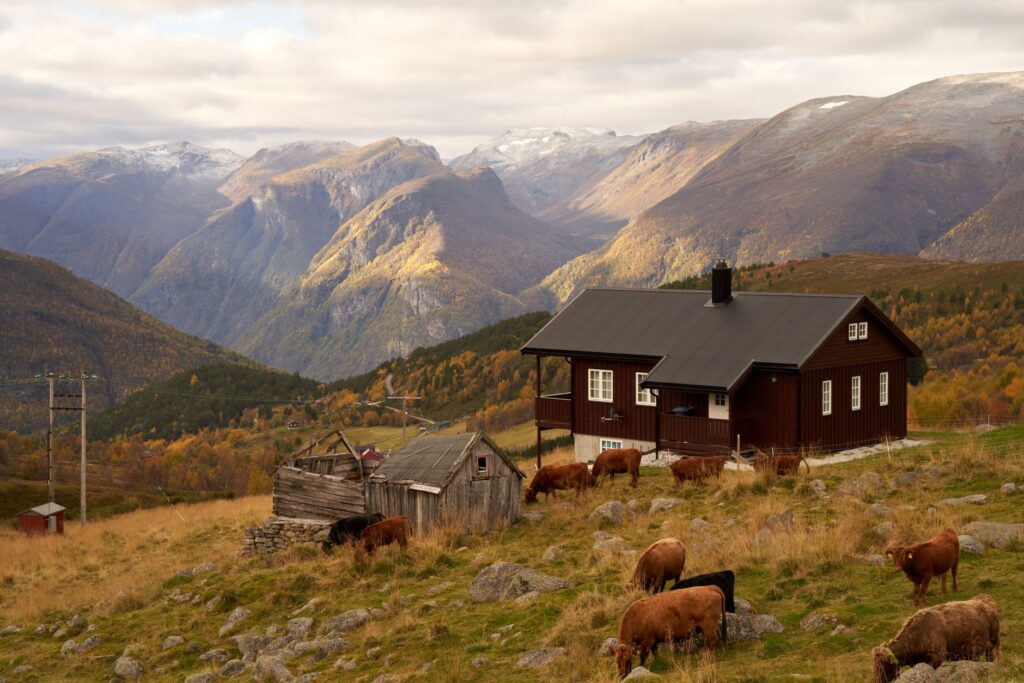
Returning to the main line at Myrdal, the train resumes its westward descent toward Voss, a town located beside Lake Vangsvatnet that enjoys a strong reputation as Norway’s capital of adventure sports. Voss offers a stark visual transition: the perpetual snows of the high plateau are left behind, replaced by steep slopes covered in lush forests, roaring waterfalls plunging vertically, and traditional small farms featuring turf roofs.
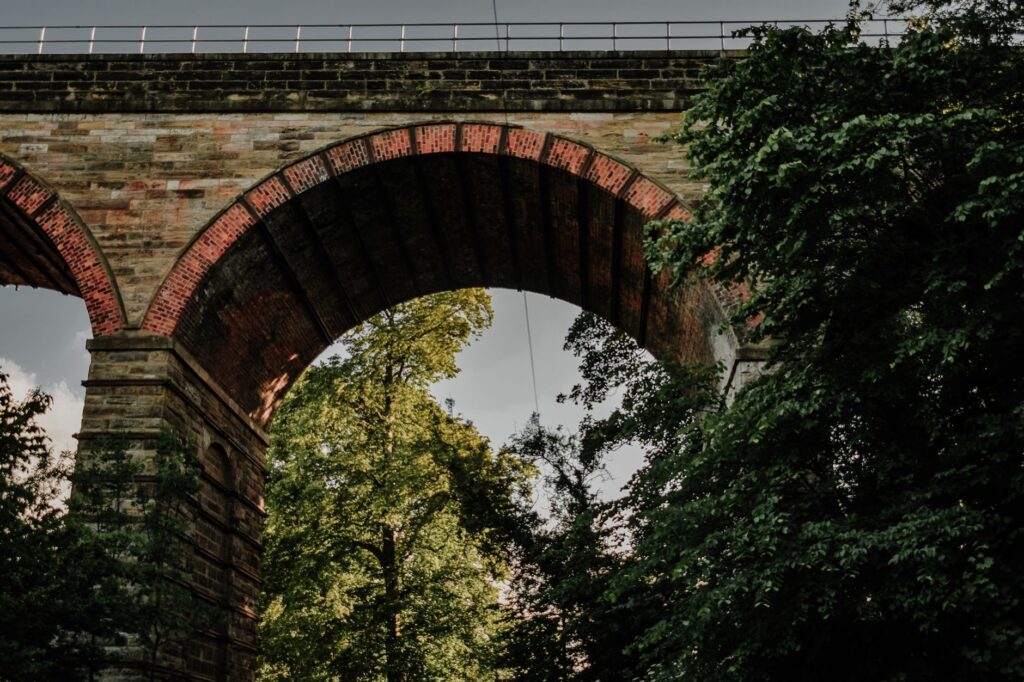
The railway infrastructure in this section consists of numerous bridges and short tunnels that bridge the abrupt changes in terrain. The presence of water is constant, appearing either as intense turquoise glacial lakes or salmon rivers winding toward the sea. Voss also represents an important intermodal junction where travelers can make a seamless transition to regional buses connecting with the more remote fjords of the Vestland region.
Arrival in Bergen, the Gateway to the Fjords
The final stretch of the journey toward Bergen station unfolds among urban tunnels and marine inlets announcing the proximity of the Atlantic Ocean. Bergen, Norway’s second-most populous city, welcomes travelers with a railway terminal inaugurated in 1913, designed by architect Jens Zetlitz Monrad Kielland, whose neo-Romanesque style reflects the historical economic and cultural solidity of the port city.
Nestled between seven mountains and surrounded by the sea, Bergen was a fundamental trading hub of the Hanseatic League during the Middle Ages. The Bryggen district, with its iconic rows of colorful wooden houses lining the wharf, synthesizes the rich maritime heritage that complements the alpine experience enjoyed aboard the train. Arriving in Bergen by rail offers an integrated urban perspective, placing the station just a short walk from the historic center and the ferries sailing toward the western fjords.
Practical Information for Planning Your Trip
The Bergen Line operates year-round with several daily departures managed by the state railway company Vy. The full journey between Oslo S and Bergen takes between six and a half and seven hours, depending on weather conditions and technical stops. Tickets are generally divided into standard classes and seats with mandatory reservation, alongside family carriages and overnight sleeper compartments.
- Advance Bookings: It is highly recommended to purchase tickets months in advance via the official Vy website to access discounted Minipris fares.
- Luggage: Trains feature designated luggage storage spaces, though traveling light is advised due to corridor layouts and the need to manage baggage during transfers.
- Connections: The ticket allows for easy combination of the main route with the Flåmsbana detour and scenic tourist ferries through the Nærøyfjord.
- Climate and Clothing: Even in summer, the thermal difference between Oslo and the Finse plateau can exceed fifteen degrees Celsius, making warm layers and windbreakers essential.

Conclusion: A Journey That Defines the Norwegian Territory
Traveling along the Bergen Line is far more than moving from point A to point B; it is a profound immersion into the topography and history of a country sculpted by ice and sea. From the bustling modernity of Oslo to the historic wharf of Bergen, passing through the majestic solitude of Hardangervidda, this railway corridor proves that the journey can be just as memorable as the final destination. The combination of pioneering civil engineering with the preservation of protected natural landscapes establishes this route as an undisputed benchmark in global rail tourism.

