Introduction to Europe’s Waterway Artery
From the glaciers of the Grisons in the Swiss Alps to its mouth in the North Sea, the Rhine River has served for millennia as Europe’s primary communication route. Today, this waterway and the parallel railway corridors running alongside it constitute the world’s most densely populated and efficient intermodal transport system. Far from being merely a landscape of medieval castles and terraced vineyards, the Rhine Valley is a colossal logistical machinery where Swiss precision, German industrial might, and Dutch port openness come together every single day of the year.
Understanding the operation of this corridor requires looking beyond fluvial romanticism. Millions of tons of cargo and passengers circulate simultaneously via water, through the four-track railway lines bordering both banks, and along the highways connecting production centers with global distribution hubs. This report details the infrastructure, daily operations, and future challenges of a route indispensable to understanding contemporary mobility.
Geography and Layout of the Rhenish Corridor
The Rhine flows for over 1,230 kilometers across six countries: Switzerland, Liechtenstein, Austria, Germany, France, and the Netherlands. The navigable and industrially critical stretch properly begins in Basel, where turbulent alpine currents transform into a gentle, deep stream suitable for large-scale commercial navigation. From that point, the river crosses key regions such as the Alsatian plain, the Loreley gorge in the Middle Rhine—famous both for its legends and the extreme complexity of its navigation—and the immense industrial conurbation of the Ruhr.
Parallel to this channel, the terrestrial corridor unfolds with unmatched density. The left and right bank railway lines of the Rhine form part of the trans-European Rhine-Alpine corridor, linking the ports of Rotterdam and Antwerp with the Italian port of Genoa. This superposition of water and land allows heavy freight transport to adapt flexibly to seasonal fluctuations in river flow, a factor that has gained special relevance due to recent summer drought episodes.

Inland Navigation: Barges, Pushers, and Port Authorities
The backbone of cargo transport on the Rhine is composed of a highly specialized fleet of river barges and pusher vessels. These steel giants can transport the equivalent of hundreds of heavy trucks in a single journey, drastically reducing carbon dioxide emissions per ton-kilometer compared to road transport. Modern vessels are equipped with advanced propulsion systems and state-of-the-art radars that enable navigation even in dense fog or during nighttime hours.
Fluvial traffic management is centralized and coordinated by strict international regulations supervised by the Central Commission for the Navigation of the Rhine (CCNR). Port authorities at critical points such as Duisburg—the largest inland port in the world—regulate right-of-way priorities, speed limits, and draft restrictions. When water levels drop below safe thresholds, barges must lighten their load, a phenomenon known as Kleinwasser that forces logistics operators to activate contingency plans combined with rail freight.
The Parallel Railway System: High Speed and Heavy Freight
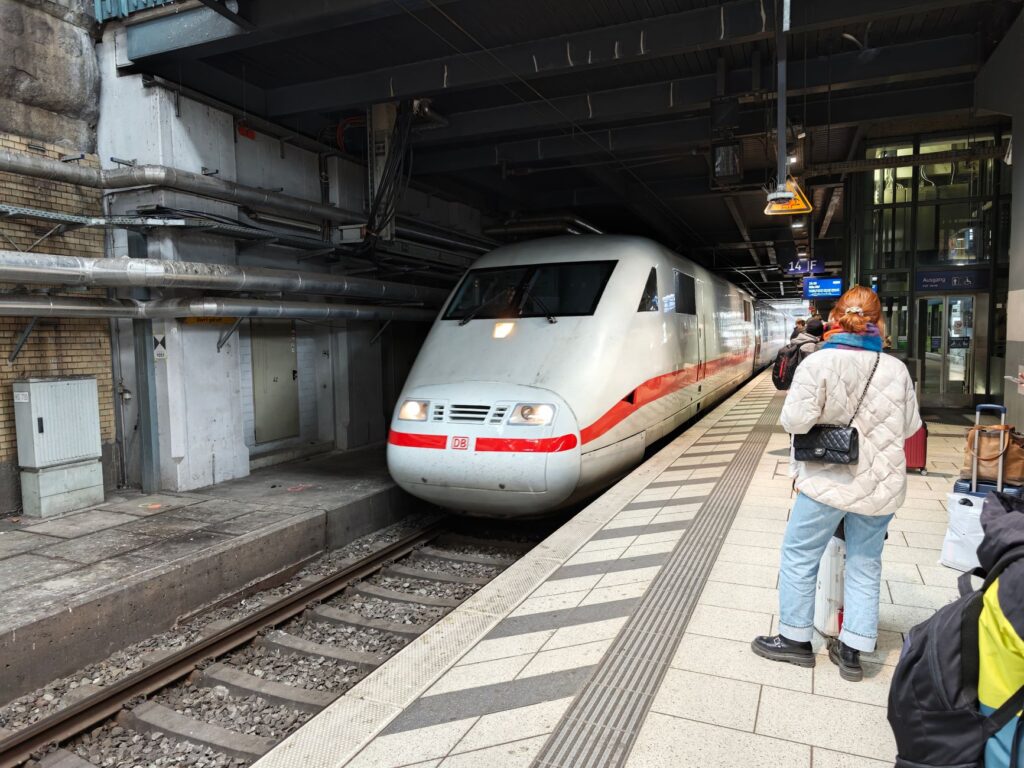
If the river is the highway for high volumes at moderate speeds, the rail tracks running a few meters from its banks represent speed and millimeter-level punctuality. The Rhine rail corridor is one of the busiest segments in the European network managed by Deutsche Bahn and the national networks of Switzerland and the Netherlands. These tracks carry intermodal freight trains loaded with maritime containers daily, alongside high-speed passenger trains such as ICE and EuroCity connecting Amsterdam and Frankfurt to Basel and Zurich within hours.

The coexistence of high-speed passenger trains and heavy freight trains on the same corridor requires extremely complex train path management. To relieve congestion, underground variants and base tunnels have been built in alpine approaches, such as the Gotthard Base Tunnel and expansion projects in the Middle Rhine Valley. These engineering works maintain the competitiveness of rail transport against roads, ensuring reliable transit times for international supply chains.
Inland Ports and Intermodal Hubs
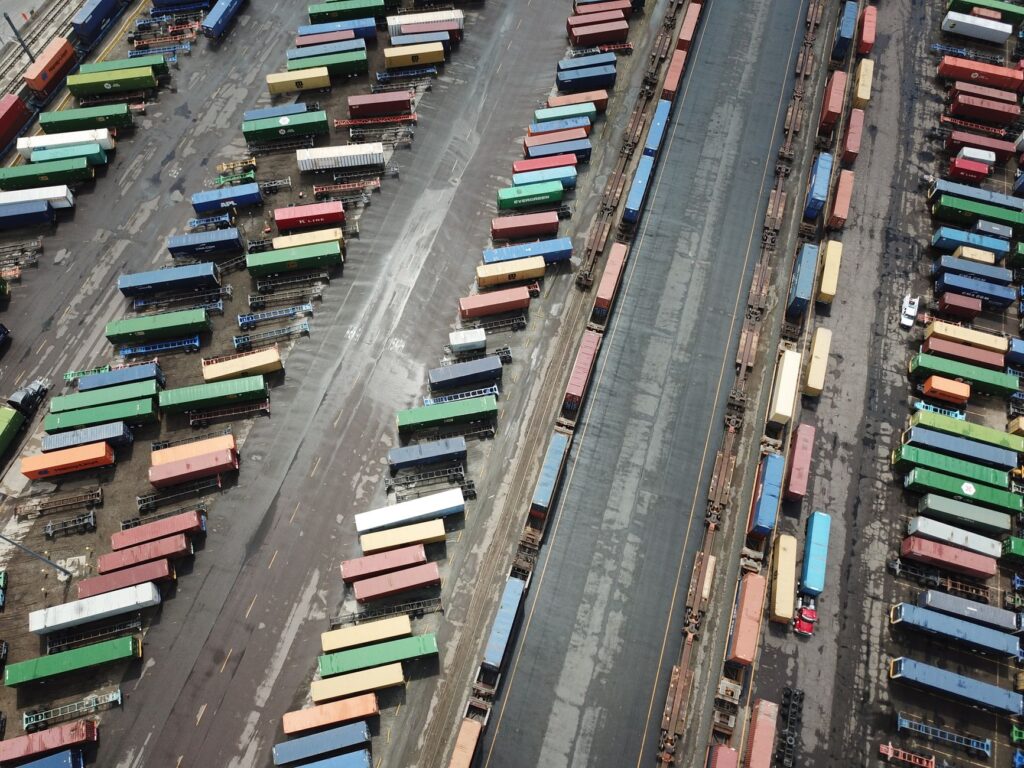
Ports along the Rhine are not mere docking piers, but complex intermodal logistics centers where inland navigation, rail, and road transport converge. Duisburg, Mannheim, Strasbourg, and Basel operate as true inland customs where deep-sea goods—initially unloaded at the macro-ports of Rotterdam or Antwerp—are automatically transferred to freight trains or electric trucks.
The true efficiency of the Rhine corridor does not lie in the speed of a single mode of transport, but in the invisible fluidity with which containers leap from ship to wagon and from wagon to truck without halting the momentum of the European economy.
These logistics nodes feature automated container yards, heavy-duty gantry cranes, and temperature-controlled warehouses operating continuously twenty-four hours a day. The digitalization of customs processes and the use of blockchain technology for tracking shipping documents have reduced port dwell times to historic lows, increasing the global competitiveness of the entire Central European region.
Climate Challenges and Operational Adaptation
In recent years, climate change has become the greatest threat to the stability of the Rhine corridor. Extremely hot summers and the reduction of the alpine snowpack cause dramatic drops in river flow during summer months. When water levels at key gauging stations like Kaub fall below certain limits, heavy cargo navigation becomes economically unviable or directly impossible, forcing the diversion of millions of tons toward the railway network and highways.
This vulnerability has accelerated adaptation plans within the inland navigation industry. Shipyards are designing a new generation of barges with shallower empty drafts and optimized hulls that can float and carry payload even under low-water conditions. Simultaneously, railway operators and transport authorities collaborate to establish emergency protocols capable of absorbing surplus river cargo in a coordinated manner without collapsing terrestrial routes.
River Tourism and Railway Heritage
Beyond its undeniable economic and industrial weight, the Rhine corridor remains one of the world’s most fascinating tourism destinations. Passenger river cruises, operated by prestigious international companies, allow travelers to leisurely explore the valley among steep vineyards, feudal fortresses, and historic cities like Mainz, Koblenz, and Bonn. These journeys offer a unique perspective on European history, combining contemporary comfort with the contemplation of a cultural landscape declared a UNESCO World Heritage Site.
For transport enthusiasts and technical history buffs, the rail routes flanking the river offer an exceptional journey. Various sections retain classic signaling and allow close observation of the complex interplay between 19th-century railway engineering and modern European Train Control Systems (ETCS). Railway museums and historic train associations periodically organize steam locomotive trips along the Rhine gorges, paying tribute to the machine that transformed the continent’s geography.

Practical Information for Travelers and Professionals
Planning a journey or logistical operation along the Rhine corridor requires understanding the particularities of its infrastructure. Below are key aspects to make the most of this transport axis:
Rail Connectivity: Mainlines operated by Deutsche Bahn, SBB (Switzerland), and NS (Netherlands) offer high frequencies. Booking in advance is recommended for international high-speed services (ICE and EuroCity), especially during holiday seasons.
River Cruises: Major passenger shipping lines operate from April through October. It is essential to check hydrological conditions seasonally, as sudden floods or prolonged droughts can temporarily modify planned itineraries.
Port and Hub Access: Professional visits to nodes such as the Port of Duisburg or Basel require prior authorizations and compliance with strict industrial and port safety regulations.
Tracking Applications: Industry professionals and interested travelers can check real-time water levels and traffic status through official portals of the German federal waterway administration (WSV) and national railway network applications.
Conclusion and Future Outlook
The Rhine corridor remains the silent engine of European prosperity. Its ability to harmoniously integrate fluvial, rail, and road transport demonstrates that sustainability and high-capacity logistics are not mutually exclusive concepts, but two sides of the same coin. As Europe advances toward its decarbonization and climate neutrality goals, this intermodal axis is poised to play an even more prominent role, shifting freight transport away from roads and toward electric waterways and rails.
Challenges arising from climatic variability and constant demand growth demand continuous investment in digitalization, selective dredging, and infrastructure modernization. Far from yielding to pressure, the Rhine corridor continuously reinvents itself, consolidating its position as a global benchmark in transport engineering, intermodal management, and cross-border cooperation.