Introduction to Europe’s Last Forest Frontier
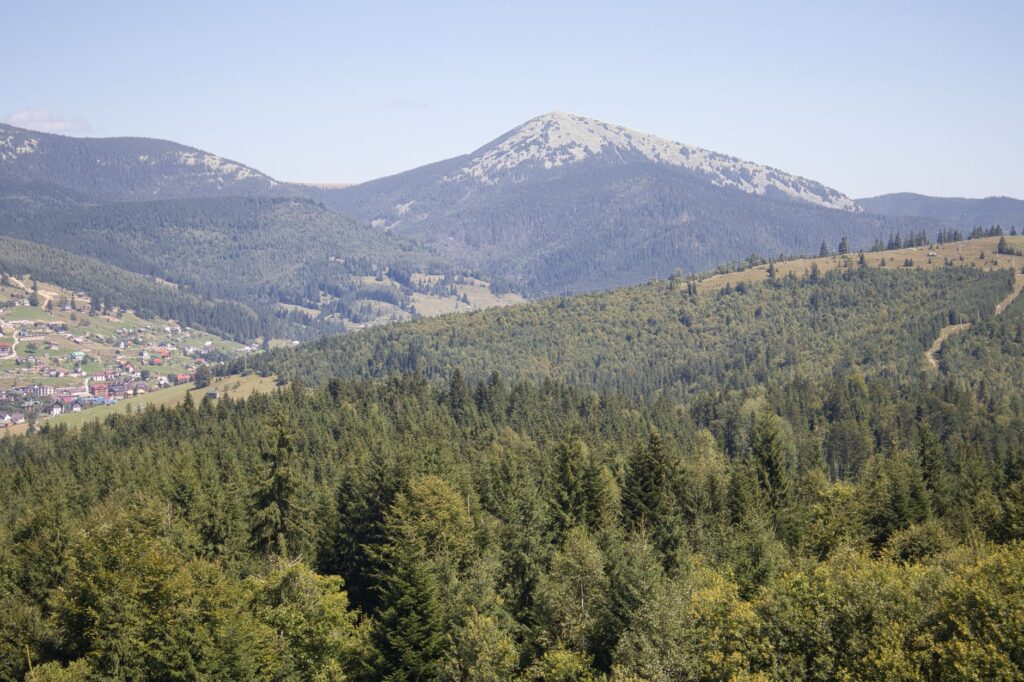
The Carpathians represent one of Central and Eastern Europe’s greatest ecological reserves, a mountainous arc winding from the Czech Republic to Romania and harboring the continent’s largest population of large carnivores outside of Russia. In this vast mosaic of primary beech, fir, and pine forests, the Eurasian lynx (Lynx lynx) finds the ideal habitat for survival. Unlike the densely populated landscapes of Western Europe, where habitat fragmentation has erased large feline presence, the Carpathians retain fundamental ecological connectivity enabling population movements across national borders.
The Eurasian lynx is a solitary, elusive predator with predominantly crepuscular and nocturnal habits. Its dense, spotted coat, characteristic tufted ears, and broad paws acting as natural snowshoes make it perfectly adapted to harsh mountain winters. However, its apparent invisibility in the field contrasts with the intense scientific and conservation work undertaken to unravel population dynamics, evaluate health status, and ensure coexistence with rural communities bordering the region’s national parks.
Understanding the reality of the Eurasian lynx in the Carpathians requires looking beyond the romanticism of pristine wilderness. It involves analyzing satellite telemetry data, studying prey densities—such as roe deer, red deer, and chamois—and examining ecological corridors preventing genetic isolation. This report addresses the species’ current situation from a rigorous perspective, documenting fieldwork by biologists, ecologists, and protected area managers safeguarding one of Europe’s most complex and fascinating ecosystems.
Ecology and Behavior of Europe’s Largest Feline
The Eurasian lynx is the third-largest cat species globally and the largest of the three present in Europe, surpassed in size only by leopards and tigers on other continents, though sharing size categories in Europe with the Iberian lynx while being significantly more robust. Adult males in the Carpathians can reach between 20 and 30 kilograms, while females are slightly smaller. Their morphology is optimized for ambush hunting in rugged, forested terrain, where dense vegetation allows close approach before a lightning attack.
Unlike canids such as wolves, which rely on chases and group cooperation, the lynx relies on keen vision and hearing, plus explosive short-distance acceleration. Its primary diet in the Carpathians consists largely of medium and small ungulates. Roe deer (Capreolus capreolus) form the staple food across most seasons, though during harsh winters when snow impedes larger ungulates, the lynx preys upon young red deer or chamois.
The Eurasian lynx is not an indiscriminate destroyer of game, but a key biological regulator selectively removing sick or weak individuals, maintaining healthy ungulate populations across the Carpathians.
A lynx’s territory is vast, varying with prey availability, population density, and topography. An adult male may patrol an area from 100 to 300 square kilometers, marked via scent secretions and tree scratching. Females establish smaller ranges, especially during rearing, selecting rock cavities, root systems of fallen trees, or small caves to give birth to litters of one to three kittens.
The Carpathians as a Refuge and Ecological Corridor
Carpathian geography is decisive for European biodiversity conservation. Spanning over 1,500 kilometers, this mountain chain acts as a green spine connecting Central and Eastern Europe. Ancient, mature forests shelter not only the Eurasian lynx but also stable populations of brown bears (Ursus arctos) and grey wolves (Canis lupus), forming the classic European large carnivore triad.

Landscape connectivity differentiates the Carpathians from other European ranges like the Alps. While massive road infrastructure, ski resorts, and intensive urbanization have historically fragmented Alpine habitats, the Carpathians retain vast areas of limited human intervention. This enables young lynx reaching sexual maturity to disperse for new territories without insurmountable barriers, vital for gene flow and preventing inbreeding depression within the Carpathian metapopulation.
However, this connectivity faces contemporary threats. Road expansion, unsustainable commercial logging in peripheral zones, and hydroelectric projects gradually fragment sensitive biological corridors. International bodies and environmental ministries in Romania, Slovakia, Poland, and Ukraine collaborate on cross-border initiatives to identify and protect these ecological bottlenecks, ensuring uninterrupted fauna flow between mountain massifs.
Scientific Monitoring Methods: Telemetry and Camera Trapping
Studying such an elusive animal requires advanced technology and rigorous fieldwork. For decades, biologists relied on winter snow tracking, a traditional yet effective technique to document presence, hunting traces, and minimum densities. However, combining GPS-GSM telemetry collars and camera-trapping networks has revolutionized research in the Carpathians over the past fifteen years.
Camera traps with infrared motion sensors and high nighttime sensitivity are strategically placed along ridge trails, valley junctions, and territorial markings. Because each lynx’s coat pattern is unique, researchers identify individuals from photographs. Using capture-recapture statistical models, scientists estimate population densities in specific study areas without directly disturbing the animals.
When detailed tracking of seasonal movements and habitat selection is needed, authorized biologists use non-invasive capture methods to fit lightweight telemetry collars. These devices transmit precise real-time location data via satellite, revealing fascinating insights into home ranges, maternal dependency durations, and high-anthropogenic-risk zones like secondary road crossings where vehicle collision risks are high.
The Coexistence Challenge: Livestock and Social Acceptance
Long-term lynx conservation in the Carpathians depends on acceptance and coexistence with local rural communities. In rural Romania, Ukraine, and Slovakia, extensive sheep and goat farming remains a traditional economic activity. Although the lynx overwhelmingly prefers wild ungulates, occasional attacks on unprotected domestic livestock grazing near forests or mountain meadows occur.
Unlike wolves, which hunt in packs and cause multiple casualties, the lynx is a solitary predator whose incursions usually result in single animal losses. Nonetheless, economic and psychological impacts on smallholders can strain relations with conservation authorities. To mitigate conflicts, NGOs and government agencies distribute robust native livestock guard dogs, install electric fences, and improve rapid, fair compensation schemes for wildlife-caused damage.

Environmental education in local Carpathian schools is equally fundamental. Showing younger generations the ecological value of the lynx as a symbol of forest health transforms the feline’s perception from a competing threat to an irreplaceable natural and cultural heritage.
Guidelines for Responsible Observation and Scientific Ecotourism
Travelers interested in deep nature and wildlife in the Carpathians must understand that direct sighting of a wild Eurasian lynx is exceptionally improbable, reserved mostly for patient researchers or pure chance after weeks in extreme conditions. Commercial ventures promising guaranteed wild lynx sightings often lack ethical or scientific rigor, potentially altering natural behavior or encouraging illegal feeding.
Responsible ecotourism in the Carpathians does not seek immediate gratification from casual sightings, but actively funds habitat conservation and supports local economies committed to environmental preservation.
Scientific tourism and wildlife observation initiatives focus on broader forest ecosystem interpretation. Accompanied by qualified local guides and field biologists, visitors learn to recognize signs of presence—tracks, scratches, feeding remains—participate in educational camera-trapping workshops, and hike authorized trails minimizing ecological footprints. These experiences foster appreciation for Carpathian forest complexity without compromising resident fauna wellbeing.
When planning a trip, collaborating with local tour operators reinvesting profits into large carnivore conservation projects is strongly encouraged. Adhering strictly to natural park regulations, avoiding drones in nesting areas, and maintaining safe distances from wildlife ensures the Carpathians remain an untamed sanctuary for future generations.

Practical Information for Travelers and Naturalists in the Carpathians
Planning an expedition or nature trip to the Eastern Carpathians requires meticulous preparation due to demanding terrain, shifting weather, and the remoteness of high-wildlife zones. Essential logistical and regulatory aspects ensure safe and rigorous organization:
- Best Time to Visit: Autumn (September and October) offers stable conditions for hiking, botany, and ungulate observation, while winter (December to March) suits specialized guided snow tracking, requiring advanced technical equipment.
- Access and Transport: Primary gateways to the Eastern Carpathians include international airports in Romania (Cluj-Napoca, Iași) and Slovakia (Košice). Renting a four-wheel-drive vehicle or hiring authorized local transport is essential for reaching mountain rural areas.
- Permits and Regulations: Critical lynx habitats lie within national parks, biosphere reserves, or Natura 2000 sites. Access to strictly protected zones requires special permits issued by local forestry administrations.
- Recommended Gear: Layered technical clothing, waterproof mountain boots with high-traction soles, quality optical binoculars, headlamps, and photographic equipment adapted to low-light conditions.
- Safety in Large Carnivore Zones: Following group-hiking protocols, avoiding food storage near campsites, and knowing action guidelines for unexpected encounters with brown bears or wolves—species sharing lynx territory—is mandatory.
Conclusion: The Future of the Phantom Cat in the Heart of Europe
The Eurasian lynx remains the silent guardian of deep Carpathian forests, a phantom feline whose mere existence confirms human-wildlife coexistence remains possible in Europe. Combined efforts from scientists, environmental managers, legislators, and local communities have consolidated stable populations where other predators suffered historical persecution and habitat loss.
However, future challenges are formidable. Climate change, ecological corridor pressure, and territorial fragmentation demand constant vigilance and closer cross-border cooperation. The future of the Eurasian lynx in the Carpathians is not merely a matter of conservation biology; it is an ethical indicator of Europe’s capacity to preserve nature in its most genuine, wild, and complex state.