


Introduction to the Two-Wheeled Revolution
Dawn in Copenhagen does not sound like roaring engines or the metallic frenzy of morning traffic jams. The dominant sound is a steady, rhythmic murmur: the friction of thousands of tires against asphalt, the soft click of gear shifts, and the gentle ringing of bicycle bells greeting the new day. Far from being a seasonal phenomenon or a picturesque eccentricity, this incessant flow of people pedaling is the heartbeat of a metropolis that decided decades ago to rewrite the rules of global urbanism. The capital of Denmark is not simply a city with bike lanes; it is a living ecosystem where the bicycle is the undisputed protagonist of daily mobility.
This report examines Copenhagen’s journey from a congested city choked by the automotive boom in the second half of the twentieth century to its status as the global benchmark for active mobility. Through courageous political decisions, long-term urban planning, and consistent investment in infrastructure, the city demonstrates that it is possible to return public space to citizens, drastically reducing polluting emissions and measurably improving public health.
The Historical Turning Point and the Oil Crisis
To understand Copenhagen’s cycling present, it is imperative to look to the past. During the early decades of the twentieth century, the bicycle was a popular means of transport in Denmark, much like in many other European countries. However, the post-World War II economic boom and the subsequent democratization of the private car threatened to bury this tradition. Streets began to widen to accommodate cars, parking lots devoured historic squares, and pedestrians and cyclists were relegated to a dangerous and marginal background.
The radical shift took shape in the early 1970s. The 1973 oil crisis shook the economic foundations of Western Europe and exposed the extreme vulnerability of societies dependent on fossil fuels. In Copenhagen, citizens and urban planners responded with pragmatism and foresight. The first car-free Sundays were instituted, an initiative that immediately highlighted the potential of streets free from noise and pollution. Danish society realized that the model centered exclusively on the private automobile was unsustainable in the long term, both from an environmental perspective and a social and economic one.
The oil crisis was not merely an economic emergency, but the catalyst that forced Copenhagen to rethink its own spatial and human survival.
Urban Planning and the Prioritization of Public Space
Beginning in the 1970s, the municipal administration began implementing a series of pioneering urban policies under the guidance of visionary architects and urban planners such as Jan Gehl. The fundamental premise was simple yet revolutionary: invest in what you wish to promote. If you want more cars, build highways and parking lots; if you want more bicycles and pedestrians, design a network of safe, continuous, and attractive infrastructures for active mobility.
The commercial streets of the historic center, spearheaded by the iconic pedestrian street Strøget, were gradually closed to vehicular traffic. This gradual pedestrianization did not stifle commercial activity, as merchants initially feared, but instead revitalized it exponentially. Sidewalks were widened, thousands of surface parking spaces were eliminated each year, and the liberated space was allocated to restaurant terraces, trees, and, above all, protected bike lanes segregated from heavy traffic.
Advanced Infrastructure: Beyond the Traditional Bike Lane
What distinguishes Copenhagen from other cities with cycling initiatives is the sophistication and coherence of its infrastructure network. Bike lanes are not mere painted lines on the asphalt that disappear at complex intersections. They are physical infrastructures elevated or separated by safety islands, designed with strict criteria for visibility, width, and fluidity.
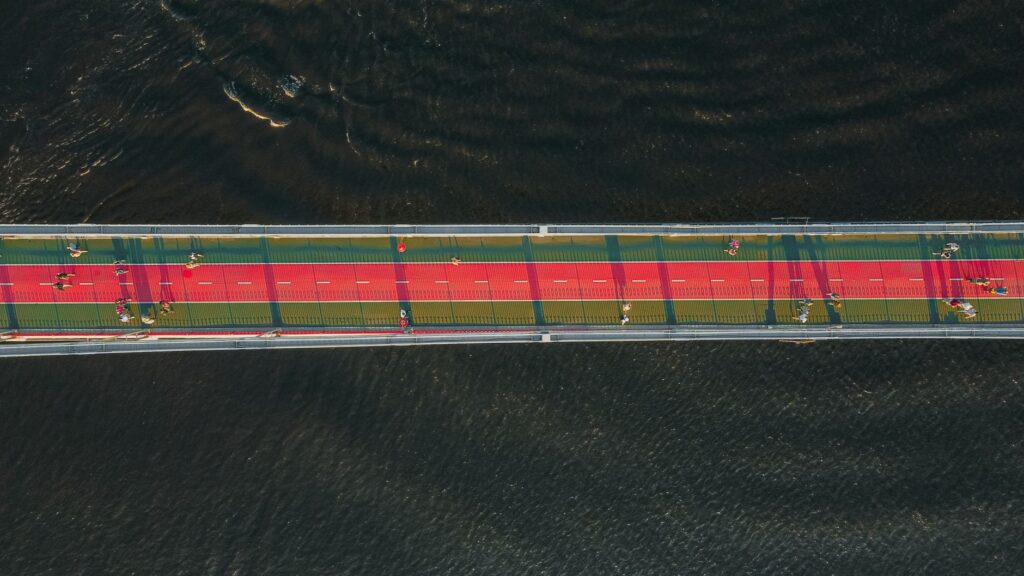
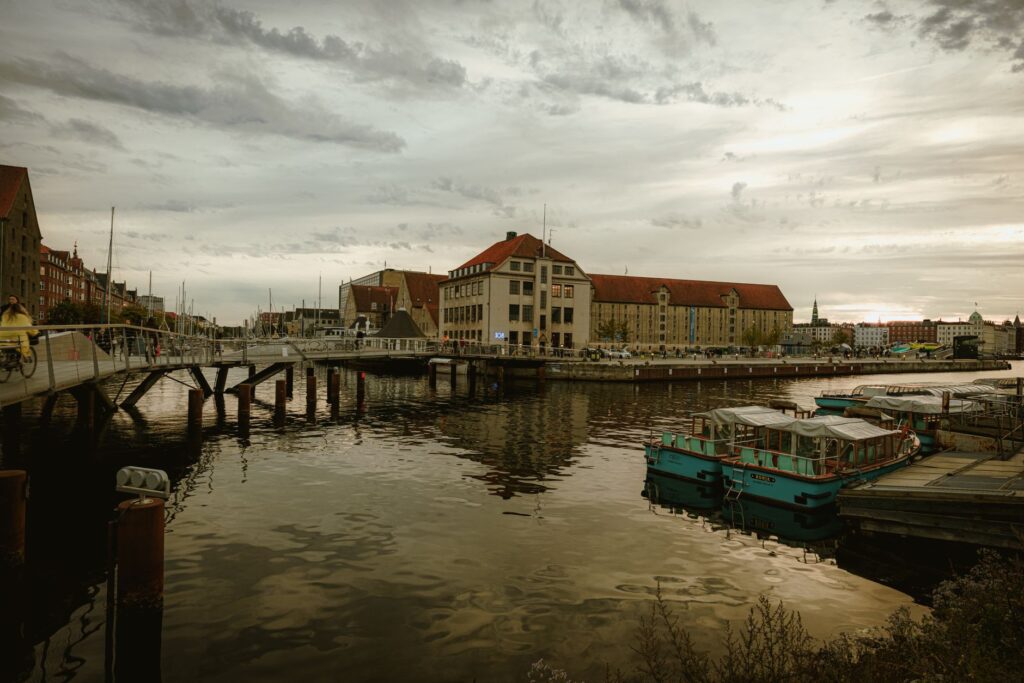
One of the most notable milestones in recent urban engineering is the construction of bicycle bridges, popularly known as cykelslanger or bicycle snakes. Landmark infrastructures such as the Cykelslangen bridge or the Bryggebroen connect neighborhoods separated by canals or urban highways, allowing cyclists to bypass geographical and traffic obstacles without dismounting. These bridges not only shorten travel times but have become architectural symbols of the city’s sustainable modernity.
- Physical separation between motorized traffic, cyclists, and pedestrians on 90% of main arteries.
- Traffic light cycles coordinated at an average speed of 20 kilometers per hour to foster the cycling ‘green wave.’
- Clear signage and automated bicycle counting systems integrated into the urban pavement.
- Sufficient width in lanes to allow safe overtaking and the transit of cargo bikes.
Intermodal Integration with Public Transport
The success of sustainable mobility in Copenhagen does not rely solely on the isolated use of the bicycle, but on its seamless symbiosis with public transport. The metropolitan rail network (S-tog), the metro, and the bus network are designed to accommodate cyclists naturally and without bureaucratic friction.
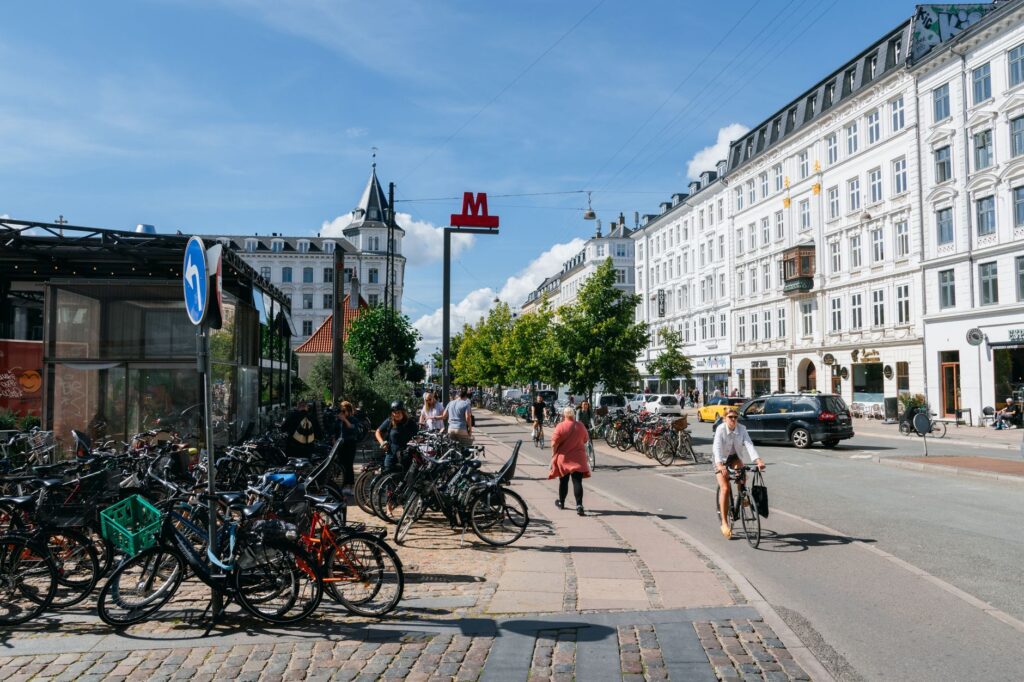
All train and metro stations feature ample secure parking facilities, both underground and at street level. Furthermore, bringing bicycles onto commuter trains is permitted free of charge during most hours, facilitating medium- and long-distance travel for citizens living in peripheral municipalities of the metropolitan region. This intermodality eliminates the dichotomy between active transport and public transport, offering a real and competitive alternative to the private car even for complex journeys.
Socioeconomic Impact and Public Health
The benefits of this sustained commitment to the bicycle go far beyond the mere reduction of carbon dioxide emissions. Various socioeconomic studies conducted by the municipality and Danish academic institutions have quantified the return on investment for every kilometer traveled by bicycle versus every kilometer driven by car.
While car use generates net costs for society in terms of infrastructure wear, congestion, accidents, and noise or air pollution, bicycle use generates a positive net benefit. Lower incidence of cardiovascular diseases, reduced absenteeism from work, a drastic reduction in healthcare costs, and a substantial improvement in urban air quality are some of the variables that justify public investment in cycling infrastructure. The city is, ultimately, an environment where the health of its inhabitants is fostered passively through the design of everyday space.
Investing in bike lanes is not an expenditure on secondary environmental policies, but one of the most profitable investments in public health and urban economic viability.
Cycling Culture and Social Cohesion
The Copenhagen phenomenon cannot be understood without observing the sociological aspect. In this city, riding a bicycle is not associated with a specific age group, a certain income level, or a particular ideological stance. Politicians, business leaders, students, the elderly, and entire families share the bike lanes with absolute naturalness.
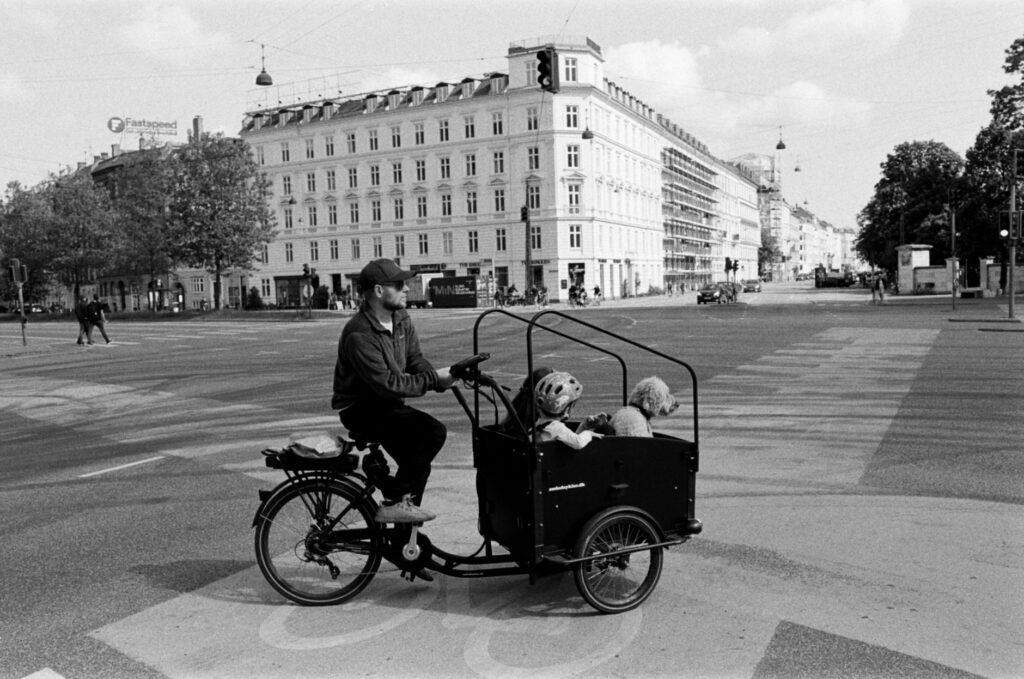
The famous cargo bikes (cargobikes), equipped with front boxes, have become the quintessential family vehicle. They are used to transport weekly groceries, school backpacks, and young children to municipal daycare centers. This social transversality generates a profound sense of community and cohesion. Socioeconomic differences blur when all citizens travel through the same public space at the same speed and under the same rules of civic coexistence.
Current Challenges and the Horizon of Climate Neutrality
Despite its many achievements, Copenhagen is not without challenges. The continuous demographic growth of the metropolitan region places constant pressure on available public space. During rush hours, some of the main cycling corridors experience congestion—not of cars, but of bicycles—forcing planners to continuously widen existing lanes.
Likewise, the rise of electric scooters and other forms of personal micromobility has introduced new complexities in managing slow traffic, requiring updates to speed limits, parking regulations, and road safety rules. The current goal of the municipal government is ambitious: to consolidate total climate neutrality in the coming years, fully electrify the remaining public bus fleet, and further integrate traffic management systems using artificial intelligence to optimize the fluidity of active mobility.
Practical Information for Visitors and Professionals
For travelers, urban planners, and professionals interested in studying or experiencing Copenhagen’s model firsthand, understanding the basic rules of coexistence and operation of its transport network is essential:
- Bicycle Rentals: The city features public bike-sharing systems equipped with touchscreens and GPS, alongside numerous private urban rental agencies.
- Traffic Rules: The use of front and rear lights is mandatory during nighttime hours or periods of low visibility. Hand signals for turns (left, right, or stopping) must be strictly followed to maintain safety within the flow.
- Pedestrian Respect: Cyclists must always yield the right-of-way to pedestrians at crosswalks and exercise extreme caution when riding past bus stops.
- Time of Year: The cycling infrastructure operates 365 days a year. Municipal cleaning services prioritize snow removal and salting of bike lanes even before motor vehicle roadways during the winter months.
Conclusion: A Mirror for Global Urbanism
Copenhagen’s case demonstrates that urban transformation is not a matter of exceptional natural resources or benign climatic conditions—the city experiences cold, windy, and rainy winters—but of political will, technical rigor, and social constancy. By placing the human scale above the mechanical scale of the automobile, the Danish capital has recovered its livability and solidified its status as a beacon for twenty-first-century urbanism. In an urbanized planet urgently seeking development models respectful of ecological limits, the silent rolling of bicycles through Copenhagen offers a clear, viable, and deeply hopeful answer.

