Origins and Historical Configuration of Mobility in Paranhos
Paranhos, located in the district of Porto, Portugal, has evolved from its ancient agrarian origins to become a densely populated territory where urban mobility is essential. With a population exceeding forty-five thousand inhabitants, this urban parish underwent a radical transformation during the twentieth century, driven by the need to connect old rural settlements with the dynamic commercial centre of Porto. Initial communication routes, composed of cobblestone paths and cart tracks, gradually gave way to more complex transport infrastructures capable of absorbing demographic growth and residential expansion.
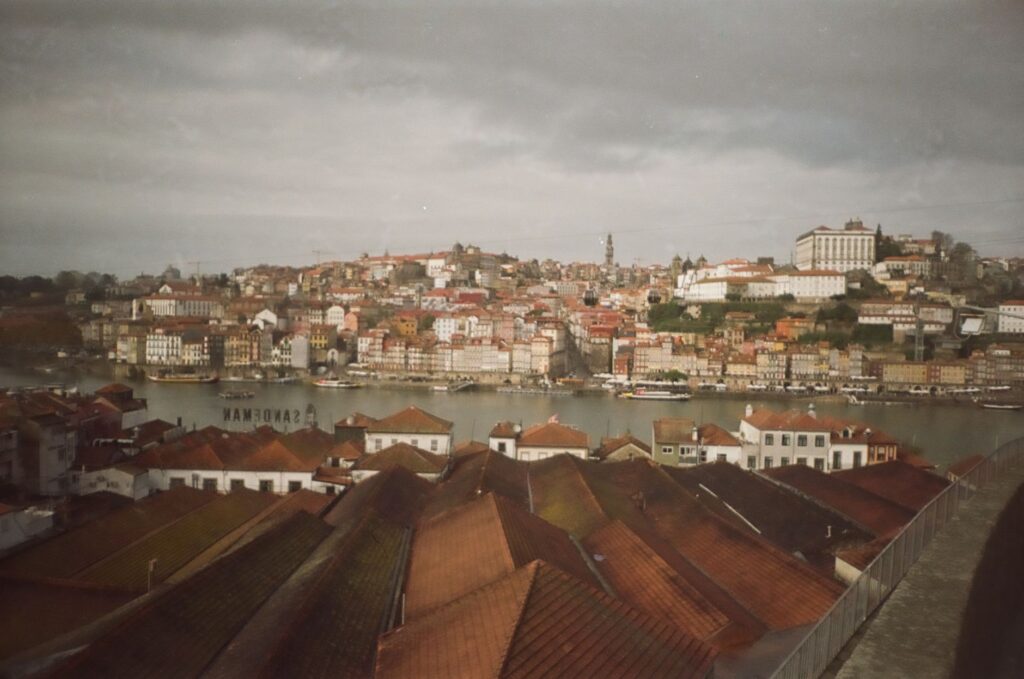
The current urban layout reflects this historical transition with remarkable precision. The streets descending toward the main thoroughfares retain fragments of their traditional physiognomy, while the steady flow of passengers demonstrates how public transport has become the true backbone of the area. Unlike major metropolitan centres where anonymity dominates the journey, in Paranhos daily commutes retain a neighbourhood character, where regular users recognise the faces sharing the same platform or stop each morning.
The collective memory of this parish preserves the recollection of an era when traveling demanded hours of effort along dusty or muddy paths. The gradual arrival of guided transport solutions radically altered the economic and social opportunities of residents, allowing entire generations to access higher education and specialized jobs in central Porto without abandoning their traditional homes.
The Role of the Railway Network and Modern Access
Paranhos’s integration into the metropolitan transport network responds to planning meticulously designed to prevent the isolation of its residential neighbourhoods. Although it lacks a major central railway station within its strict boundaries, its proximity to Porto’s main train and metro lines defines the routine of its inhabitants. Rail transport represents the vital spine that allows students, workers, and visitors to travel punctually to the heart of the city or to neighboring towns in northern Portugal.
Nearby stops and stations function as intergenerational meeting points. University students heading to nearby campuses share carriages with veteran workers and residents running daily errands. This uninterrupted flow of people has shaped local commerce, placing small cafes, greengrocers, and kiosks in the immediate vicinity of transit points, creating an economic ecosystem directly dependent on the efficiency of train and bus timetables.
The synchronization between different transport modes has improved substantially in recent decades. Users now have real-time information available through digital panels and mobile applications, which reduces uncertainty and optimizes waiting times. This technical modernization has not diminished the human warmth of the stations, where morning greetings among neighbors remain a constant that humanizes technology.
Urban Architecture and Everyday Landscape
Walking through Paranhos means observing architecture that constantly engages with transit. Traditional granite facades and mid-twentieth-century residential buildings alternate with contemporary constructions designed to accommodate the growing urban population. Pavements, although narrow in some historical sections, have been adapted to facilitate fluid transfers between urban buses and peripheral metro stations, minimising waiting times on foot.
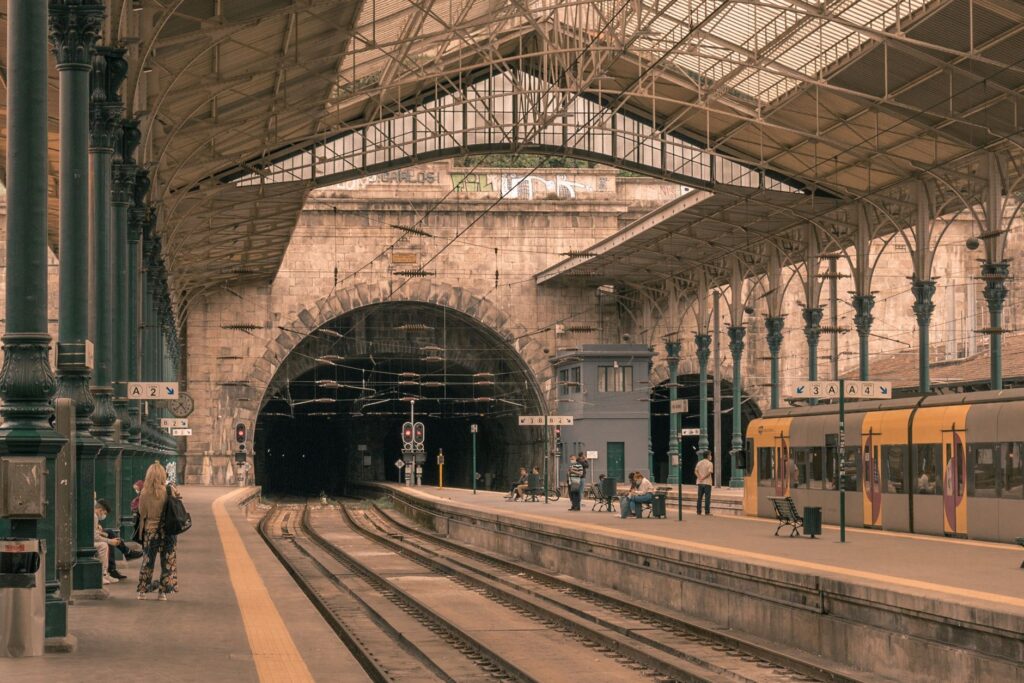
The urban landscape cannot be understood without the constant movement of public transport vehicles. Shelters and pedestrian crossings structure space, compelling a harmonious coexistence between pedestrians and the mobility network. During rush hour, the cadence of trains and trams sets the rhythm of commercial activity, demonstrating that transport infrastructure is not merely a means to get from one point to another, but the organizing element of community life.
Landscape elements integrate discreetly into the surroundings. Pocket parks and small tree-lined squares offer visual relief to the traveler, creating a smooth transition between the bustle of the platforms and the tranquility of the interior residential streets. This planning ensures that demographic densification does not drastically alter the quality of life and visual well-being of the inhabitants.
Social Life Around Stations and Stops
Daily routine in Paranhos revolves around its connection points. In the morning, the fast pace of those heading to work contrasts with the afternoon pause of residents returning home. Small squares adjacent to major stops act as improvised agoras where local news is exchanged, weather is debated, or neighbourhood errands are organised. The proximity of transport infrastructure fosters a sense of belonging unusual in high-density residential areas.
Local businesses have learned to take advantage of this dynamic. Traditional bakeries and grocery stores open their doors before dawn to serve the early-morning traveler, while local cafes fill with customers taking advantage of the minutes before transport arrival to enjoy an espresso. This synergy between local commerce and urban mobility ensures that neighbourhoods maintain their economic vitality against the competition of large peripheral shopping centres.
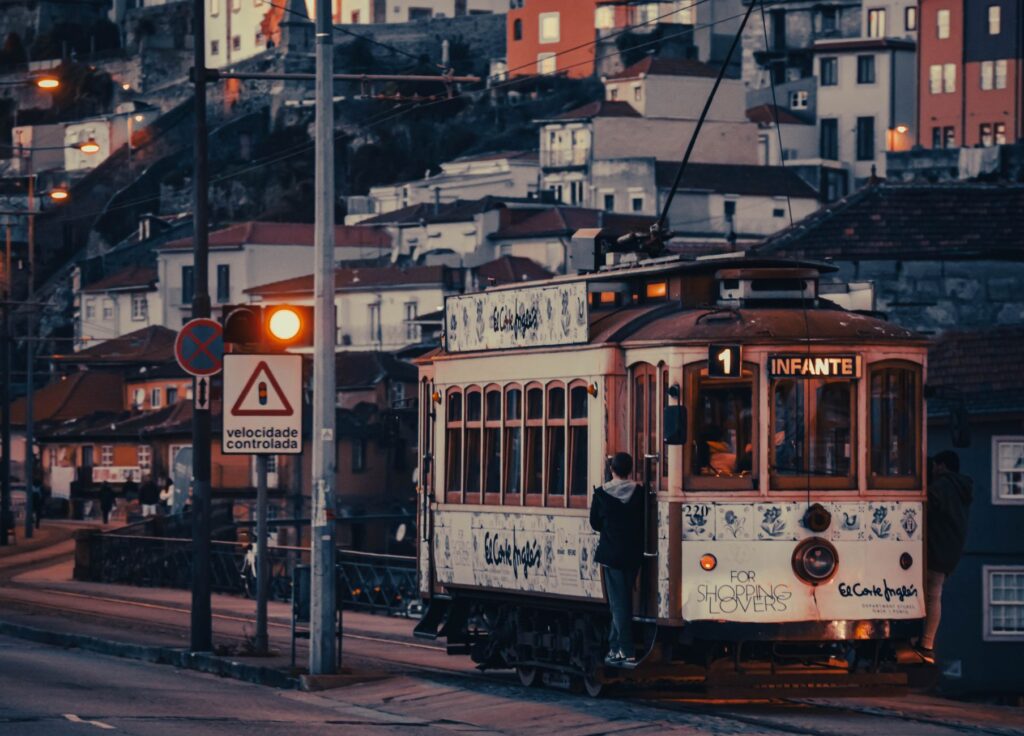
This relational fabric extends beyond mere commercial transactions. Neighborhood associations and community centers frequently organize cultural activities in the vicinity of transport nodes, taking advantage of the natural transit of people to spread local events and foster social cohesion among lifelong residents and new settlers.
Current Challenges of Sustainable Urban Mobility
Like many urban areas in Porto, Paranhos faces the challenge of modernising its transport network to reduce dependence on private vehicles without losing accessibility. Recent initiatives focus on improving intermodality, allowing users to easily combine bicycles, buses, and trains through integrated payment systems and specific lanes that streamline traffic during peak congestion hours.
Sustainability is no longer an abstract concept on the streets of Paranhos, but a practical requirement. The renewal of the public transport fleet toward electric or low-emission models responds to citizen demand for cleaner air and quieter public spaces. Residents and urban planners collaborate in identifying bottlenecks on heavily traveled routes, seeking solutions that preserve the historical heritage of the place while optimising daily travel times.
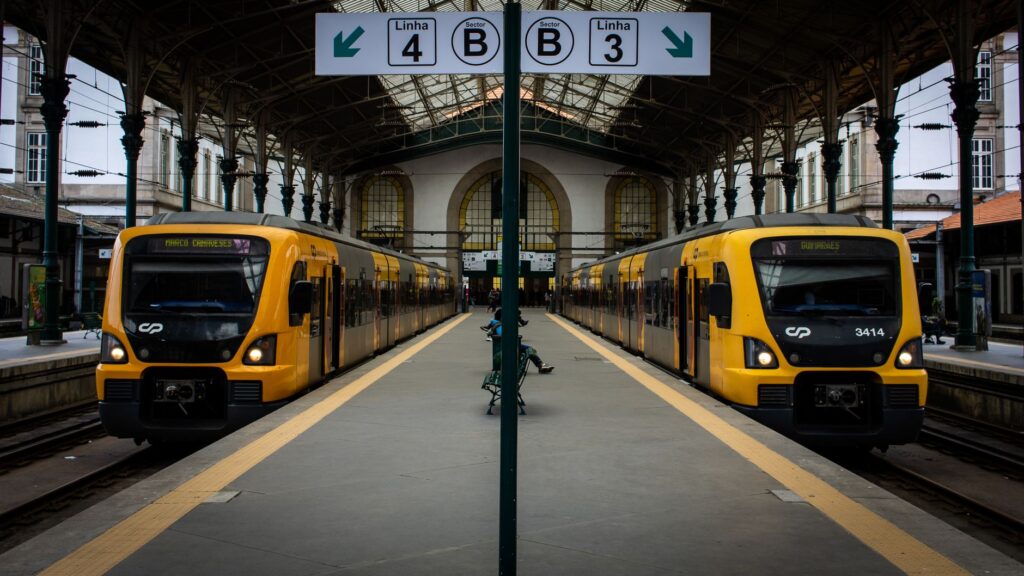
Bicycle lanes and pedestrian priority zones continue to expand along main axes, encouraging healthy lifestyle habits and reducing acoustic pollution. These measures demonstrate a firm commitment to the environment and the long-term habitability of public spaces.
The Value of Railway Heritage in Collective Memory
Beyond its practical utility, the history of transport in Paranhos holds a collective memory worthy of preservation. Local archives and testimonies from older residents recall how the arrival of the first rail lines and trams radically altered families’ economic opportunities, opening access to higher education and specialized jobs in central Porto.
This legacy manifests today in the conservation of certain architectural elements linked to historical stations and in the pride with which residents defend the quality of their public services. For those who inhabit this Portuguese corner, the tracks and train schedules form part of local identity just as much as its tree-lined squares or festive traditions.
The dissemination of this historical heritage through temporary cultural exhibitions in community centers helps younger generations appreciate the collective effort required to provide these streets with a dignified and functional transport infrastructure.
Practical guide
- How to get there: It is mainly accessed from central Porto via the metro network (Yellow Line) and urban buses operated by STCP that connect directly to various points in Paranhos.
- When to visit: Any time of year is suitable for visiting the area, although spring and autumn offer more pleasant temperatures for exploring the neighbourhoods on foot.
- Getting around: The best way to move is by combining local buses with walking sections, taking advantage of pedestrian signage and real-time transport applications.
- Useful tips: Purchasing a reloadable transport card (such as the Andante card) facilitates seamless access to the entire Porto metropolitan network.
- Respect for the environment: It is recommended to use the recycling bins located near the main stops and keep pedestrian areas clean.
- Transport schedules: Services generally operate from five in the morning until past midnight, with reduced frequencies during weekends and holidays.
Final Reflection on the Horizon of Daily Commutes
Observing the coming and going of passengers in Paranhos reveals that the true essence of a place lies in its capacity for movement. Between the historical heritage of its streets and the constant modernisation of its services, this parish proves that it is possible to grow without losing the human scale. The tracks crossing the landscape do not merely transport bodies, but sustain the invisible fabric of a community moving united toward the future, balancing the memory of its origins with the demands of sustainable development on Portuguese soil.