An Urban Territory of Contrasts in the Heart of Paris
The eleventh district of Paris, located on the right bank of the city in France, represents one of the most densely populated and vibrant spaces in the French capital. With a population exceeding 140,000 residents in a compact area, this territory concentrates a history marked by artisan traditions, labor movements, and a profound contemporary transformation. Walking through its streets reveals how Parisian urbanism has integrated residential life with intense commercial and cultural activity without losing the pulse of its popular identity.
The morphology of the district largely responds to the historical layout driven by major urban reforms, yet it preserves a network of narrow streets and interior passages that recall its industrial past. Unlike monumental districts strictly oriented toward large museum tourism, the eleventh arrondissement is experienced through daily life. Its squares, such as Republic and Nation, act as geographic and social hubs connecting neighborhoods of diverse profiles, from the vibrant nightlife around Oberkampf to the residential tranquility near Charonne.
The administrative and demographic reality of this sector in France is tied to its evolution within the urban grid of the department. Spatial organization reflects decades of continuous adaptation, where residential blocks merge with artisan workshops and creative spaces. This structural continuity allows visitors to perceive the layering of different historical periods within a single continuous urban fabric.
Street Layout and Stages of the Walking Journey
Exploring the 11th arrondissement requires understanding its network of grand boulevards and tree-lined avenues. The original design, shaped by history and urban mobility needs, facilitates pedestrian movement through wide sidewalks and clear signage. The stages of a walking tour typically begin near the Saint-Martin canal, where water and locks set a slower pace, gradually leading into the interior of the district.
Walking through this sector of Paris involves crossing major arteries such as Richard-Lenoir Boulevard, built over the underground route of the canal, which offers a green refuge highly valued by locals. On weekends, this space transforms into a community meeting point where local markets and strollers converge. Universal accessibility has improved markedly in recent years, with lowered curbs at intersections and the partial pedestrianization of several secondary streets, favoring balanced coexistence among pedestrians, cyclists, and surface public transport.
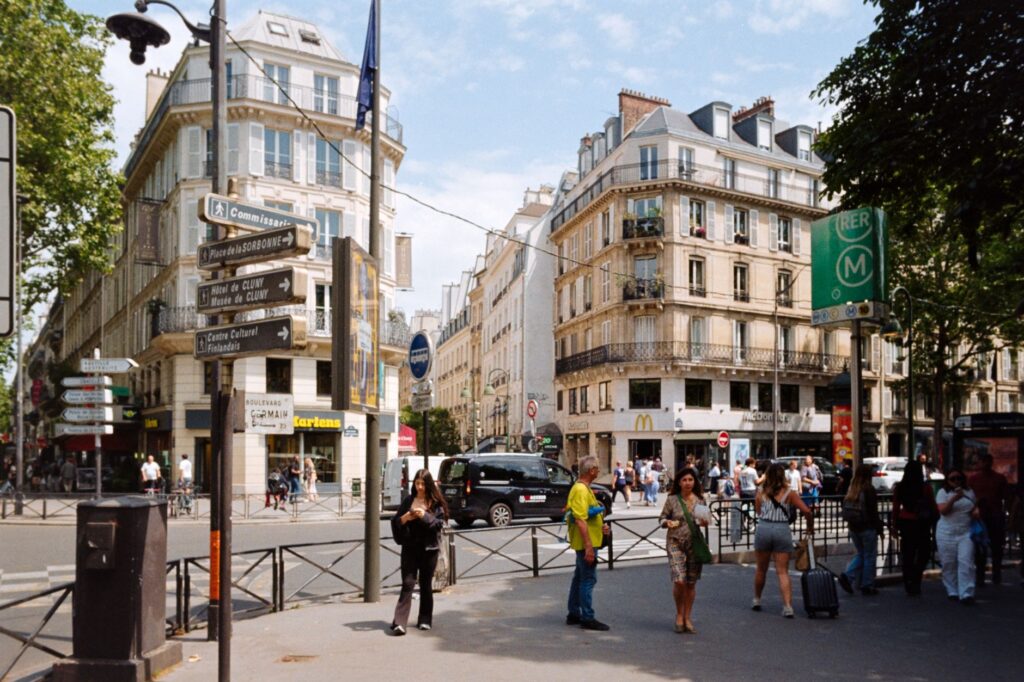
The sequential stages of the route guide travelers through changing architectural backdrops, linking expansive plazas with intimate residential alleyways. These transitions highlight the careful balance achieved between vehicular management and pedestrian priority zones across the district.
Residential Architecture and the Heritage of Transformation
The architectural heritage of the eleventh district stands out for its eclecticism. Here, eighteenth- and nineteenth-century residential buildings coexist with notable examples of converted industrial architecture. Former factories and workshops for leather goods, cabinetry, and metalwork, which once provided a livelihood for thousands of working families, have been transformed into lofts, design studios, and independent cultural centers, preserving the material memory of the place.
Parisian stone facades, characterized by wrought-iron balconies and zinc roofs, define the traditional urban landscape. However, the district also hosts examples of contemporary architecture in social housing buildings and public infrastructure that pursue energy efficiency without breaking the visual harmony of the ensemble. This layering of time periods gives the streets of the eleventh constant aesthetic interest, where each block tells a different stage of France’s urban development.
Preservation efforts in this part of France focus on maintaining structural facades while adapting interior spaces to modern standards of habitability and environmental sustainability. This dynamic conservation prevents the fossilization of the neighborhood, ensuring it remains a living, breathing community.
Local Transport and Sustainable Mobility in the District
The connectivity of the eleventh district within the metropolitan network of Paris is exceptional. Numerous metro stations, including key lines such as 1, 2, 3, 5, 8, and 9, ensure smooth access from any point in the Île-de-France region. This underground transport density is complemented by a bike lane network that has seen remarkable expansion, facilitating daily commutes by bicycle and scooter.
For visitors and residents alike, the combined use of walking and public transit represents the most efficient way to explore the area. Surface bus lines also offer a visual perspective of the urban landscape that the metro cannot provide. Municipal management has prioritized reducing private vehicle traffic, promoting clean alternatives and encouraging streets to regain their function as spaces for social connection rather than mere transit.
The integration of multimodal transport options supports a reduced carbon footprint, aligning local municipal goals with broader national transit strategies implemented throughout France.
Neighborhood Life and Responsible Community Engagement
One of the greatest appeals of the eleventh district lies in its vibrant community and commercial life. Food markets, such as Popincourt market or Richard-Lenoir market, are neuralgic points where local producers offer seasonal goods, fostering a proximity consumption model. These commercial dynamics reinforce the social fabric and ensure the neighborhood maintains its authenticity against gentrification processes.
Tourism in this area is characterized by its human scale and respect for the daily lives of its inhabitants. Visitors find a selection of small cafes, independent bookstores, and local creator workshops that integrate sustainability into their daily activities. Maintaining a responsible relationship with the community involves respecting residential spaces, supporting neighborhood commerce, and valuing the intangible heritage residents have preserved over decades.

Community associations play a vital role in mediating between commercial development and residential preservation, ensuring that neighborhood transformations benefit long-standing residents and newcomers alike.
Gastronomy and Markets: The Culinary Pulse of Eastern Paris
The culinary scene of the eleventh district reflects the cultural diversity of Paris. Alongside traditional neighborhood boulangeries and bistros, international culinary proposals and establishments run by a new generation of chefs committed to market cuisine and organic produce coexist. This blend makes the district a premier culinary destination within the capital.
Oberkampf, de la Roquette, and Faubourg Saint-Antoine streets concentrate a wide variety of venues where food is understood as an act of coexistence and culture. From small traditional grocers to modern food cooperatives, daily consumption in the eleventh district fosters circular economy principles and supports small producers in the surrounding region, ensuring traceability and quality on every plate.
Gastronomic routes within the neighborhood offer an experiential map of cultural exchange, illustrating how food production and distribution chains connect urban consumers directly with agricultural producers across France.
Practical guide
How to get there: The eleventh district is accessible via the Paris metro network through multiple strategic stations such as République, Bastille, Nation, Oberkampf, and Belleville, directly connected to the region’s main train stations and airports.
When to go: Any time of year is suitable for exploring the district, although spring and autumn offer optimal temperatures for walking tours and visiting outdoor markets.
How to get around: It is recommended to prioritize walking and using the metro or bus network for medium distances, complemented by public bicycle rentals available at numerous local stations.
Accommodation and services: The area features a wide variety of independent hotels, hostels, and tourist apartments that comply with local regulations on sustainability and neighborly respect.
A Journey’s End Beneath the Gentle Light of Eastern Paris
As evening falls, when golden light illuminates the stone facades and zinc roofs, the eleventh district reveals its most intimate side. In the tree-lined squares and small pedestrian passages, daytime bustle gives way to a serene atmosphere where locals enjoy the end of the day. This balance between urban energy and human scale summarizes the essence of a territory that, without renouncing its working-class past, projects itself toward a sustainable future deeply rooted in the community life of France.