On Spain’s far northwestern edge, A Coruña looks out over the Atlantic from a peninsula that history turned into a port, a fortress and a city. Walking its coastline does not demand high altitudes or mountaineering gear, but it does require honest preparation: the wind can change the plan in minutes, rain is a frequent companion and the terrain alternates between asphalt, stone, sand and wooden walkways. The reward is an urban and coastal hiking experience that blends landscape, heritage and everyday life.
This feature does not propose a sporting feat, but a sensible way to explore the city and its surroundings. The guiding question is simple: what does someone need to walk through A Coruña safely, enjoying the place and causing the least possible impact? The answer involves understanding the weather, choosing the right footwear, respecting the tides and accepting that walking here is also a way of reading the territory.
A city made for walking
A Coruña is a city on a human scale, with a peninsula that invites unhurried walking. Its old town, declared a heritage site, preserves arcaded squares, Romanesque churches and narrow streets where the Atlantic wind slips between buildings. Walking here is a way to understand how the city has grown facing the sea, first as a fishing and commercial port, later as an urban destination.
The seafront promenade, one of the longest in Europe, runs along much of the Coruña coastline and connects beaches, viewpoints and green spaces. It is not a mountain trail, but it demands attention: there are sections exposed to the swell, wooden walkways that can be slippery and areas where the wind blows hard. Preparation begins by accepting that the sea here is not a backdrop but a factor that shapes the route.
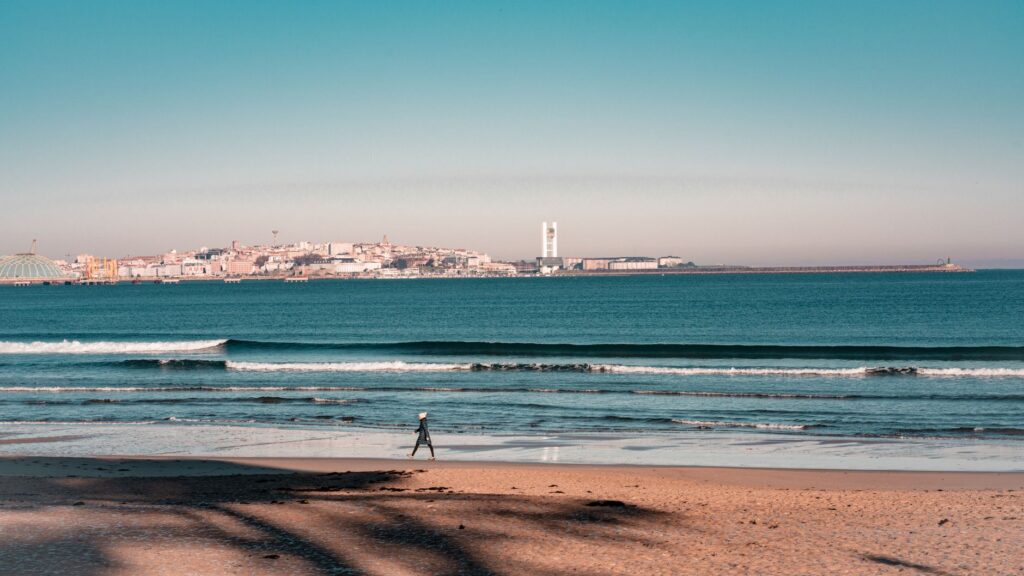
Coastal hiking in A Coruña is less about conquering a summit than about reading the weather: those who listen to the Atlantic walk better.
Weather as your first hiking companion
Galicia has an Atlantic climate, with mild temperatures but frequent rainfall throughout the year. In A Coruña, rain can appear without warning and wind is a constant presence, especially on the most exposed stretches of coast. Good clothing is therefore not a detail: a waterproof, breathable layer, footwear with good grip and head protection make a real difference.
Fog is also part of the landscape. On misty days, viewpoints are covered and visibility drops, which means extra caution on sections close to the water. The recommendation is to check the forecast before setting out, carry a charged phone and avoid long routes when storms are forecast. The goal is not to dodge the rain, but to walk with judgement when the weather allows.
Tides and swell: two clocks that set the pace
Walking by the sea means watching the tide table. In A Coruña, the difference between high and low tide can completely change the look of a beach or a rocky stretch. Some areas are covered by water and others appear only at low tide, which makes timing a basic safety tool.
Swell can also be intense even on sunny days. Waves break against rocks and breakwaters, and water splashes over the walkways. Keeping away from the breaking line, avoiding wet rocks and respecting danger signs are elementary rules that should never be improvised.

Footwear, body and pace: preparing without drama
No specific training is needed to walk in A Coruña, but common sense is. A route can add up several kilometres, with gentle climbs and asphalt sections that call for comfortable, already broken-in footwear. Blisters and foot pain are the most common problems among unprepared walkers, and they are avoided with previously used boots or sports shoes.
Hydration and food also matter, even on cool days. Wind and humidity can make you lose fluids without noticing, and stops at the cafés along the promenade are an opportunity to rest and refuel. The pace should be that of a curious walker, not an athlete: the city has too many corners to be crossed in a hurry.
Heritage discovered on foot
Walking through A Coruña brings you face to face with history without needing to enter a museum. The Tower of Hercules, a Roman lighthouse and symbol of the city, stands on a hill overlooking the ocean. Its surroundings are a good place to walk, with trails running along cliffs and coastal vegetation.
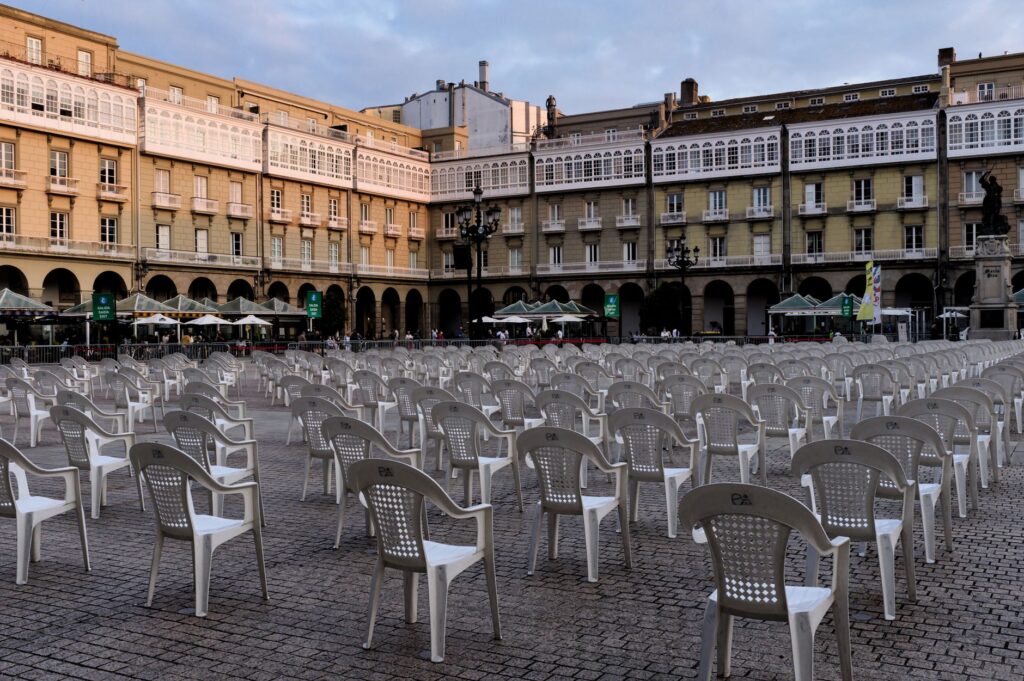
Closer to the centre, the Old Town preserves churches such as Santiago, squares such as Azcárraga and buildings that speak of centuries of maritime trade. Walking these streets is also a way to understand the city’s relationship with the sea, which has shaped its economy, architecture and character.

Beaches and sands: walking on soft ground
A Coruña has urban beaches such as Riazor and Orzán, separated by a promenade that invites walking by the water. Soft sand requires more effort than asphalt, so it is best to save this kind of section for the end or alternate it with firmer ground. In summer, the number of bathers means extra attention and respect for passage areas.
Beaches are also sensitive natural spaces. Avoid stepping on dunes or protected vegetation, take your litter with you and do not disturb the wildlife along the shore. Responsible hiking begins by understanding that the landscape is not a stage set but an ecosystem.
Safety and minimum impact on the trail
Safety in coastal hiking means anticipating risks and not exposing yourself unnecessarily. Walking alone can be pleasant, but it is wise to tell someone your planned route and carry a charged phone. In case of an accident, 112 is the emergency number in Spain, and it is useful to have it saved on your phone.
Minimum impact is also a form of safety: stay on marked trails, do not cross unprotected cliff areas and do not light fires in natural areas. In a city with so many visitors, respect for local rules and for spaces shared with residents is part of the experience.
Eating and resting: the Galician pause
Walking around A Coruña builds an appetite, and local food is one more reason to stop. Octopus, seafood, Padrón peppers and Galician cheeses appear on the menus of taverns and restaurants. The pause is not a luxury but part of the route: sitting on a terrace and looking at the sea is a way to understand the city’s rhythm.
For those who prefer something lighter, the bakeries and cafés in the centre offer simple options. The important thing is to choose wisely, respect local hours and not turn eating into a race. Galician hospitality is best enjoyed without haste.
Practical guide
Before setting out, check the weather forecast and the tide table. The seafront promenade and the trails around the Tower of Hercules are accessible on foot or by public transport, and the city has an urban bus network linking the main points of interest. A Coruña Airport (LCG) lies on the outskirts, with connections to several Spanish and European cities.

- Footwear: previously tested trainers or boots with grippy soles.
- Clothing: light layers, a windproof jacket and a breathable waterproof.
- Safety: water, a charged phone, sun protection and the 112 emergency number.
- Tides: check the table before walking rocky areas or beaches.
- Respect: stay on trails, avoid dunes and protected vegetation.
The best time to walk depends on the visitor: spring and autumn usually offer mild temperatures, though with rain; summer brings more people and requires early starts to avoid the hottest hours. In winter, wind and rain are more intense, but the city recovers a quiet rhythm that has its own charm.
A final look at the ocean
At the end of the route, as the sun sets over the Atlantic, A Coruña shows its calmest face. The promenade fills with walkers, the wind eases and the sea seems closer. It is the moment to stop, look back and remember that hiking is not always about going far: sometimes it is enough to walk well, with respect and with your senses open.
The Galician city does not demand heroics, but it does require attention. Those who plan, listen to the weather and respect the environment discover a coastline that is walked slowly and remembered with gratitude. That is, perhaps, the best luggage to take home.