Off Australia’s northeast coast stretches the planet’s largest coral reef system: some 2,500 individual reefs and more than 900 islands spread across roughly 2,000 kilometres, from shallow waters near the shore to oceanic zones exceeding 2,000 metres in depth. The Great Barrier Reef is at once a landscape of exceptional beauty and an ecosystem that sustains the daily life of coastal communities.
The question organising this report is not how to admire it, but how to visit without damaging the ecological processes that keep it alive. The answer requires understanding what happens beneath the surface, who depends on it, and which concrete practices mark the difference between a responsible visit and one that is not.
A mosaic of reefs, islands and seagrass meadows
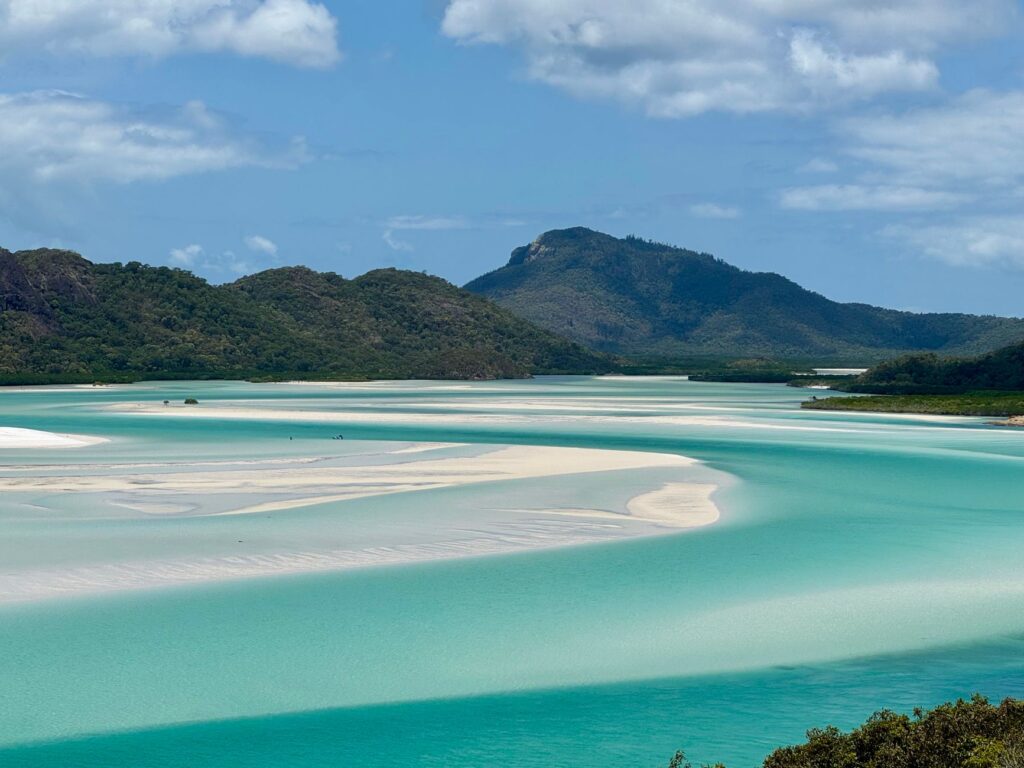
The Great Barrier is not a continuous band of coral but a complex network of formations extending from the mainland’s low water mark to about 250 kilometres offshore. That cross-shelf diversity includes inshore fringing reefs, mid-shelf reefs, exposed outer reefs and deep ocean floors. Each hosts distinct communities.
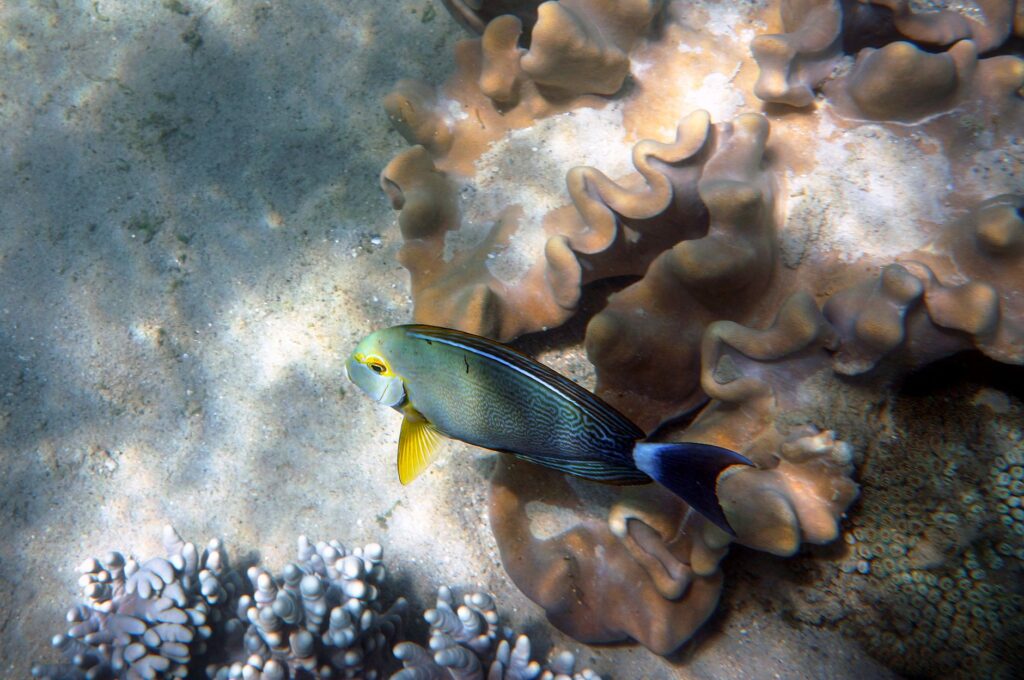
Among the islands are everything from small sandy cays to large rugged continental islands rising more than 1,100 metres above sea level. This variety of relief and depth explains why the site concentrates a biodiversity without equivalent among natural World Heritage properties: more than 1,500 fish species, around 400 coral types, some 4,000 mollusc species and 240 bird species.

The Great Barrier is not a backdrop for photography: it is a living structure that grows, erodes and reorganises on timescales that outlast any tourist season.
Four millennia of history beneath the water
The reef’s geological evolution dates back to glacial and interglacial cycles that exposed and re-flooded the continental shelf at least four times. During glacial periods, sea levels dropped and the reefs emerged as flat-topped hills of eroded limestone; large rivers meandered between them and the coastline extended further east.
During interglacial periods, rising sea levels created continental islands, coral cays and new phases of coral growth. That environmental history can be read in cores of old massive corals, genuine archives of climate and sea-level change. Today, one third of the site lies beyond the seaward edge of the shallower reefs, in deep oceanic waters and abyssal plains.
Dugongs, turtles and whales: the fauna that holds the balance
The Great Barrier hosts species of great conservation value. The dugong, a herbivorous marine mammal related to the manatee, finds here one of the world’s largest populations. It feeds on seagrass meadows covering extensive areas of the shallow seafloor, which depend on water quality and available light.
Six of the world’s seven marine turtle species frequent these waters. Raine Island, in the far north, is the world’s largest green turtle breeding site. At least 30 cetacean species have also been recorded, and the area is significant for humpback whale calving during their annual migration.

Birds are no minor detail: 22 seabird species nest on cays and continental islands, and some of those colonies are globally significant. Thousands of plant species grow on the continental islands, while coral cays develop their own distinctive flora and fauna.
The connection to daily life on the Queensland coast
The reef is not an isolated territory. Its health depends on what happens on land: the quality of water flowing from coastal catchments, land use along the shoreline, and the management of ports and shipping routes. Communities along Australia’s northeast coast have built their economy and identity in relation to the sea, from fishing and tourism to scientific research.
The cultural connection is equally deep. Aboriginal and Torres Strait Islander peoples maintain active ties to their sea country, documented in shell deposits, fish traps and places of symbolic meaning. That relationship is not a chapter of the past: it is part of the area’s contemporary management.
A healthy reef does not only protect biodiversity: it sustains jobs, research and a cultural relationship that reaches back millennia.
What threatens the coral system today
The site faces natural and human pressures. Natural ones include cyclones, crown-of-thorns starfish outbreaks and sudden freshwater influxes after extreme weather events. Human ones include tourism, shipping and coastal development, including ports.
Added to these are disturbances inherited from actions predating the site’s inscription on the World Heritage list. At the ecosystem scale, most habitats and species groups retain some capacity to recover from disturbance or withstand ongoing pressures, but that capacity is not unlimited. Ecological integrity depends on key processes — currents, larval dispersal, migrations, calcification — continuing to function in their natural relationships.
How a 348,000-square-kilometre marine territory is managed
Most of the site lies within the Great Barrier Reef Marine Park, which at 344,400 square kilometres covers approximately 99 per cent of the area. The marine park authority, an independent Australian Government agency, is responsible for its protection and management. The state of Queensland manages the adjoining coastal marine park and most of the islands.
Overlapping state and federal jurisdictions add complexity, but they have also forced the construction of formal agreements and stable collaborations between governments, commercial and recreational sectors, scientific institutions and universities. Marine park zoning is the central tool: it sets a spectrum of permitted uses and reserves 115,000 square kilometres of no-take and no-entry zones.

Federal environmental legislation acts as an overarching protection mechanism: any development proposal inside or outside the site must undergo environmental impact assessment, with the possibility of public consultation and of approval, rejection or conditional approval.
What responsible visiting actually means
Responsible visiting does not depend on a single decision but on a chain of choices. Choosing licensed operators, respecting no-take zones, not touching or standing on coral, keeping distance from wildlife and avoiding products that carry sediment or pollutants are concrete gestures with a cumulative effect.
Timing and location matter too. The most visited reefs bear greater pressure; distributing visits and preferring lower-impact vessels reduces the load on the most fragile spots. Information on regulations and protected zones is available from marine park authorities and should be checked before booking any activity.
Research and citizen science
The site’s scientific value is one of the criteria that justified its inscription. Research on corals, fish, turtles and dugongs relies on decades of monitoring and on collaboration between universities, public institutions and tour operators who collect data during their outings.
For visitors, participating in citizen science programmes — recording sightings, monitoring reefs, cleaning up debris — offers a way to contribute without replacing the work of specialists. Attentive observation and respect for the rules are, in themselves, a form of collaboration.
Practical guide
Before travelling, it is worth learning about the marine park’s zones and their restrictions, which vary by location. The best time to visit depends on the phenomenon you want to observe: coral spawning, whale migration or turtle nesting occur at different times of year. Consulting official sources allows you to adjust the trip without relying on outdated data.
- Choose licensed operators that comply with marine park rules and explain their low-impact practices.
- Do not touch or stand on coral and keep a prudent distance from turtles, dugongs and birds.
- Use sun protection that is respectful of marine ecosystems and avoid plastic waste.
- Respect no-take zones and no-entry areas, which protect conservation cores.
- Check official information from the marine park before booking activities or vessels.
Returning from the Great Barrier with images is easy; returning with a more precise understanding of what happens beneath the surface demands something more. The reef does not need passive admiration, but everyday decisions that recognise its condition as a living, fragile and shared system.