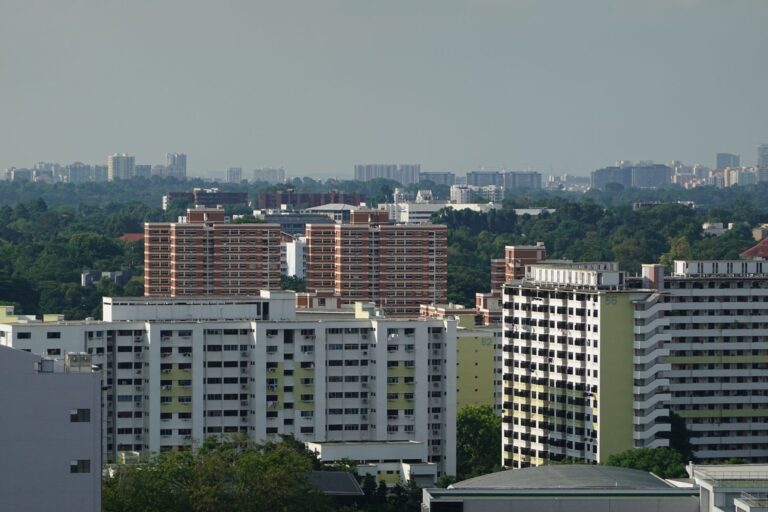
On the far western edge of Nepal, where the Terai plain merges with the Indian border, Dhangadhi has become an urban hub of more than 200,000 people. Its rapid, often unplanned growth puts pressure on community forests, wetlands and rivers that for generations sustained the region’s farming life. The question running through its neighbourhoods is not whether the city should grow, but how to do so without wiping out the natural heritage that still defines it.
The answer, according to public documentation and contextual sources, lies in a fragile mix of science, local governance and community participation. There is no single solution and no heroic narrative: there are small, verifiable and often invisible decisions that determine whether Dhangadhi keeps its environment or loses it within the next decade.
A young city on an ancient plain
Dhangadhi is the headquarters of Kailali district, in Sudurpashchim province. Its altitude is around 180 metres and its climate is typical of the Terai: humid summers, mild winters and a monsoon that transforms the landscape within weeks. That seasonality shapes daily life, agriculture and the rhythm of the rivers crossing the region.
The city is not an established tourist destination. It is an administrative, commercial and educational centre that draws people from neighbouring districts and nearby rural areas. That central role explains its demographic growth and also the pressure on land, water and the forests around it.
The demographic figure is not a detail: a city that doubles its population within a few decades needs housing, services and jobs, and all of that competes with the ecosystems that sustain it.

Community forests: an institution that holds the landscape
Nepal is internationally known for its community forest model, in which local groups manage forest areas under formal agreements with the state. In the western Terai, this model has been key to slowing deforestation and maintaining ecological corridors that connect the plain with the Himalayan foothills.
Around Dhangadhi, community forests serve functions beyond timber: they regulate water, protect soil, shelter wildlife and provide resources for rural households. Their management depends on local assemblies, use rules and neighbourly vigilance, a system that does not always work without tension.
Conservation in the Terai is not decided in distant offices: it is negotiated every season among those who need firewood, fodder and water from the same forest they protect.
The threats are well known: illegal extraction, agricultural expansion, dry-season fires and urban pressure for land. Science provides forest inventories and biodiversity data, but implementation depends on local governance and on communities’ ability to enforce their own rules.
Wetlands and rivers under watch
The river system of western Nepal, with rivers descending from the Himalayas and crossing the plain towards India, is vital for aquifer recharge and biodiversity. Dhangadhi sits in an area where seasonal wetlands and watercourses regulate water flows and shelter migratory birds.
Water quality and the integrity of these ecosystems depend on various factors: urban discharges, agrochemical use, gravel extraction and changes in flood patterns. Available data are fragmented, and that lack of systematic information is itself a governance problem.

Some local initiatives promote community monitoring of rivers and wetlands, with participation from schools and neighbourhood organisations. Citizen science, when well designed, can complement official data and give visibility to problems that would otherwise go unnoticed.
Governance: who decides about the territory
Conservation in Dhangadhi does not depend on a single authority. Local government, provincial government, the Ministry of Forests and Environment, forest user groups and non-governmental organisations all take part. That multiplicity of actors can be a strength or a maze of overlapping mandates.
Political decentralisation in Nepal has transferred responsibilities to municipalities, but not always with sufficient technical and financial resources. Urban development plans must integrate environmental criteria, and that is where the game is played: in the capacity to order growth before land is occupied.
- Land-use planning with risk and conservation criteria.
- Municipal budgets for waste management and sanitation.
- Coordination between districts and province to protect ecological corridors.
- Transparency in granting extraction and construction permits.
Communities on the front line
On the outskirts of Dhangadhi, many families depend directly on natural resources: farming, livestock, fishing and gathering. For them, conservation is not an environmental abstraction but a livelihood issue. Any policy that ignores that reality risks failure.
Women’s groups have gained a relevant role in community forest management in Nepal, and in the Terai their participation in assemblies and committees is increasingly visible. That presence does not erase inequalities, but it changes priorities: domestic water, firewood and food security enter the agenda.
Protecting a forest without asking who cooks with its firewood is an elegant way of not protecting it.
What science says and what remains unknown
Research on biodiversity in the western Terai has documented species associated with wetlands and lowland forests, as well as the importance of corridors connecting protected areas. However, specific information about Dhangadhi and its immediate surroundings is limited.
That knowledge gap is a management challenge: without updated data on water quality, forest cover or wildlife populations, decisions are taken blindly or postponed. Investing in monitoring is a conservation measure as concrete as planting trees.
Local universities and research institutes have a strategic role here: training technicians, generating data series and translating evidence into recommendations that can be applied at municipal scale.
Waste, sanitation and the urban footprint
Dhangadhi’s urban growth has intensified waste generation and demand for sanitation. Waste management is one of the most visible fronts of environmental pressure: informal dumps, burning and leachate affect soils and watercourses.
Municipalities in the Terai face common difficulties: lack of treatment plants, irregular collection and little separation at source. Some local initiatives promote composting and material recovery, but their scale is still limited compared with the volume generated.
The link between waste and conservation is direct: a polluted river upstream affects wetlands downstream, and a city that does not manage its waste ends up paying the cost in public health and ecosystem loss.
Cultural heritage and landscape
Dhangadhi is not only an environmental problem: it is also a place with history. The far-western region of Nepal preserves cultural traditions, farming practices and festivities that intertwine with the monsoon calendar and the life of the rivers.
Intangible heritage —knowledge of local varieties, cultivation techniques, use of medicinal plants— is part of the cultural landscape that conservation should recognise. Protecting a wetland without attending to the communities that have inhabited it is as incomplete as preserving a building without its people.
Practical guide
For those visiting Dhangadhi with an interest in conservation and sustainability, it is best to start with realistic expectations: it is not a mass tourism destination and visitor infrastructure is basic. Up-to-date information should be checked with official and local sources before travelling.

- The best time to travel coincides with the dry season, outside the monsoon, when roads and access are more reliable.
- The local airport connects with domestic flights; for longer journeys, plan ahead and verify schedules.
- Visiting nearby natural areas requires local guidance and respect for community use rules.
- Carrying drinking water and managing your own waste is a practice consistent with the place.
- Supporting local businesses and guides helps conservation generate an economic return.
Birdwatching and landscape photography are possible in the region, always with permission and without disturbing habitats. Caution and listening are better tools than any fixed itinerary.
A future decided now
Dhangadhi embodies a dilemma common to many cities in the global south: grow fast or grow well. Conservation is not a luxury to be addressed after development; it is the condition for development to last. Community forests, wetlands and rivers are not obstacles to progress but natural infrastructure that sustains urban life.
What happens in this city in western Nepal over the coming years will depend on concrete decisions: budgets, land-use plans, environmental monitoring and neighbourhood participation. There are no guarantees, but there is evidence that organised communities can change course.
At the end of the day, as the sun falls over the Terai plain and herds return along the dirt roads, Dhangadhi remains a place where nature and the city negotiate their coexistence. That silent, everyday negotiation is the real story of conservation in Nepal.