The train’s whistle pierces the freezing dawn air at Creel station. It is not a nostalgic sound, but a declaration of resilience. In an era dominated by the immediacy of commercial aviation and the uniformity of highways, the Chihuahua-Pacific Railroad—affectionately known worldwide as El Chepe—survives not as a museum relic, but as a vital, pulsing artery. El Chepe is not merely a mode of transportation, but the last steel thread connecting modern Mexico with the sublime isolation of the Sierra Madre. Along a route that defies gravity, this iron titan cuts through the heart of Chihuahua state before descending to the fertile plains of Sinaloa, offering travelers one of the most breathtaking geographical and cultural expeditions on the American continent.
The Genesis of a Utopia Built on Steel and Rock
The existence of El Chepe is the result of a nineteenth-century dream that bordered on madness. The idea of connecting northern Mexico with the Pacific Ocean through the impenetrable Sierra Tarahumara was first proposed in 1849 by Albert Kinsey Owen, a visionary American utopian who imagined a trade route that would shorten the distance between the East Coast of the United States and Asian markets. However, the geography of the Sierra Madre Occidental, with its colossal canyons, vertical cliffs, and extreme climatic variations, stood as an insurmountable stone titan for over a century.
Formal construction was not completed until November 1961, following decades of financial interruptions, unprecedented civil engineering challenges, and the loss of many lives. Mexican engineers had to design a track that would overcome an elevation change of more than 2,400 meters above sea level. The final result was a masterpiece of global engineering: a railway line featuring 37 monumental bridges and 86 tunnels blasted with dynamite through solid rock. Today, traveling this route means admiring a monument to human tenacity that transformed the historical isolation of the sierra into a corridor of cultural encounter.
The Geography of the Abyss: The Copper Canyon
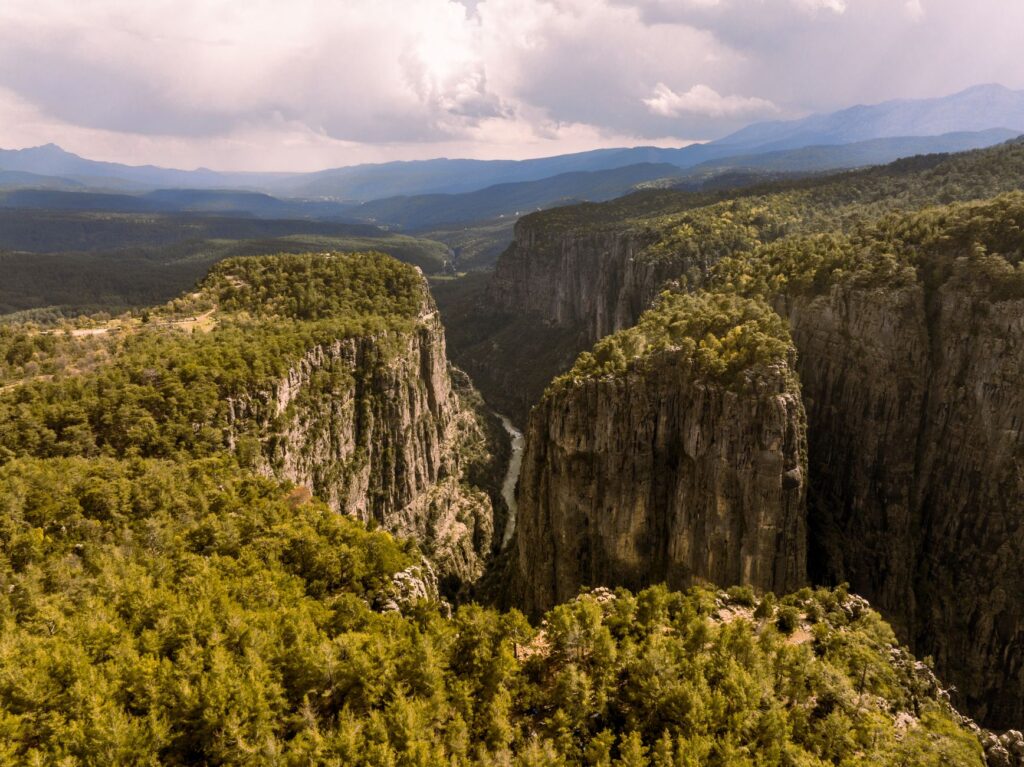
To comprehend the scale of the landscape El Chepe traverses, one must discard familiar visual reference points. The Copper Canyon is four times larger and, at several points, significantly deeper than the Grand Canyon in Arizona. This system of seven major canyons covers an area of approximately 60,000 square kilometers, forming a labyrinth of geological formations where the pine and oak forests of the peaks plunge abruptly into subtropical jungles at the canyon floors, carved by untamed rivers like the Urique and the Septentrión.
The train ride allows passengers to witness this ecological transition gradually. As the convoy advances, the landscape shifts: the aridity of the Chihuahuan desert gives way to the dense temperate forests of Creel, before opening wide at the abyss of Divisadero, the route’s most famous panoramic viewpoint. Here, travelers stand on the edge of a precipice where their gaze is lost in an immensity of copper, green, and violet hues, sculpted by millions of years of erosion.
«The Sierra Tarahumara is not to be contemplated from a distance; it is felt in the chest through the constant clatter of the train and the echo of the wind rising from the stone abysses where time itself seems to have stopped.»
The Two Faces of El Chepe: Express vs. Regional
Today, the railway service has adapted to the demands of contemporary tourism and the needs of local communities, splitting into two distinct options. Planning your journey requires deciding beforehand whether to board the luxury-focused Chepe Express or the traditional Chepe Regional.
The Chepe Express is an experience designed for absolute comfort. With passenger cars divided into three classes (First, Executive, and Tourist), it features a terrace car with panoramic windows, a contemporary design bar, and the acclaimed Urike restaurant, which serves a high-cuisine menu inspired by ingredients from both the sierra and the Sinaloan coast. This train stops only at key tourist stations: Creel, Divisadero, Bahuichivo, El Fuerte, and Los Mochis.
On the other hand, the Chepe Regional preserves the essence of exploratory travel and social service. It is an indispensable means of transport for local inhabitants, particularly the Rarámuri community, who use it to travel between their scattered settlements. While it offers fewer luxury amenities, it provides unmatched authenticity and stops at secondary stations, allowing travelers to observe daily life in the deep sierra. For the anthropologically-minded traveler, the Regional is a direct window into the social reality of the region.
The Human Scale: Encountering the Rarámuri People
Beyond its geological majesty, the true soul of the Sierra Tarahumara lies in its original inhabitants. The Rarámuri, also known as Tarahumaras, are globally famous for their extraordinary physical endurance and their ability to run superhuman distances across the rugged canyons—a skill born of their cosmology and historical adaptation to the land. Indeed, their name translates to «the light-footed ones.»
Contact with the Rarámuri culture must be approached with deep respect and ethical awareness. In towns like Creel and surrounding communities (such as San Ignacio Arareko or Cusárare), visitors can appreciate their pine-needle weaving, colorful traditional clothing, and a worldview deeply connected to nature. Respect for the privacy and autonomy of the Rarámuri people must guide every interaction and photograph throughout the journey. Understanding that they are not a tourist attraction, but a living culture with territorial rights and sacred traditions, is fundamental for any responsible visitor.
Gravity-Defying Engineering: Iconic Bridges and Tunnels
The rail journey is a constant parade of civil engineering milestones. One of the most spectacular spots is the Mezquital Bridge, a steel structure rising dozens of meters above the river of the same name, offering an almost surreal sensation of suspension. However, the true technical marvel is found at the Témoris Loop, a section of the track where the train performs a complete 180-degree turn inside a tunnel to descend a near-vertical slope, allowing passengers to see the tracks they just traveled on directly above their heads.
Another milestone is the Aguacaliente Bridge, the longest on the route at nearly 500 meters, which crosses the Fuerte River at a low altitude before the train enters the coastal plains of Sinaloa. Every tunnel traversed is a reminder of the miners and engineers who spent years drilling through the sierra’s volcanic rock—a collective effort that cemented El Chepe as one of the wonders of twentieth-century Mexican infrastructure.

Key Stations to Disembark and Explore
Taking the journey in a single run without getting off the train is a common mistake that deprives travelers of the region’s true essence. It is imperative to disembark at least at two intermediate stations to truly experience the human and natural scale of the sierra.
- Creel: Designated as a Pueblo Mágico (Magical Town), it is the gateway to the high sierra. Surrounded by coniferous forests, unique rock formations like the Valley of the Monks, and beautiful alpine lakes, it is the ideal base for hiking, mountain biking, and respectful cultural visits.
- Divisadero: Offers the most spectacular view of the canyon system, where the Urique, Tararecua, and Copper canyons converge. Here you will find the Copper Canyon Adventure Park, which features one of the longest zip-lines in the world and a cable car that descends into the heart of the abyss.
- Bahuichivo: This station provides access to the picturesque colonial town of Cerocahui, located in a fertile wine-producing valley, and the Urique Canyon viewpoint, the deepest point in the entire system.
- El Fuerte: Located in the state of Sinaloa, this Magical Town stands out for its colonial architecture, its majestic river, and its rich history tied to colonial-era legends.
Logistics and Route Planning
To design a successful itinerary aboard El Chepe, it is essential to consider the seasonality of the landscape. Each time of year offers a completely different sierra. During winter (December to February), the peaks are often covered in snow, transforming the landscape into a stunning alpine setting, though temperatures can drop severely below freezing. Summer (July to September) brings the rainy season, which drapes the canyon slopes in a dazzling emerald green and activates spectacular seasonal waterfalls like Basaseachic.
Ticket reservations should be made several months in advance, especially when traveling in the premium classes of the Chepe Express during peak seasons such as Easter, summer, and the end of the year. It is advisable to start the journey in Chihuahua or Creel and descend toward Los Mochis, as this direction ensures that the most visually and technically spectacular stretches are traversed during the brightest afternoon sunlight.
The Sierra Table: Frontier and Coastal Gastronomy
A journey on El Chepe is also a culinary voyage reflecting the geographical transition of northern Mexico. In the Chihuahuan portion, the cuisine is dominated by the rigor of the dry, temperate climate: dried meats (machaca), premium beef cuts, artisanal cheeses of Mennonite heritage, and apples from the Guerrero region. As you descend toward Sinaloa, the menu changes drastically, flooding with freshness from seafood freshly harvested from the Sea of Cortez, spicy aguachiles, scallop ceviches, and zarandeado fish.
Aboard the Chepe Express, this transition is celebrated in the Urike dining car, where renowned chefs have designed menus that fuse the robustness of mountain cooking with the delicate marine flavors of the coast, paired with wines from the Parras Valley and the emerging wineries of Cerocahui, offering a sensory experience that perfectly complements the visual spectacle rolling past the panoramic windows.
A Journey of Preservation and Future
Traveling on El Chepe is, ultimately, an act of supporting the preservation of an invaluable human and natural ecosystem. The revenue generated by sustainable tourism helps maintain the economic viability of the railway, ensuring that the Chepe Regional continues to provide its indispensable social service to the Rarámuri communities who depend on it for their livelihoods, medical connectivity, and education.
As you bid farewell to the sierra and watch the stone peaks fade into the reflection of Sinaloa’s coastal lagoons, you realize that El Chepe is not just a route between two geographic points, but a temporal and cultural bridge that defies twenty-first-century haste, reminding us of the value of slow travel, contemplating the immensity of the world at the human speed of the railway.