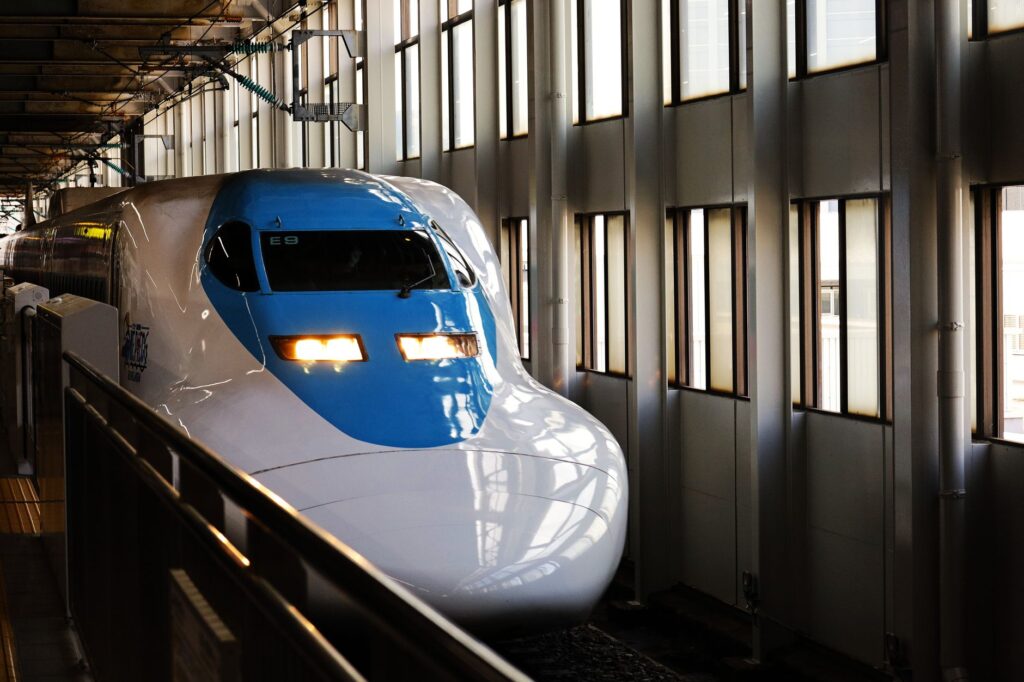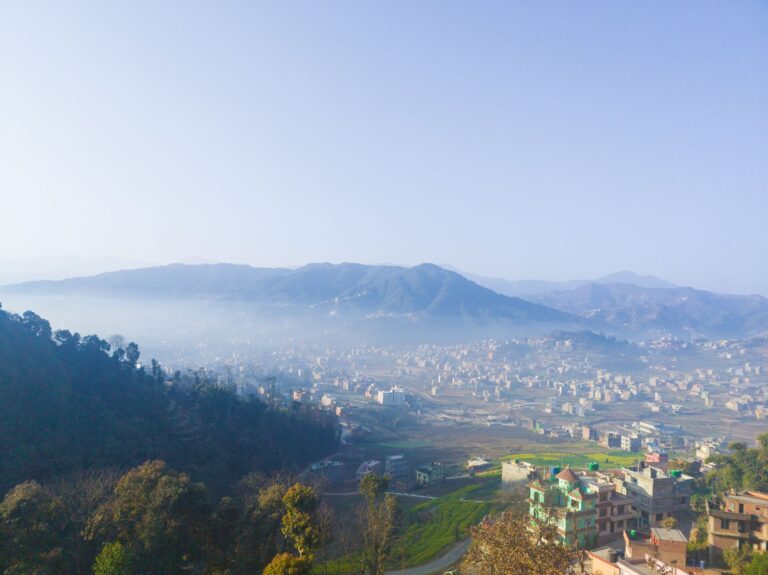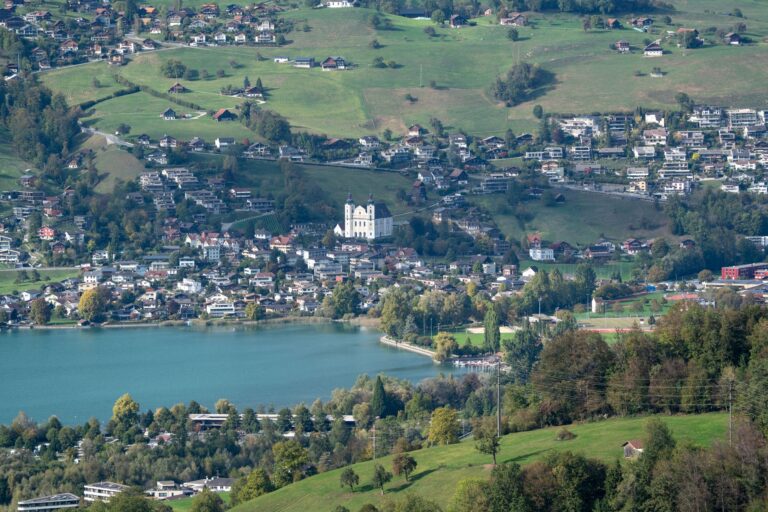
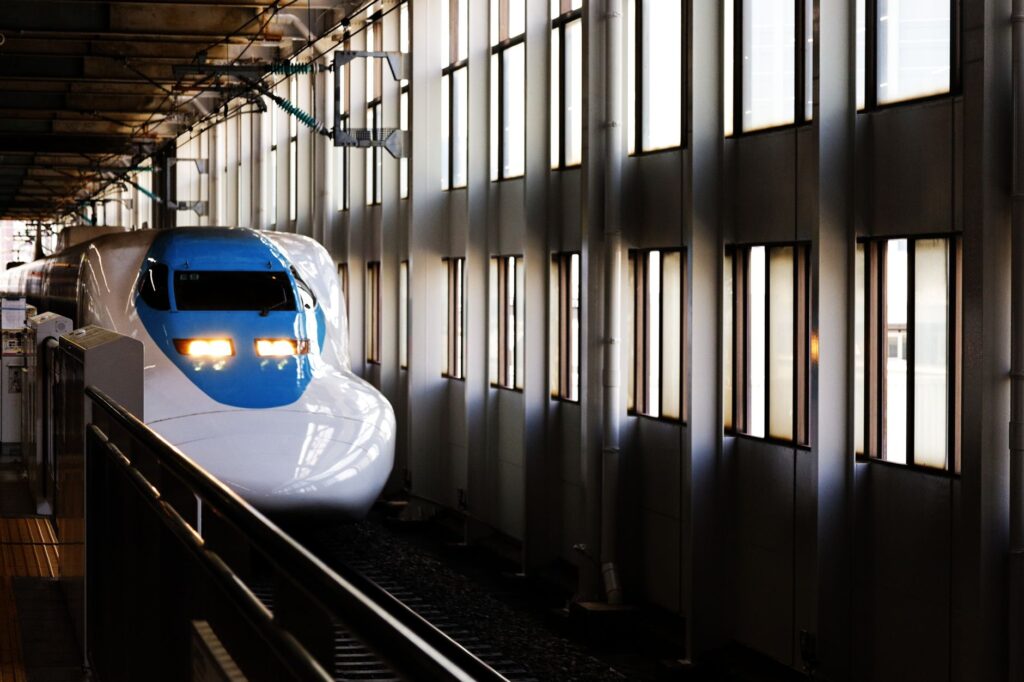
On platform 14 of Tokyo Station, the air is remarkably still, yet the sense of anticipation is palpable. Gliding to a halt with an almost imperceptible whisper is the aerodynamic nose of the Shinkansen N700S Series, the latest evolution of the world’s most famous high-speed train. There are no screeching brakes or jarring metallic jolts. The train stops precisely on the markings painted on the platform floor, aligning perfectly with the passenger boarding gates. Only three minutes remain until departure. Within this brief window, hundreds of passengers disembark and an equal number board in a silent, beautifully choreographed routine. The Shinkansen is not merely a mode of transport; it is the circulatory system of modern Japan, an engineering masterpiece that has effectively shrunk the country’s geography while setting the global benchmark for railway punctuality.
The Birth of High Speed: Historical Context
To truly comprehend the significance of the Tokaido Shinkansen, one must journey back to the 1950s. Japan was in the midst of post-war reconstruction, seeking not only to rebuild its infrastructure but also to redefine its national identity on the global stage. The traditional narrow-gauge Tokaido railway line, which connected the capital to the Kansai region, was operating at maximum capacity. The proposal to construct an entirely new standard-gauge line dedicated exclusively to high-speed passenger rail was initially met with international skepticism. Many transport analysts believed that the future of travel belonged entirely to commercial aviation and interstate highways, viewing railways as a relic of the past.
However, visionaries like Shinji Sogo, president of Japanese National Railways, and Hideo Shima, the chief engineer of the project, remained steadfast. Their ambition bore fruit on October 1, 1964, just nine days before the opening ceremonies of the Tokyo Olympic Games. The first Shinkansen, the iconic Series 0 with its distinctive rounded white-and-blue nose, completed the journey between Tokyo and Shin-Osaka in four hours, cutting the previous travel time in half. This milestone did not just capture the world’s imagination; it proved that high-speed rail was a viable, clean, and highly efficient alternative for mass transit in the modern era.
Precision Timing: The Zero-Second Miracle
In Japanese railway culture, punctuality is not a mere goal; it is an absolute duty. The average annual delay of a Shinkansen train is measured in seconds, typically hovering below thirty seconds per journey—a figure that includes delays caused by natural disruptions such as typhoons, earthquakes, and heavy snowfalls in the Sekigahara region. This extraordinary precision is the result of a seamless harmony between cutting-edge technology and a highly trained workforce.
Shinkansen drivers undergo rigorous training programs where they learn to estimate the train’s speed based solely on visual cues from the passing landscape, complementing the automated speed control systems. Behind the scenes, the COMTRAC (Computer Aided Traffic Control) system monitors the real-time position of every train on the network, dynamically adjusting schedules to mitigate any disruption. However, the most impressive display of efficiency occurs at the terminal stations. When a train arrives at Tokyo Station, a specialized cleaning crew, affectionately known as the «seven-minute miracle» team, boards the cars. In this incredibly short window, they clean every seat, rotate the rows to face the direction of travel, clear all waste, and leave the train spotless for the next group of passengers, keeping the system running without a single lost second.
Anatomy of the Shinkansen: Models and Classes
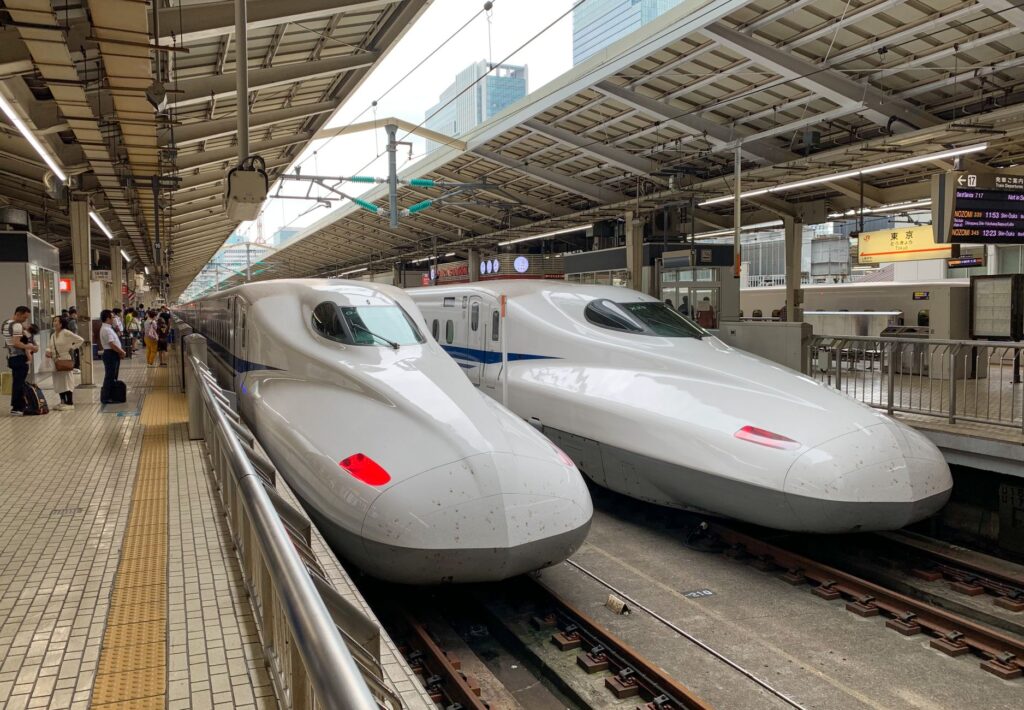
The fleet operating on the Tokaido line today consists primarily of N700A trains and the ultra-modern N700S (where the ‘S’ stands for «Supreme»). This latest model features significant advancements in active suspension systems, reducing cabin vibration to almost imperceptible levels, alongside a silicon carbide propulsion system that drastically lowers energy consumption. Furthermore, in the event of a power outage caused by an earthquake, the N700S is equipped with lithium-ion batteries that allow it to move under its own power to a safe location, such as out of a tunnel or off a bridge.
When booking a seat, travelers can choose from three distinct classes of service:
- Ordinary Car (Tourist Class): Features a 3+2 seating configuration. Unlike commercial aircraft, the legroom is exceptionally generous, offering over a meter of space between rows, ensuring a comfortable journey even for taller passengers.
- Green Car (First Class): Equivalent to business class, this carriage offers a 2+2 layout. The seats are wider, equipped with adjustable leg rests, individual reading lights, and a noticeably quieter atmosphere, ideal for working or resting.
- Gran Class: Available only on select lines operated by JR East (such as the Hokuriku or Tohoku Shinkansen), this represents the pinnacle of rail luxury, featuring cabin designs inspired by first-class airline suites, gourmet dining options, and dedicated attendant service.
«The Shinkansen transcends mere engineering; it is an exercise in collective respect where silence, cleanliness, and punctuality serve as a quiet pact between traveler and destination.»
The Ekiben Ritual: Gastronomy at Three Hundred Kilometers per Hour
Traveling on Japan’s bullet train is deeply intertwined with one of the country’s most cherished culinary traditions: the ekiben. A portmanteau of eki (station) and bento (boxed meal), these meals are sold exclusively at railway stations across Japan. Far from ordinary transit food, the ekiben is a celebration of Japan’s rich regional culinary diversity.
Before boarding at Tokyo Station, a visit to specialized shops like «Ekibenya Matsuri» is practically mandatory. This bustling market offers over two hundred varieties of bento boxes sourced from every corner of the archipelago. Each box is meticulously arranged using fresh, seasonal local ingredients. Travelers can savor everything from slow-simmered Yonezawa beef to salmon sushi wrapped in persimmon leaves from the Nara region. Eating an ekiben while watching the Japanese countryside sweep past the window is an irreplaceable sensory experience, a ritual where the rush of travel slows down to savor local culinary heritage.
The Scenic Route: From Tokyo’s Skyline to Mount Fuji
The 515-kilometer journey between Tokyo and Kyoto aboard the premier Nozomi express service takes exactly two hours and fifteen minutes. As the train leaves behind the sprawling concrete and towering skyscrapers of the capital, the landscape quickly shifts into rolling hills carpeted with green tea plantations, quiet farming villages, and rushing mountain rivers.
The highlight of the journey occurs approximately 45 minutes after departure. When traveling westbound from Tokyo, it is essential to reserve a seat on the right-hand side of the train (seats in row E in Ordinary Class). As the train passes Shin-Fuji Station, weather permitting, the iconic snow-capped peak of Mount Fuji rises majestically against the horizon. The sight of the sacred volcano, framed by the train window while traveling at 285 kilometers per hour, remains one of the most enduring images of contemporary Japan—a perfect marriage of ancient nature and human technological progress.
Logistics and Booking: Navigating the SmartEX System
For international travelers, planning a Shinkansen journey has become much easier thanks to modern digital tools. The official reservation platform, SmartEX, allows passengers to book tickets up to a month in advance from anywhere in the world using a mobile app or website. Upon registration, users can link their digital tickets directly to an IC transit card (such as Suica, Pasmo, or Icoca), allowing them to pass through the ticket gates with a simple tap of their phone or physical card.
It is worth noting that following significant price adjustments to the traditional Japan Rail Pass in late 2023, purchasing individual point-to-point tickets via SmartEX is now often the most cost-effective and flexible option for simple itineraries like the Tokyo-to-Kyoto route. Additionally, strict luggage regulations introduced in 2020 require passengers traveling with oversized bags—where the total dimensions (length + width + height) measure between 160 and 250 centimeters—to reserve a specific seat that includes access to an oversized baggage area, typically located at the rear of the carriage.
Invisible Rules: Passenger Etiquette on the Bullet Train
The Shinkansen is renowned for its serene and orderly atmosphere, reflecting the social etiquette that governs daily life in Japan. To ensure a comfortable journey for everyone, passengers are expected to observe several unwritten yet strictly followed rules of conduct:
- Mobile Phone Usage: Voice calls are strictly prohibited inside the passenger cabins. If you must make or take a call, you should move to the vestibule areas between carriages. Devices should always be kept on silent mode.
- Waste Disposal: There are no trash bins next to individual seats. Passengers are expected to keep their garbage with them and dispose of it in the recycling bins located near the exit doors at the end of each car.
- Speaking Volume: Conversations should be kept to a quiet, respectful whisper. Many passengers use their travel time to sleep, read, or work in peace.
- Reclining Seats: Out of courtesy, always check with the passenger seated behind you before reclining your seat with a polite «Sumimasen» (excuse me).
The Future on Rails: The Next Frontier of Maglev
While the Tokaido Shinkansen continues to operate with flawless efficiency, Japan is already building the future of overland transport with the construction of the Chuo Shinkansen line. This ambitious project utilizes Magnetic Levitation (Maglev) technology, completely eliminating friction between the train and the track by using powerful superconducting magnets.
The L0 Series Maglev train has already clocked record-breaking speeds of 603 kilometers per hour during test runs in Yamanashi Prefecture. When the first phase of the line between Tokyo and Nagoya opens, travel time will be slashed to just 40 minutes, linking the two major hubs at speeds that rival commercial aviation while producing a fraction of the carbon footprint. This technological leap will once again secure Japan’s position at the forefront of global transport innovation, proving that rail travel is not just a nostalgic journey, but the most sustainable and elegant path forward.